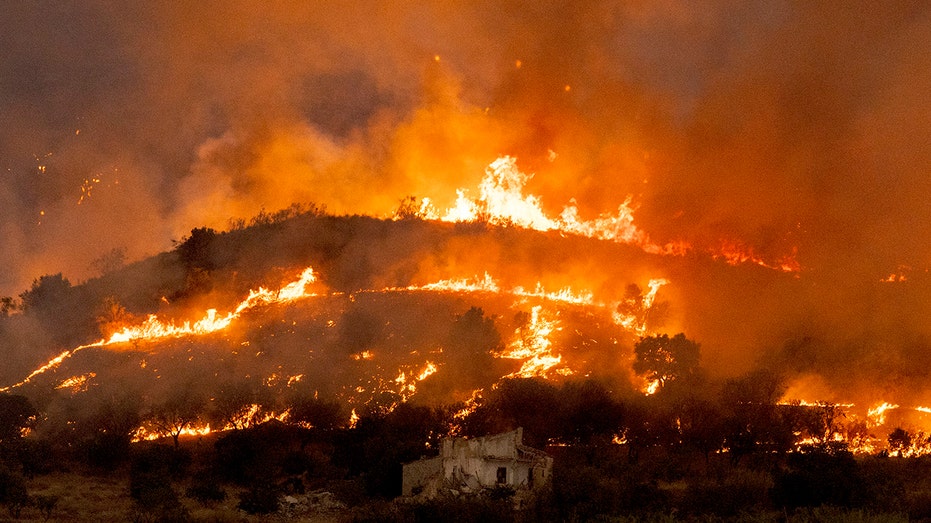
France and Spain have faced massive wildfires since the beginning of the month, with infernos consuming forests and buildings amid record-breaking heat across Europe.
The extreme heat has already contributed to thousands of deaths and triggered the cancellation of outdoor events, particularly in southern France.
Last week, the Fontainebleau Forest near Paris burned through 2,000 hectares of woodland, forcing the evacuation of roughly 1,000 people and deploying 850 firefighters.
Officials estimate containment efforts could take weeks as crews continue to battle the blaze.
Data from France’s Ministry of Agriculture shows nine out of ten wildfires in the country are caused by human activity, often from campfires, discarded cigarettes, or negligence.
Extreme heat turned scrub grassland into highly flammable terrain, amplifying the destruction across both France and Spain.
Regulations in both nations restrict clearing of protected lands, allowing brush to accumulate and increasing fire risk in some areas.
In the United States, similar patterns emerge, with federal data indicating 85% of wildfires are human-caused, though lightning fires burn more acreage due to remote locations.
French interior officials identified multiple ignition points within a small radius around recent fires, suggesting deliberate origin in several cases.
Dozens of individuals have been arrested across France for accidentally or intentionally starting fires, as authorities pledge strict enforcement against arson.
The French president stated the nation has not seen this level of simultaneous outbreaks since the end of World War II and warned of zero tolerance for those responsible.
Spain has contended with three major wildfires, including one near Zaragoza that destroyed 12,000 hectares and displaced six villages.
Fires in Madrid and Guadalajara affected at least 2,000 residents, with firefighters describing unprecedented spread speeds.
A wildfire in Andalusia killed at least 13 people, among them a 93-year-old woman injured at Los Gallardos.
Large unused rural areas in Spain, left uncleaned, have become tinderboxes under drought conditions where a single cigarette can ignite disaster.
A university study found annual human exposure to wildfires rose by an average of 382,700 people between 2002 and 2021, a 40% increase driven by migration into fire-prone regions.
Over the same period, total burned land declined by 26%, even as more people faced fire threats.
France’s heat wave alone caused approximately 2,000 deaths at the end of June, with high temperatures forecast to persist through August.
Meteorologists attribute the warm, dry conditions to unusually high Mediterranean sea surface temperatures combined with colder Atlantic waters, sustaining the crisis into late summer.