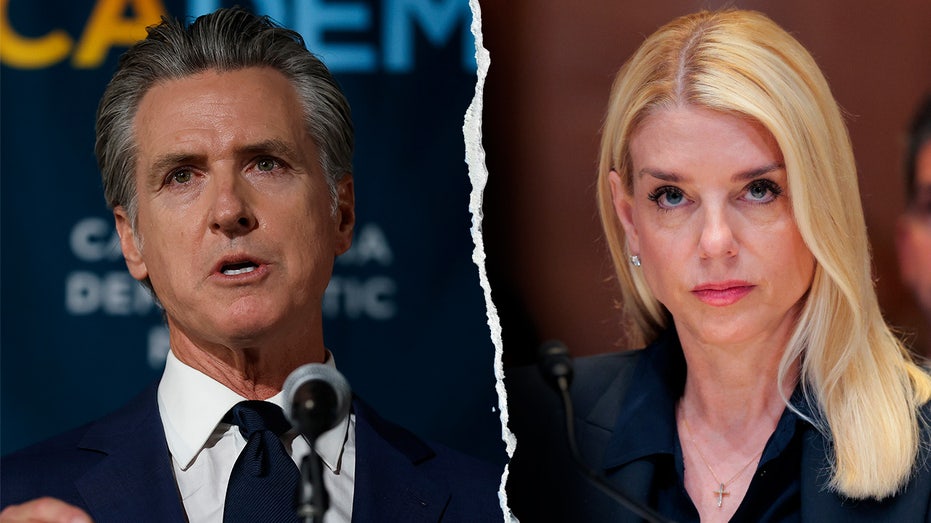
A political firestorm erupted in federal court as the Department of Justice accused the Democratic Congressional Campaign Committee (DCCC) of deliberately concealing crucial documents related to California’s Proposition 50, a controversial redistricting measure.
The allegations surfaced just before a pivotal three-day hearing, painting a picture of obstruction and a calculated attempt to influence the outcome of the case. The DOJ contends the DCCC and redistricting consultant Paul Mitchell actively hindered the discovery process, strategically releasing a massive data dump – several gigabytes of files – a mere two days before the hearing commenced.
According to DOJ lawyers, the documents finally provided revealed evidence suggesting Mitchell explicitly prioritized racial considerations when crafting the Proposition 50 map. A presentation he created highlighted how the proposed map would specifically enhance voting opportunities for Latino residents, raising serious questions about the intent behind the redistricting effort.
The DOJ further argues the DCCC misled the court by claiming limited control over Mitchell’s records, despite possessing a contractual right to access his materials. This, the DOJ asserts, created a clear obligation to fully cooperate with the discovery process and produce all relevant documentation.
Mitchell himself is accused of withholding documents, lodging numerous unsubstantiated claims of privilege, and only belatedly submitting a small fraction of his tens of thousands of files. This pattern of delay and obstruction fueled the DOJ’s accusations of a deliberate cover-up.
The court battle is centered around a lawsuit the DOJ joined against Governor Gavin Newsom and the DCCC, alleging Proposition 50 constitutes unconstitutional racial gerrymandering. Opponents claim the measure was designed to create a more Democrat-friendly map in time for the 2026 midterm elections, but at the expense of fair representation.
This case is part of a larger national trend of redistricting disputes as states prepare for upcoming elections. Proposition 50 was directly conceived as a response to a mid-decade redistricting effort in Texas, intended to counteract the Republican gains achieved there.
While the Supreme Court recently upheld the Texas map, the DOJ reportedly views the two situations distinctly. Sources indicate the department considers Texas’s redrawing a purely political maneuver, while California’s is perceived as driven by racial considerations – a “brazen power grab” designed to divide voters.
The DCCC vehemently denies the allegations, arguing the DOJ is attempting to force a connection where none exists and is exaggerating the extent of their access to Mitchell’s files. They characterize the DOJ’s case as weak and built on flimsy evidence.
Beyond California and Texas, redistricting battles are unfolding in Louisiana, where a case is pending before the Supreme Court, and Utah, where a state judge recently approved a map expected to favor Democrats. Illinois, Maryland, and Virginia are also actively considering redistricting changes.
The DOJ is urging the three-judge panel overseeing the California case to conclude that race was a central factor in the map’s design, based on the actions of Mitchell and the DCCC. Such a finding would significantly strengthen the lawsuit’s core argument that Proposition 50 is unconstitutional and should be blocked.


