Beneath the modern construction of a new highway in Central Europe, a silent story of centuries-old battles began to emerge. Archaeologists, during routine surveys, unearthed a series of military graves, revealing poignant glimpses into forgotten conflicts and the lives lost within them.
The discovery unfolded along a 2.3-mile stretch of the D11 highway, between the Czech cities of Jaroměř and Trutnov. Initial metal detector sweeps in September signaled something significant – the presence of ammunition hinting at a past soaked in conflict.
The oldest of these unearthed resting places dates back to 1745, a grim testament to the Battle of Žďár during the Second Silesian War, a brutal chapter in the War of the Austrian Succession. Three more recent graves connect to the fierce fighting of the 1866 Battle of Nový Rokytník, part of the Austro-Prussian War.
Evidence of violent ends was immediately apparent. Investigators noted that many individuals suffered gunshot wounds to the head, a stark reminder of the brutal realities of 18th and 19th-century warfare. The recovered skeletal remains and accompanying artifacts were carefully transported to laboratories for detailed analysis.
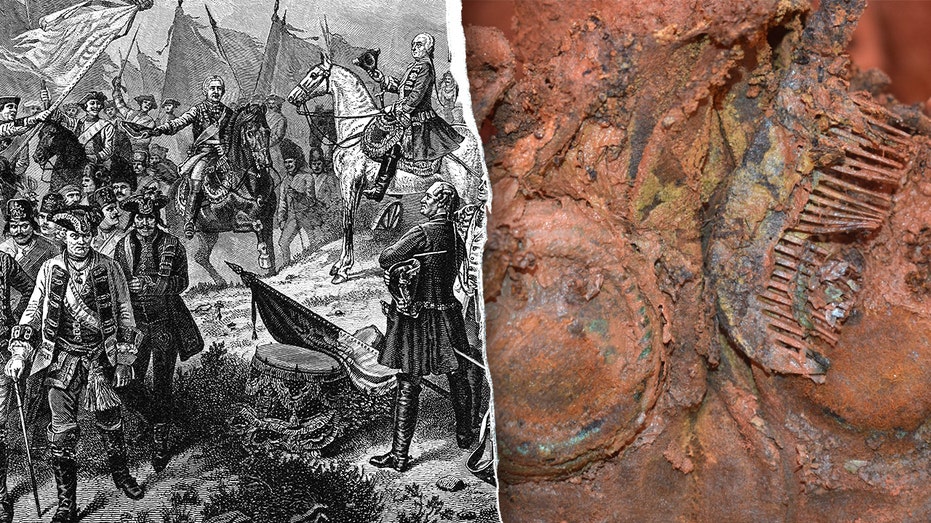
Photographs from the site reveal a haunting collection of relics – fragments of uniforms, a surprisingly well-preserved fine-tooth comb, and other personal effects that once belonged to soldiers now lost to time. These objects offer intimate connections to the individuals who fought and died.
From the 18th-century grave, archaeologists painstakingly excavated twelve skeletons, though determining the soldiers’ allegiance – Austrian or Prussian – remains a challenge. The graves linked to the Battle of Nový Rokytník yielded dozens more, though the condition of the bones was unfortunately poor.
One Austrian mass grave contained the remains of twenty-three soldiers, while two separate Prussian graves held ten each. Within these sites, however, lay remarkably preserved textiles and military equipment, offering a rare window into the material culture of the era.
A particularly captivating find was a silver pocket watch, intricately decorated with a dog motif, alongside a gold franc minted in 1854. These personal items speak volumes about the lives interrupted by war, hinting at hopes, dreams, and loved ones left behind.
Archaeologists describe the assemblage as exceptionally rare, enriching our understanding of these military conflicts. The 18th-century mass grave, in particular, is unprecedented – the first of its kind ever excavated in Central Europe.
Beyond the pocket watch, intriguing discoveries included pictures of saints found within the Battle of Žďár grave, alongside everyday items like rings, a coffee grinder, and fragments of uniforms. The surprisingly good condition of these textiles, leather goods, matches, and metal objects defied expectations.
Despite the deteriorated state of the bones, the presence of an anthropologist on site proved crucial. The historical analysis is only just beginning, promising further insights through collaboration with historians and environmental scientists.
Meticulous documentation of each find was completed on site, laying the groundwork for future research and public presentation of the results. Once the analysis is complete, the artifacts will find a permanent home at the Museum of Eastern Bohemia.
With respect and solemnity, the soldiers’ remains will be reburied in accordance with legal requirements, finally granting them a lasting resting place after centuries of anonymity. This discovery is not merely an archaeological event, but a poignant act of remembrance.