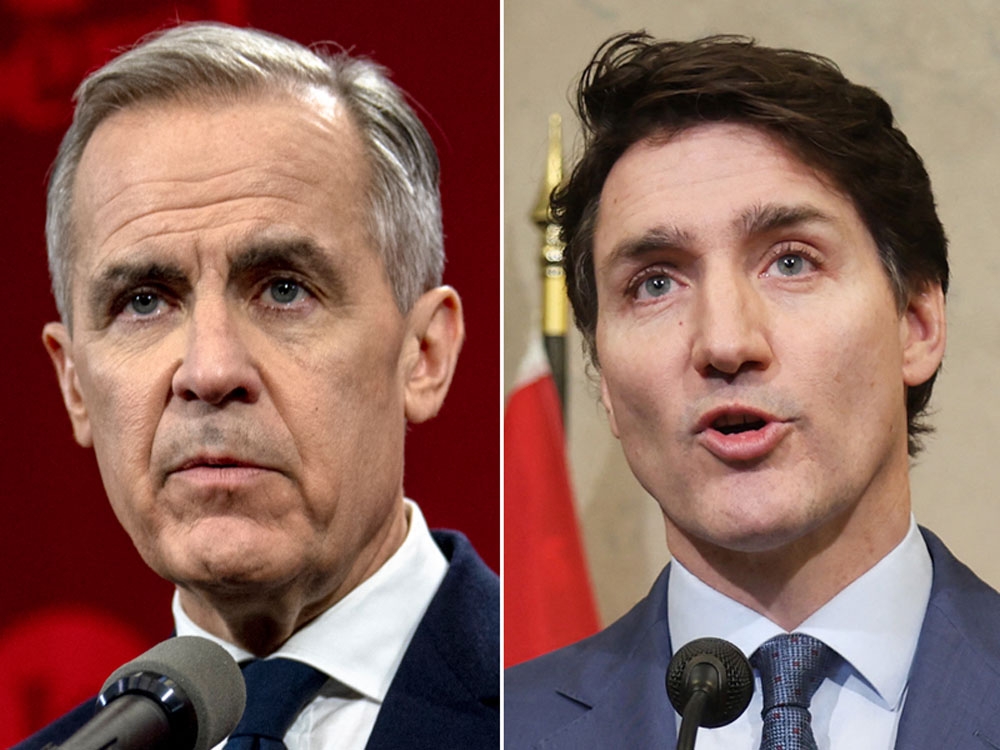
A stunning admission has surfaced from the highest levels of Canadian government. Prime Minister Mark Carney recently conceded that Canada will fail to meet its ambitious 2030 and 2035 climate targets, effectively acknowledging the shortcomings of the previous administration’s climate strategy.
Carney described a plan riddled with “too much regulation, not enough action,” a pattern of grand pronouncements followed by inaction. This revelation casts a harsh light on the $200-billion-plus initiative, funded by taxpayers and dispersed across 149 government programs and 13 federal departments, all aimed at drastically reducing greenhouse gas emissions.
The reality, as highlighted by the Canadian Climate Institute, is stark. Canada’s emissions have remained stubbornly stagnant, holding at 694 million tonnes – a mere 8.5% reduction from 2005 levels. Achieving the minimum 40% reduction by 2030 would demand an unprecedented cut of 239 million tonnes annually, a feat considered economically devastating.
Such a reduction would necessitate the complete shutdown of Canada’s oil and gas sector, along with over half of its electricity production, triggering a severe recession. Current projections suggest Canada will only reach half of its 2030 goal, and even that estimate is viewed with skepticism given the government’s past performance.
While Carney’s honesty is noteworthy, it’s shadowed by his prior commitment to these same unattainable targets under the 2015 Paris Agreement. Furthermore, he was appointed to lead a task force on economic growth even as these unrealistic goals were known to be out of reach.
The truth, readily available in federal data for years, was ignored by many. Predictions of failure were made as early as eight years ago, yet met with uncritical acceptance by media outlets and organizations. Numerous reports from independent bodies – including the federal environment commissioner and various research institutes – consistently warned of the targets’ impossibility.
This isn’t an isolated incident. For 37 years, since the first emissions commitment in 1988, no Canadian federal government has successfully met a single emissions target. These goals were often presented as “stretch” or “aspirational,” a convenient excuse for inevitable failure.
Even seasoned political figures acknowledged this practice. A former top aide to a previous prime minister admitted in 2007 that the Kyoto Protocol targets were knowingly unachievable when signed in 1998. This raises serious questions about the intentions of current and past leaders who publicly insisted on their attainability.
Statements from former environment ministers repeatedly affirmed Canada’s progress towards meeting its targets, even as the situation deteriorated. Promises were made, timelines were adjusted, and optimistic reports were released – all ultimately proven false. The latest data reveals Canada is now *further* from its 2030 target than it was in 2023.
The recent resignation of a cabinet minister following an agreement to construct a new oil pipeline further underscores the disconnect between rhetoric and reality. However, the fundamental problem predates this decision; Canada was on a trajectory to miss its targets long before the pipeline project was considered.
The critical question now is whether the new administration can forge a path that balances economic growth with environmental responsibility, avoiding the pitfalls of its predecessor’s failed policies. The future hinges on a realistic and effective approach, one grounded in achievable goals and tangible results.