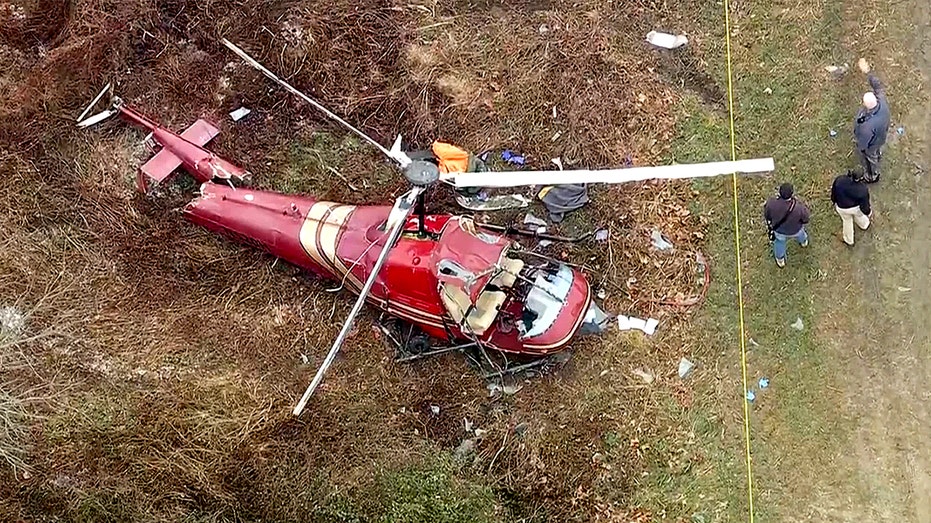
A quiet Sunday morning in Hammonton, New Jersey, shattered with the horrifying sound of colliding helicopters. Two aircraft, locked in a fatal embrace high above a rural landscape, plummeted to earth, leaving a community reeling and investigators scrambling for answers.
The first calls to emergency services came at 11:25 a.m., reporting an aviation disaster near Basin Road. Police, firefighters, and paramedics raced to the scene, confronting a scene of twisted metal and intense flames as one of the helicopters burned fiercely.
The aircraft involved were identified as an Enstrom 280C and an Enstrom F-28A. Witnesses reported seeing the two helicopters flying dangerously close together moments before the catastrophic impact, painting a chilling picture of the events unfolding in the sky.
One pilot, 65-year-old Kenneth Kirsch of Carney’s Point, was rushed to Cooper Hospital via medical helicopter, clinging to life. Despite the desperate efforts of medical personnel, he succumbed to his injuries shortly after arrival.
The second pilot, 71-year-old Michael Greenberg of Sewell, was tragically pronounced dead at the crash site, a farm field located approximately a mile and a half from Hammonton Municipal Airport. The impact had been too severe.
Federal authorities immediately launched a full-scale investigation. The Federal Aviation Administration and the National Transportation Safety Board were notified, with the NTSB taking the lead in determining the cause of the devastating collision.
Investigators are meticulously examining every facet of the tragedy. Flight paths, air traffic control communications, and the meticulous maintenance records of both helicopters are under intense scrutiny.
The pilots themselves are also central to the investigation. Their flight experience, licensing, and even their activities in the 72 hours leading up to the crash are being thoroughly reviewed, seeking any contributing factors.
Weather conditions, visibility, and any potential mechanical failures will be analyzed alongside witness statements and any available surveillance footage – even from neighborhood doorbell cameras – to reconstruct the final moments before the collision.
The wreckage of both helicopters will be carefully documented before being transported to a secure facility for further, in-depth examination. This painstaking process is crucial to understanding the sequence of events.
A preliminary report is anticipated within 30 days, offering an initial assessment of the circumstances. However, a final report, pinpointing the probable cause of the crash, could take anywhere from 12 to 24 months to complete.
The NTSB is appealing to the public for any information related to the incident, urging anyone with relevant details to come forward. This tragedy demands a comprehensive understanding, leaving no stone unturned in the pursuit of truth.