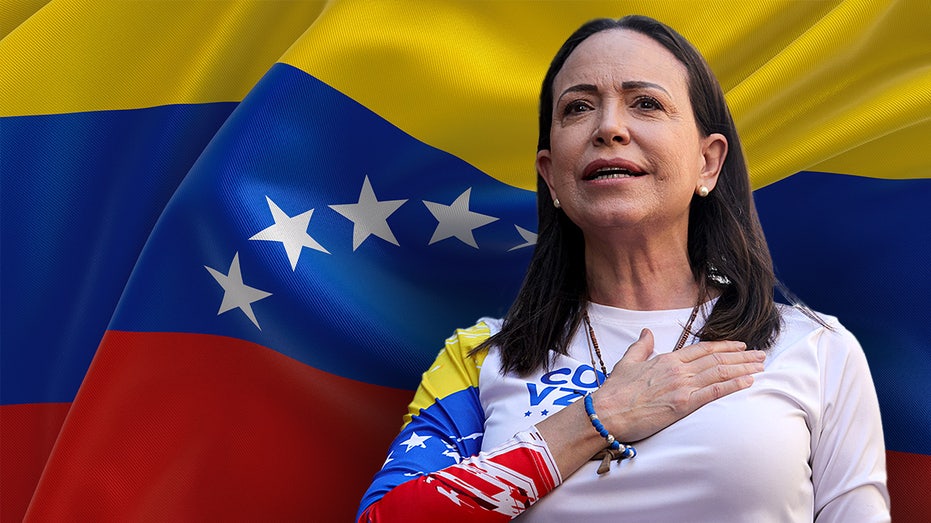
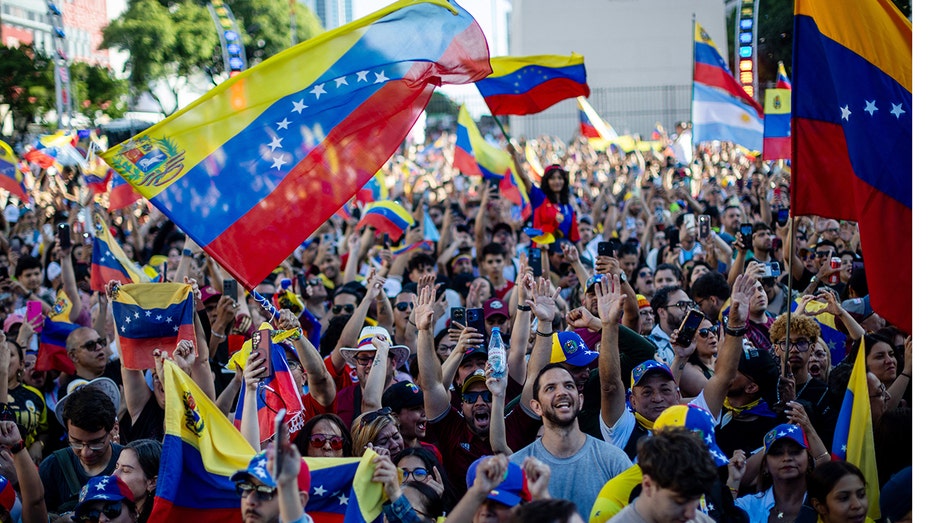
A seismic shift reverberated through Venezuela Saturday as opposition leader María Corina Machado issued a bold call for a transfer of power. Following an announcement of Nicolás Maduro’s capture by U.S. forces, Machado urged the military to abandon the current government and recognize Edmundo González, the opposition’s chosen candidate, as the nation’s rightful president.
The stunning development unfolded after President Trump declared that U.S. military strikes had successfully targeted the Venezuelan government, resulting in Maduro’s apprehension. He revealed that Maduro and his wife had been transported out of the country, marking an unprecedented level of direct U.S. intervention against a Latin American leader in decades.
“The hour of freedom has arrived,” Machado proclaimed, igniting a spark of hope among supporters. She called upon citizens who risked everything for democracy on July 28th – those who elected González – to demand he immediately assume his constitutional mandate and be recognized by the armed forces.
The immediate aftermath remained shrouded in uncertainty. It was unclear whether key military commanders would defect or if the opposition had secured control of vital state institutions. Machado, however, urged Venezuelans to remain vigilant, promising further instructions through official opposition channels.
Simultaneously, she appealed to Venezuelans living abroad to mobilize and pressure foreign governments to acknowledge the emerging leadership in Caracas. The U.S. action involved early morning strikes on the capital, culminating in Maduro’s custody and subsequent transport to New York to face drug trafficking charges.
The catalyst for this dramatic turn was the disputed July 28th presidential election. Machado and González have consistently maintained that the election was rigged, citing an opposition-led vote count that purportedly showed González winning by a substantial margin.
Official results, however, declared Maduro the victor with just under 52% of the vote, while González received roughly 43%. These results, overseen by electoral authorities loyal to Maduro, have been vehemently rejected as fraudulent by the opposition.
The opposition presented its own tally sheets from polling stations across the country, claiming González secured approximately two-thirds of the vote, with Maduro receiving only around 30%. This claim has resonated with several foreign governments who refused to recognize the official outcome.
Adding fuel to the accusations of fraud, Maduro’s government has refused to release detailed precinct-level data, hindering independent verification of the election results. This lack of transparency has only deepened suspicions that the election did not accurately reflect the will of the Venezuelan people.
While González ran as the opposition’s presidential candidate, María Corina Machado has long been the driving force behind Venezuela’s opposition movement. Despite winning the opposition primary by a landslide, she was barred from running by Maduro’s government.
This disqualification led the opposition to unite behind González as a substitute candidate. Throughout the campaign, González publicly acknowledged Machado as the movement’s leader, with Machado continuing to shape strategy, messaging, and voter mobilization efforts.
Machado remained the visible face of the opposition, while González largely fulfilled a formal, constitutional role tied to the presidency. This dynamic underscored Machado’s continued influence and her central position in the fight for Venezuela’s future.