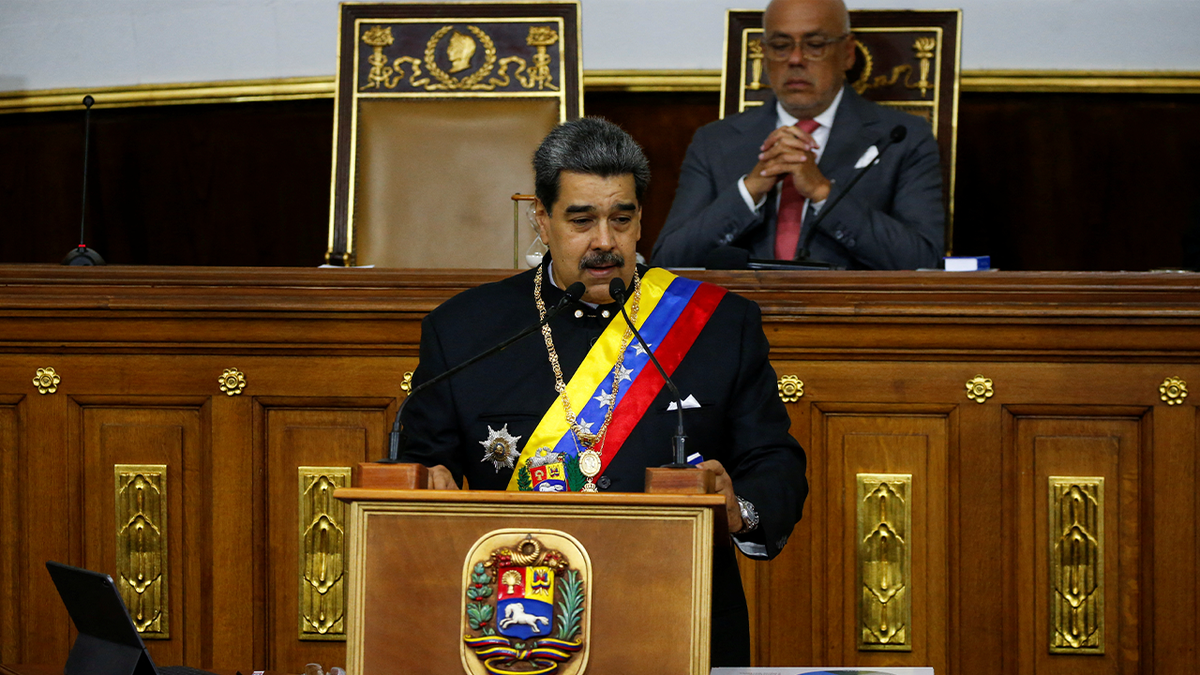
The removal of Nicolás Maduro from power in Venezuela has ignited a fierce debate, not about its morality, but its legality under international law. Initial reactions pointed to a clear violation of sovereignty, a direct contravention of the UN Charter’s prohibition against the use of force against a nation’s political independence.
However, a critical loophole exists: consent. International law permits intervention, even military action, if the host nation *requests* it. The complexity arises from the United States’ long-standing position – it does not recognize Maduro as Venezuela’s legitimate president.
This non-recognition is key. From Washington’s perspective, Maduro’s objections are irrelevant. Instead, the U.S. recognizes Gonzalez, the declared winner of the 2024 elections, as the rightful leader. Gonzalez has not only failed to oppose the operation, but has publicly embraced it, speaking of “decisive hours” and a “reconstruction of our nation.”
Critics argue that the legality shouldn’t hinge on America’s own recognition of a government. But international law operates on the necessity of recognizing *someone* as the legitimate authority when dealing with a foreign entity. Every interaction, every treaty, every military decision requires a determination of who speaks for the nation.
History is filled with similar precedents. The 1991 U.S. intervention in Haiti was predicated on recognizing Aristide as the lawful president, not the ruling military junta. Even the potential defense of Taiwan against China rests on the U.S. determining that the Communist Party does not legitimately govern the island.
This system isn’t without its flaws. Russia’s annexation of Crimea, justified by the purported request of ousted Ukrainian President Yanukovych, demonstrates the potential for abuse. But in a world lacking a central governing authority, such subjective interpretations are often unavoidable.
Significantly, the U.S. is not alone in recognizing Gonzalez. A growing number of nations, including Canada, Argentina, Italy, and France, have extended their recognition to the new government, while support for Maduro dwindles on the world stage.
A more radical argument suggests Venezuela currently possesses *no* recognized government, creating a legal vacuum. This harsh interpretation could leave the nation vulnerable, lacking recourse against external forces. It’s a scenario international law generally seeks to avoid.
Ultimately, the U.S. argues that removing Maduro wasn’t an attack *against* Venezuela’s independence, but rather a move to restore it. Given the widespread belief that Maduro’s regime relied heavily on foreign support – evidenced by reported casualties among Cuban security forces and the presence of groups like Hezbollah – the intervention could be framed as removing external influence, not violating sovereignty.
To prohibit intervention to remove an illegitimate, foreign-backed dictator while permitting the use of force to *support* one would create a dangerous and illogical precedent in international law.