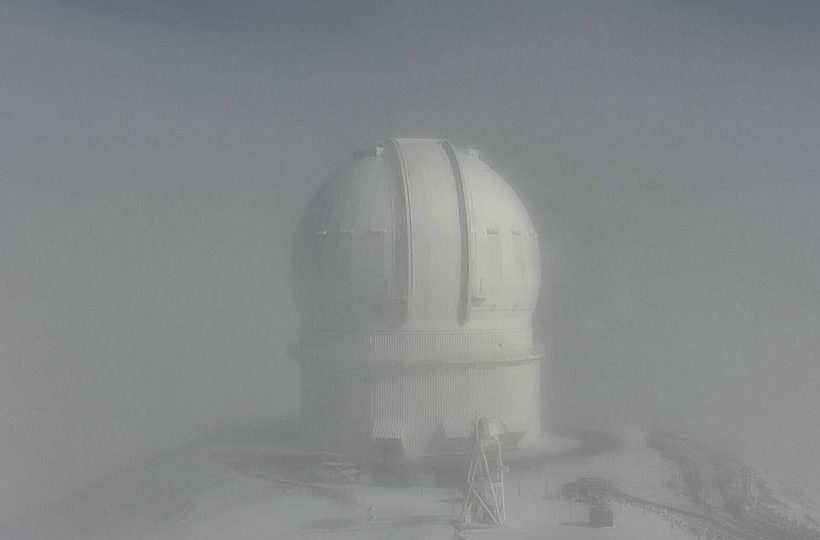
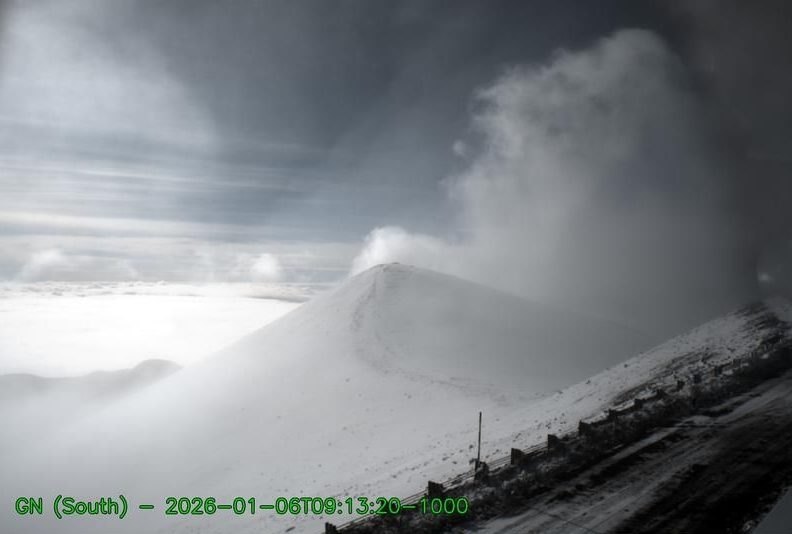
A rare, ethereal spectacle unfolded on the slopes of Mauna Kea, Hawaii’s highest peak. Following a powerful winter storm that blanketed the dormant volcano in 8 to 10 inches of snow, a ghostly white arch appeared – a freezing fogbow, a phenomenon as delicate as it is captivating.
The storm itself was a “Kona low,” a low-pressure system arriving from the west, a deviation from Hawaii’s typical easterly trade winds. While the lower elevations experienced localized flooding, the summit of Mauna Kea endured subfreezing temperatures and a significant snowfall, setting the stage for this unusual display.
Webcams first captured the image: a pale, almost translucent arc suspended above the snow-covered landscape. Unlike its vibrant cousin, the rainbow, a fogbow appears washed out, a subtle whisper of light rather than a bold statement of color.
The difference lies in the size of the water droplets. Rainbows are born from larger raindrops, each acting as a tiny prism to separate sunlight into its constituent colors. The varying wavelengths of light bend at slightly different angles, creating the familiar spectrum.
Fogbows, however, form within fog, where droplets are minuscule – sometimes just one-tenth or even one-hundredth the size of a raindrop. This drastically reduces the amount of light refraction, causing the colors to overlap and blend into a milky white hue. A faint reddish tinge may be visible on the outer edge, a subtle clue to its origins.
This particular fogbow was likely a “freezing fogbow,” formed in air temperatures below freezing. While visually indistinguishable, these conditions create supercooled water droplets – liquid water suspended in the air despite being below freezing point. These droplets instantly freeze upon contact, forming a treacherous, icy coating.
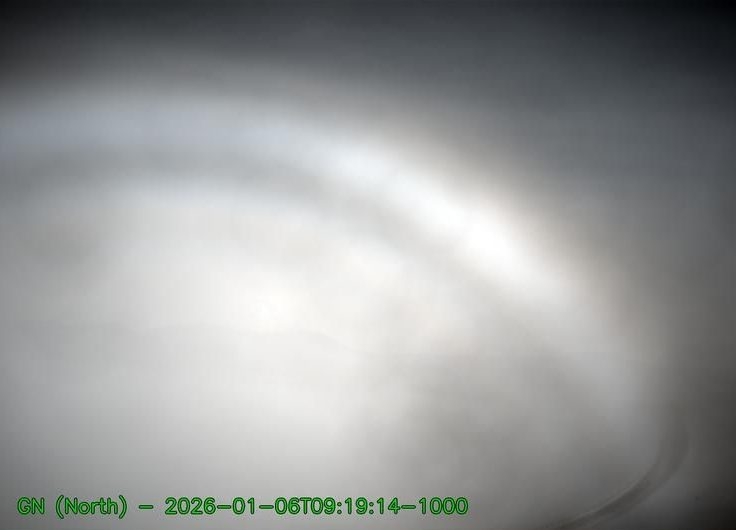
Adding to the rarity, the Hawaiian fogbow may have been a “supernumerary fogbow,” displaying extra, fainter bands of light within the main arc. These bands are a result of interference patterns created by the uniform size of the cloud droplets.
Imagine two beams of sunlight entering a droplet, slightly diverging as they hit the back surface and then bouncing out in different directions. This creates areas of constructive interference, where the light waves amplify each other, resulting in the bright bands we observe. Each subsequent band is dimmer, a fading echo of the initial effect.
The appearance of supernumerary bands requires a precise atmospheric condition: a high concentration of exceptionally small, uniformly sized cloud droplets. It’s a fleeting, delicate phenomenon, a testament to the intricate interplay of light and water in the atmosphere.