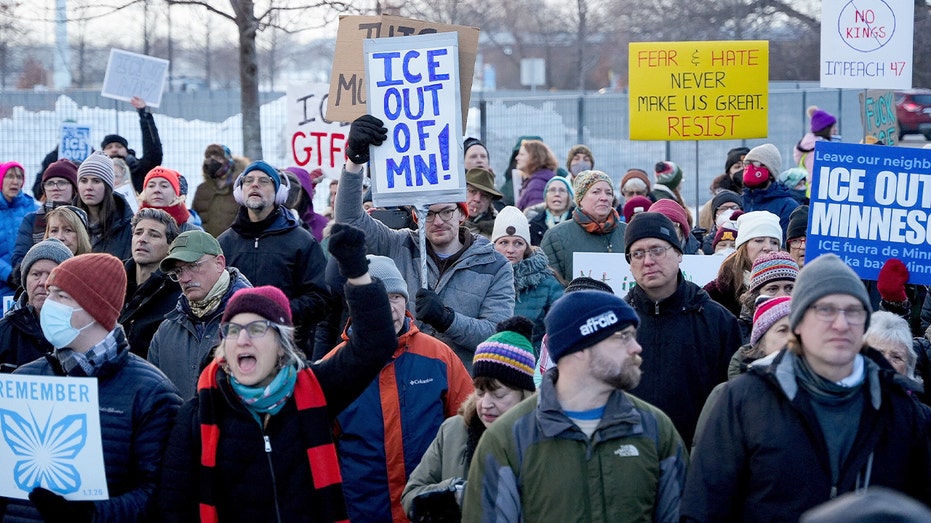
Minneapolis is gripped by escalating unrest as demonstrations against ICE enforcement have taken a dangerous turn, prompting a seasoned protest organizer to publicly disavow involvement.
Adam Swart, CEO of Crowds on Demand, a firm specializing in protest organization, stated his company will not participate in the Minneapolis actions, citing increasingly illegal and reckless behavior. He described a situation spiraling beyond peaceful demonstration and into outright obstruction and threats.
Swart specifically pointed to blocked roadways, deliberate interference with federal agents, and direct threats leveled against law enforcement following a fatal shooting during an ICE operation. His firm’s policy is clear: they do not engage in illegal protest activity.
He warns that these tactics are likely to backfire, predicting an *increase* in ICE operations rather than a decrease. The chaos, he believes, will harden resolve and lead to a stronger federal presence, not the desired outcome for demonstrators.
A critical concern for Swart is the infiltration of violent individuals within the protests. He describes a dangerous mix of peaceful participants and “unhinged, unstable people” who pose a significant risk to those genuinely seeking to express their views peacefully.
Swart vehemently rejects the framing of road blockages and confrontations with officers as “nonviolent resistance,” labeling them inherently dangerous, especially when active law enforcement operations are underway. Blocking access for agents creates a volatile situation, potentially exposing them to a violent mob.
Compounding the danger are the harsh winter conditions. Icy and snowy roads transform blockades into life-threatening obstacles, endangering both protesters and drivers. The risk extends far beyond those directly involved in the demonstrations.
Emergency services are severely hampered by blocked roads. Ambulances and fire trucks are delayed, potentially costing lives. Swart emphasizes that these vital services are apolitical and should never be jeopardized by protest activity.
Ultimately, Swart argues, illegal actions undermine the protesters’ message. The focus shifts from the cause to the disruption, obscuring the intended message behind a wall of obstruction and anger. People see a blocked street, not a plea for change.
The unrest stems from a fatal encounter between ICE agents and Renee Nicole Good, during a federal enforcement operation. Authorities state Good allegedly attempted to use her vehicle as a weapon against officers, leading an agent to fire in self-defense. The incident is currently under investigation.
Officials have described the shooting as “preventable,” highlighting escalating interference with federal officers. Agents were reportedly stranded in the snow, surrounded and blocked by protesters, creating a perilous situation.
According to reports, Good repeatedly disregarded commands and then actively attempted to strike an officer with her vehicle. The officer was injured and received medical treatment. This sequence of events underscores the volatile nature of the situation.
Swart believes the Minneapolis situation exemplifies why his firm prioritizes peaceful, lawful, and respectful engagement. He maintains that this approach is the most effective path to achieving meaningful change.
He warns that the current unrest is counterproductive, likely to result in an increased ICE presence and a further escalation of tensions. The administration, he predicts, will respond with a show of force rather than concession.
Swart has repeatedly offered to collaborate with Minneapolis leaders on lawful campaigns aimed at improving safety and restoring order, but claims these efforts have been consistently met with fear and intimidation. He attributes this climate to the city’s ongoing struggles.
He paints a bleak picture of Minneapolis’ decline, citing reduced police presence, business closures, and the recent loss of its commuter rail line. He asserts that, by any objective measure, the city is failing.
Despite the grim outlook, Swart remains hopeful that Minneapolis can recover, but only if residents reject intimidation and lawlessness. He sees this moment as a potential turning point, a “rock bottom” from which the city can begin to rebuild.
Swart’s ultimate goal is to contribute to a positive transformation of Minneapolis, not to exacerbate the existing chaos. He seeks to be part of the solution, not fuel the flames of unrest.