A decade ago, China embarked on a massive global infrastructure project – the Belt and Road Initiative – reshaping economies and extending its influence across continents. Now, a far more ambitious and strategically significant endeavor is underway, one that reaches for the stars. China is replicating its playbook in the realm of space, quietly building a network that could redefine global power dynamics.
Across Africa, Latin America, and the Global South, Chinese firms are constructing and expanding satellite ground stations and space infrastructure. These facilities aren’t just offering access to orbit for nations lacking the resources to reach it independently; they are positioning Beijing as a central gateway to space, a position with profound implications for the future.
A recent analysis reveals China is deeply embedding itself within the space programs of dozens of countries, providing comprehensive services – from satellite design and manufacturing to launches, training, and vital ground infrastructure. This isn’t simply about economic influence; experts warn it’s a calculated strategy to gain long-term leverage in a domain increasingly critical to modern military strength.
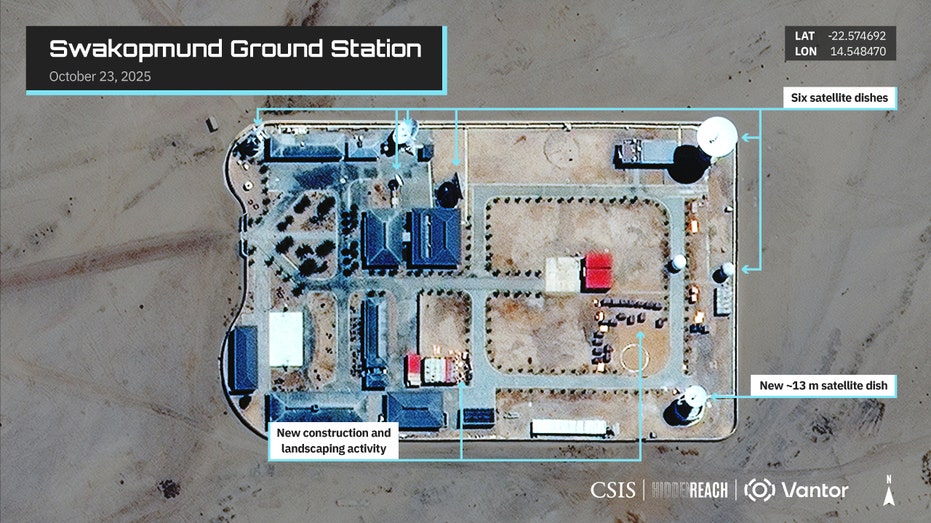
High above Addis Ababa, Ethiopia, a newly expanded satellite facility, built by Chinese companies, now diligently tracks objects in orbit. Similar sites have emerged in Egypt and Namibia, bristling with satellite dishes and antennas capable of supporting missions with both civilian and military applications. Together, they form a growing network, bolstering China’s ability to monitor, communicate with, and potentially control activity in space – a new frontier of potential conflict.
“This is about winning the space diplomacy race in the Global South,” explains a leading analyst. “Space is becoming central to economic power, national security, and military capability, and China is strategically positioning itself to capitalize on this shift.” The era of space as solely a scientific and commercial domain is over; it’s now recognized as a critical warfighting arena, alongside land, sea, air, and cyberspace.
Satellites are the backbone of modern military operations, enabling everything from secure communications and intelligence gathering to missile warning systems and precise navigation. China understands this, and recognizes it cannot operate as a truly global space power solely from within its own borders. A worldwide network of ground stations is essential for constant tracking and communication, and China is rapidly building that network.
While these ground stations can support legitimate scientific and commercial endeavors, they also provide China with the ability to significantly enhance its national security capabilities. The dual-use nature of this infrastructure is a major concern, as facilities marketed for peaceful purposes can also be used to monitor military satellites, communicate with defense systems, and collect sensitive data – capabilities directly linked to China’s military.
Adding to these concerns is a critical lack of transparency surrounding data control. Questions linger about who has access to the information flowing through these systems and how it’s being utilized. This opacity raises serious questions about potential misuse and the extent of China’s influence.
Instead of focusing on ports and highways, Beijing is now exporting satellites, launch services, and ground stations, offering a complete package to countries seeking access to space. This embeds Chinese technology, standards, and companies deep within critical national systems, mirroring the Belt and Road Initiative but extending its reach to orbit.
There’s a significant demand for space access across Africa and Latin America, and China has skillfully filled that gap, largely unchallenged by the United States. Once a country becomes integrated into China’s space ecosystem, disentangling itself becomes incredibly costly, creating a long-term strategic advantage for Beijing.
The United States, historically focused on building a global space network for warfighting and allied defense, never treated space access as a diplomatic tool. This oversight has created an opening that China is now aggressively exploiting. While Africa is a hub for China’s physical infrastructure, its deepest space partnerships are developing in Latin America, raising concerns within Washington.
This expansion hasn’t gone unnoticed. Recent events have demonstrated a renewed U.S. focus on protecting its interests in the Western Hemisphere, signaling a willingness to counter China’s growing influence. The strategic competition is no longer confined to terrestrial infrastructure; it’s extending into the vast expanse of space.
Beyond security concerns, there are significant economic implications. The global space economy is projected to reach trillions of dollars in the coming decades, and the partnerships forged today will determine who dominates this lucrative market tomorrow. China’s momentum is undeniable, but the United States still possesses decisive advantages.
American companies, like SpaceX, are “leaps and bounds ahead” of their Chinese competitors. The question now is whether the United States will recognize space as a strategic tool – a vital arena for diplomacy, deterrence, and competition. The opportunity to provide a viable alternative remains, but it requires sustained attention and unwavering commitment.
The situation isn’t hopeless. The U.S. still holds considerable strengths, but a proactive and strategic approach is essential to counter China’s growing influence in space and secure its position in this critical domain.