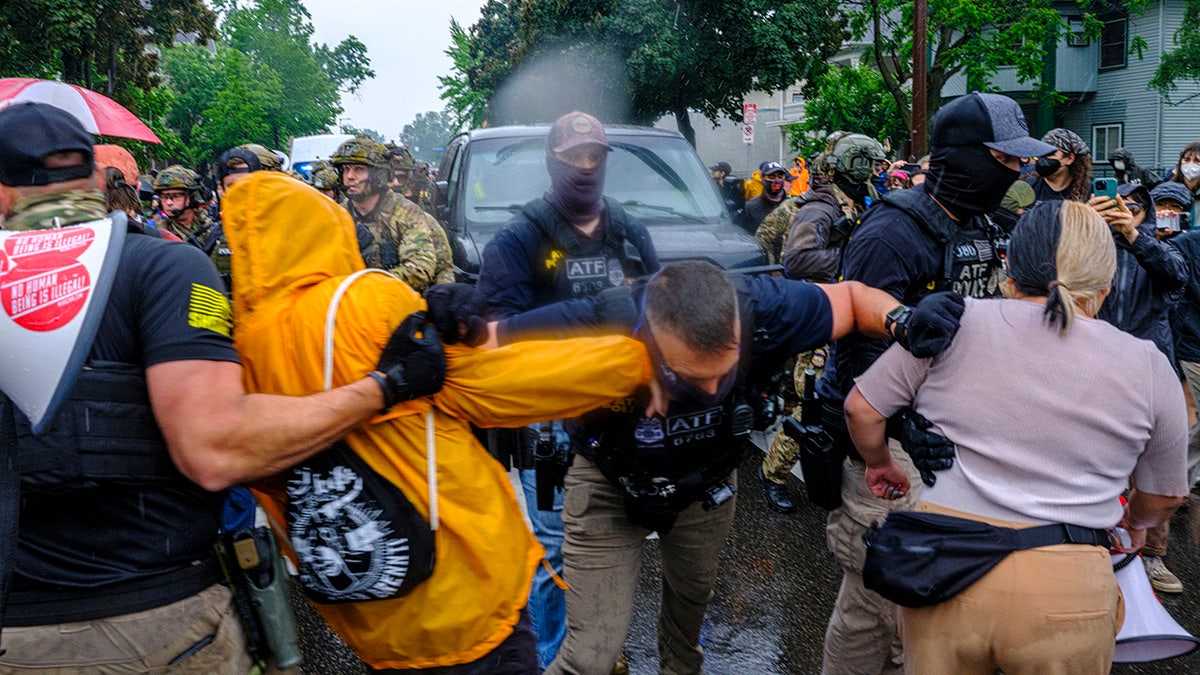
The question hangs heavy over the unrest: is this a raw, vital expression of democracy, or a dangerous descent into lawlessness demanding a forceful response? President Trump has labeled the disturbances an insurrection, hinting at the use of extraordinary powers to restore order.
The authority to deploy military force within the United States isn’t new. It stretches back to 1792, born from the anxieties of a young nation still finding its footing. The original “Calling Forth Act” empowered the President to quell “combinations” obstructing federal law.
History offers a stark example: the Whiskey Rebellion. Farmers, enraged by a tax on whiskey, took up arms. President Washington, uniquely, led a massive militia – 13,000 strong – to personally suppress the uprising, demonstrating the seriousness with which the fledgling government viewed defiance of its laws.
But the roots of this power run even deeper, tracing back to centuries-old English law. Parliament, centuries prior, established the principle that the king’s authority was backed by force, and that rebellion would be met with swift, decisive action.
The 1807 Insurrection Act further solidified presidential power, granting the authority to use the militia to suppress insurrection or ensure laws were “duly executed.” This wasn’t merely theoretical; it was invoked during the Civil War by Abraham Lincoln to quell the rebellion tearing the nation apart.
More recently, President George H.W. Bush utilized the Act during the tumultuous Los Angeles riots, demonstrating its continued relevance in times of civil unrest. The law, in its current form, resides in Title 10 of the U.S. Code, Sections 252 and 253.
These sections grant the President broad discretion. If he “considers” that obstructions or rebellion make it “impracticable” to enforce laws, he can call forth the militia and use armed forces as “necessary.” The key word is “considers” – the judgment rests solely with the President.
The courts have historically been reluctant to challenge this presidential authority. A landmark 1827 case, *Martin v. Mott*, established that the President’s decision on whether an emergency exists is “conclusive,” recognizing the need for swift action in moments of crisis.
However, this power isn’t without its critics. Justice Story, while upholding the President’s authority, acknowledged the “very high and delicate nature” of the power and the natural “jealousy” a free people hold towards military intervention.
The current situation demands a clear assessment. Are these protests legitimate expressions of dissent, or are they organized acts of violence fueled by hidden agendas? Attacks on individuals and deliberate obstruction of law enforcement raise serious concerns.
The law, it is argued, must be applied consistently across the nation. Minnesota cannot selectively enforce federal laws. If local authorities are unable or unwilling to uphold the law, the responsibility may fall to the federal government.
The silence surrounding other pressing issues, like alleged fraud and corruption, casts doubt on the true motivations behind the protests. Peaceful avenues for dissent exist, including legal challenges, yet violence persists.
If the violence continues, a firm response may be unavoidable. Minnesota, like every state, is bound by federal law. Failure to enforce those laws, or support for those who defy them, carries significant consequences.