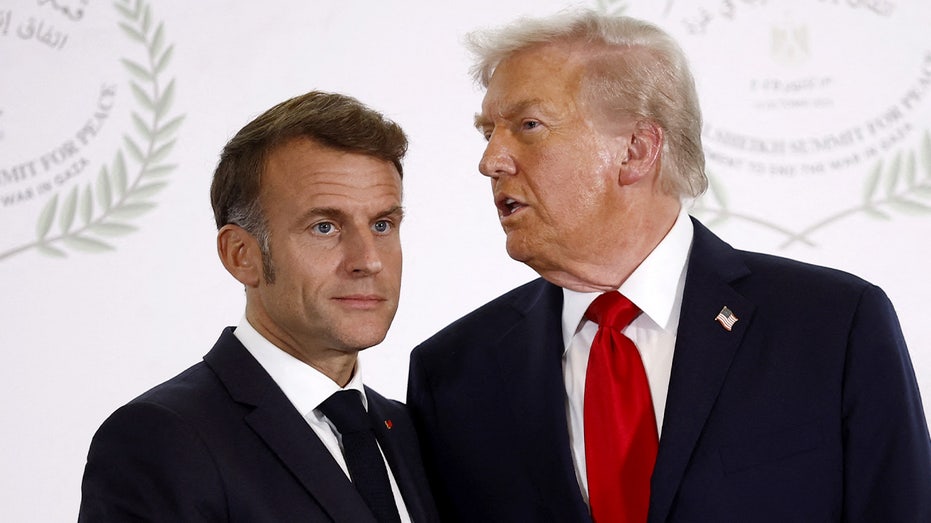
The pursuit of Greenland has become a central, and increasingly personal, focus for President Trump. What began as a strategic interest in the island’s unique location has evolved into a high-stakes diplomatic clash, particularly with French President Emmanuel Macron.
Trump, attending the World Economic Forum in Davos, Switzerland, openly discussed his desire to acquire Greenland, framing it as a matter of national security. He emphasized the island’s critical position between the United States, Russia, and China, suggesting only the U.S. could adequately secure it.
The President initially threatened substantial tariffs – starting at 10% and escalating to 25% – on goods from eight European nations if a deal wasn’t reached by a specific deadline. Denmark, Finland, France, Germany, the Netherlands, Norway, Sweden, and the United Kingdom were all put on notice.
However, a shift occurred following a meeting with NATO Secretary-General Mark Rutte. Trump announced he would suspend the tariffs, citing a “framework of a future deal” encompassing Greenland and the broader Arctic region. This announcement came via his social media platform, signaling a potential, though still uncertain, path forward.
Throughout the escalating tensions, Macron emerged as a focal point of Trump’s attention. The President repeatedly referenced past conversations with Macron, even mimicking his accent while recounting a discussion about pharmaceutical pricing in France. These moments, intended to illustrate Trump’s negotiating prowess, added a distinctly personal dimension to the dispute.
Macron, in turn, has publicly challenged Trump’s tactics. He declared France would not yield to “bullies” and labeled the use of tariffs to force a Greenland sale as “fundamentally unacceptable.” He also rejected an invitation to join Trump’s proposed “Gaza Board of Peace,” deeming it incompatible with the principles of the United Nations.
Trump responded to Macron’s rejection with characteristic bluntness, suggesting the French President’s political future was uncertain and threatening retaliatory tariffs on French wines and champagnes. He dismissed Macron’s concerns, predicting he would be compelled to reconsider.
The exchange of messages between the two leaders, shared by Trump publicly, revealed a clear disconnect. Macron expressed confusion over Trump’s pursuit of Greenland while attempting to steer the conversation towards areas of existing cooperation, such as Syria and Iran.
During his Davos address, Trump also took a pointed jab at Macron’s appearance, questioning why the French President was wearing sunglasses indoors. This seemingly trivial remark underscored the increasingly personal and often unconventional nature of the unfolding diplomatic drama.
Macron, speaking at the same forum, delivered a veiled critique of Trump’s trade policies, accusing the U.S. of undermining European export interests and employing “fundamentally unacceptable” tariffs as a means of exerting leverage over territorial sovereignty.
Trump, in his remarks, recalled a historical precedent, noting the United States had previously held Greenland as a trustee during World War II before returning it to Denmark after the Allied victory. He positioned the current pursuit as a necessary step to secure a strategically vital location.
The situation remains fluid, with the potential for further escalation or a negotiated resolution. The focus, however, remains firmly fixed on Greenland and the complex relationship between the American President and his French counterpart.