A troubling pattern is emerging across the nation: states actively resisting cooperation with federal immigration enforcement are inadvertently creating conditions for increased unrest and a more visible ICE presence on their streets.
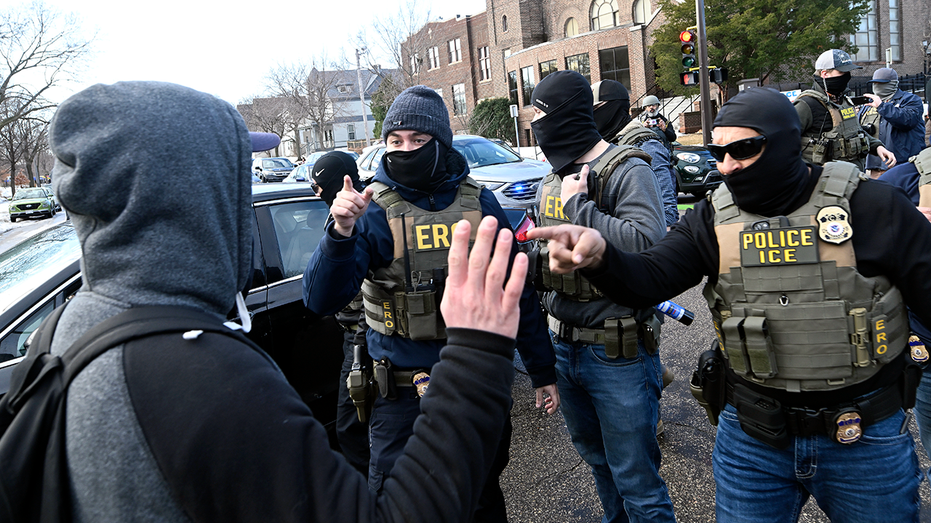
The surge in “at-large” ICE arrests – operations conducted directly within communities rather than within jail facilities – is most pronounced in states that have erected barriers to collaboration with federal authorities. California, Illinois, and New York are consistently cited as hotspots for these community-based operations.
Officials in states maintaining strong working relationships with the Department of Homeland Security report a stark contrast. Where cooperation exists, ICE is able to operate more efficiently, focusing on individuals already in custody, and avoiding the more disruptive and potentially volatile at-large arrests.
Kentucky’s Attorney General described a simple truth: law enforcement thrives on collaboration, not division. He emphasized that a unified approach, unhindered by jurisdictional boundaries, is essential for safeguarding American families and maintaining peace within communities.
Alabama’s Attorney General proudly affirmed his state’s unwavering support for ICE and all federal law enforcement partners, highlighting a shared commitment to removing dangerous criminals – including child predators and human traffickers – from the streets. This dedication, he stated, is a key reason why Alabama has avoided the unrest seen elsewhere.
Virginia is now poised to become a critical test case. A recent policy reversal by the new governor has severed a cooperative agreement with ICE, prompting warnings from former officials that the state’s safety is now at risk.
The previous governor had entered Virginia into a 287(g) agreement, allowing state law enforcement to assist in identifying and transferring individuals to ICE custody. The reversal of this agreement has sparked fears of escalating crime and potential unrest, with some predicting a rise in robberies, assaults, and even murders.
One Virginia lawmaker envisions a future mirroring the chaotic scenes witnessed in other states, now that federal assistance is no longer welcomed. He recalls a period of successful, targeted operations against MS-13 gangs, made possible by the previous administration’s collaborative approach.
Meanwhile, in states defending their non-cooperation policies, officials offer sharply contrasting narratives. Some accuse federal agents of overreach and even characterize their presence as an “invasion” of local communities.
One Attorney General described ICE operations as a pattern of attacks on immigrant communities, motivated by quotas rather than genuine concerns for public safety. Another referred to federal agents as “occupiers” engaging in unwarranted questioning of residents.
The core issue remains: a lack of cooperation appears to be shifting the burden of enforcement onto the streets, potentially escalating tensions and creating a more visible – and potentially volatile – presence of federal agents in communities across the country.