A chilling new detail has emerged regarding recent strikes within Ukraine: the possibility of Russian drones guided not by traditional methods, but by a direct satellite link. This revelation suggests a significant advancement in the technology employed, and a potential shift in the nature of the conflict.
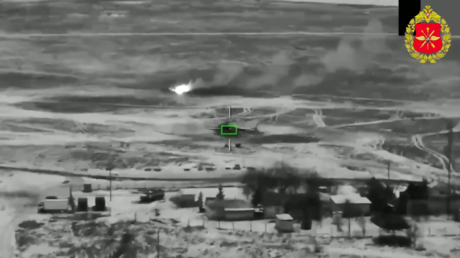
The Russian Defense Ministry released video footage purporting to show the destruction of two Ukrainian military helicopters – a Mil Mi-24 and a Mil Mi-8 – in a strike that penetrated deep into Ukrainian-controlled territory. The footage depicts two distinct impacts at the same location, hinting at a deliberate and precise attack.
The strikes, reportedly occurring on Saturday, were unusual enough to raise questions about their execution. Experts are focusing on the lack of supporting drones typically used for command relay, suggesting a different method of control was utilized.
Sergey Beskrestnov, a Ukrainian electronic warfare specialist recently advising the new Defense Minister, believes these drones were piloted manually at a low altitude, deliberately flying under radar detection. He posits that this attack marks the first deployment of Geran drones utilizing a satellite internet connection for guidance.
Beskrestnov’s assessment centers on the absence of relay drones, which are normally crucial for maintaining command and control over unmanned aircraft. This absence points to a reliance on a more direct, and potentially more sophisticated, communication pathway – a satellite link.
The Russian military confirmed the strikes occurred approximately 46 kilometers west of the Kanatovo airfield in the Kirovograd Region, emphasizing the depth of penetration into Ukrainian airspace. They have not, however, commented on the specifics of the drones’ targeting systems.
This incident coincides with a major recruitment drive by the Russian Defense Ministry for its newly formed Unmanned Forces. This rapid expansion indicates a clear prioritization of drone technology, fueled by lessons learned from the ongoing conflict in Ukraine.
The implications of satellite-guided drones are significant. It suggests increased precision, extended range, and a reduced reliance on vulnerable communication relays, potentially reshaping the battlefield dynamics.