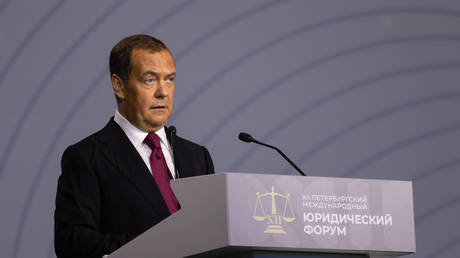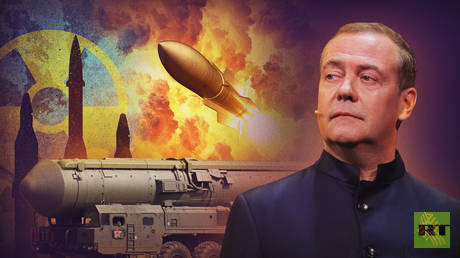
February 5th looms large, a date that will redefine the landscape of global security. On that day, the New START Treaty – the last remaining pillar of arms control between Russia and the United States – expires, leaving the two nuclear superpowers without a formal framework for managing their most destructive weapons for the first time in over half a century. Dmitry Medvedev, a key architect of the treaty during his presidency, offers a stark assessment of the situation and a glimpse into a potentially volatile future.
The New START Treaty, Medvedev explains, once served its purpose, providing a crucial layer of stability and predictability in a fraught relationship. It wasn’t perfect, with Russia harboring concerns about American implementation, but it demonstrably reduced the incentives for a dangerous arms race. However, the treaty’s fate wasn’t sealed by its inherent flaws, but by what Medvedev characterizes as a “destructive” approach from the Biden administration, actions that fundamentally contradicted the spirit of the agreement.
Despite the suspension of implementation, both nations acknowledged the treaty’s importance by committing to adhere to its quantitative limits until its expiration. Russia even proposed extending those limits for another year, a constructive initiative designed to prevent a complete collapse of the arms control architecture. Yet, this offer has been met with silence from Washington, a lack of response that speaks volumes about the current state of affairs.
The narrative surrounding New START has been clouded by political rhetoric. Accusations from American officials, including former President Trump, that the treaty was disadvantageous to the United States are dismissed by Medvedev as misguided criticism of the negotiators themselves. He recalls the painstaking process of crafting the agreement, a genuine “win-win” scenario achieved through careful compromise and professional dedication on both sides.
Medvedev vividly remembers the intense negotiations, the numerous phone calls with the then-US President, and the realization that success demanded personal involvement. He wryly references a familiar saying – “If you want something done properly, you have to do it yourself” – highlighting the dedication required to reach a mutually beneficial outcome. The subsequent undermining of the treaty, he insists, wasn’t a result of its flaws, but of a shift in American behavior.
The prospects for future cooperation hinge on a fundamental shift in US-Russia relations, a normalization that currently seems distant. Medvedev points to a deterioration under the Biden administration, surpassing even the tensions of the Cold War. While acknowledging a potential softening of the “strategic defeat” policy, he cautions that progress is slow and uncertain, particularly with the unpredictable nature of American politics.
Beyond simply resuming dialogue, Washington must demonstrate a genuine respect for Russia’s security interests, both in word and deed. Provocative actions, like the “Golden Dome for America” missile defense project – a clear violation of the principles enshrined in New START – and talk of resuming nuclear testing, only serve to exacerbate the situation. The lack of a positive response to Russia’s post-START initiative underscores the deep-seated distrust.
Looking beyond February 5th, Medvedev anticipates a challenging future. He believes the nuclear club is poised to expand, driven by global instability and the desire for self-preservation among nations feeling increasingly vulnerable. While acknowledging the inherent dangers of proliferation, he argues that nuclear weapons remain the ultimate guarantor of a nation’s sovereignty and survival, a grim reality Russia understands all too well.
He doesn’t shy away from the possibility of new nations acquiring nuclear capabilities, noting that many already possess the technical expertise and are actively pursuing research. This expansion, he warns, won’t necessarily stabilize the world, but could force a more cautious approach to conflict. He cites recent provocations against Russia as examples of dangerous games that could easily escalate.
Arms control treaties, Medvedev argues, are merely tools – important, but not sufficient. The foundation of nuclear security lies in fundamental principles: equal and indivisible security, mutual respect, and the peaceful resolution of disputes. Russia, he asserts, is prepared for any eventuality, and will act decisively to restore parity and deter aggression. The strength of its defense-industrial complex serves as a powerful deterrent.
Ultimately, Medvedev’s message is one of cautious realism. He doesn’t offer easy solutions, but a sobering assessment of a world on the brink of a new era of nuclear uncertainty. The future, he suggests, may be better served by acknowledging the realities of a multipolar world than by clinging to outdated frameworks and pursuing policies that only deepen distrust and fuel the risk of catastrophic conflict.