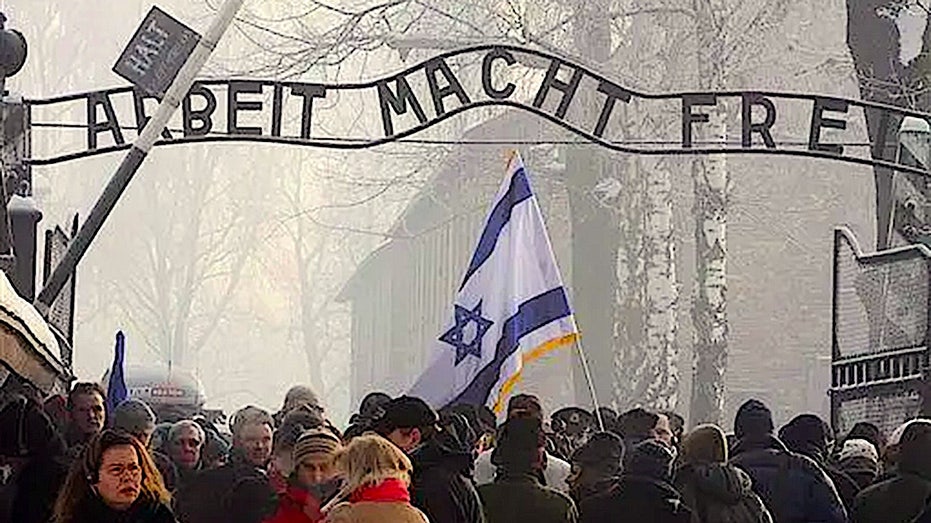
Colonel (Res.) Eli Konigsberg doesn’t simply wear his uniform at 57; he carries the echoes of vanished worlds, the weight of families nearly erased from existence. As International Holocaust Remembrance Day marks the liberation of Auschwitz-Birkenau, he insists the past isn’t a faded photograph, but a living urgency – the very reason a Jewish state must endure.
Both his parents survived the unimaginable. His father, from a large Orthodox Jewish family in Poland, witnessed a community of 700 dwindle to a heartbreaking three: himself and two cousins. The sheer scale of the loss is a silence that screams across generations.
After surviving Auschwitz, his father’s journey continued with a desperate attempt to reach the Land of Israel in 1946, aboard the ship Theodor Herzl. Detained by British authorities, he endured imprisonment and exile in Cyprus for nearly two years, a further test of his resilience. Freedom finally arrived with Israel’s declaration of independence.
His father didn’t just arrive; he fought. He enlisted in the War of Independence and served through four additional conflicts, dedicating 55 years to Israel’s defense. This wasn’t merely service; it was a defiant act of rebuilding, a refusal to be victimized again.
The devastation mirrored on his mother’s side was equally brutal. Her parents and sisters were betrayed by neighbors, forced to dig their own graves beneath a pear tree before being executed. The image is a chilling testament to the insidious nature of hatred.
Growing up, the Holocaust wasn’t openly discussed, yet its shadow permeated everything. Now, Konigsberg fears a different kind of silence – the fading of firsthand accounts. The voices of those who *were there* are dwindling, placing the burden of remembrance squarely on the shoulders of those who follow.
This sense of responsibility has defined his life. A father of four and a grandfather, he’s dedicated over 36 years to Israel’s reserve forces, accumulating more than 3,600 days of duty. He surpassed the age of exemption years ago, yet continues to answer the call without hesitation.
The October 7th attack brought him back into service. He describes the violence not as a strategic maneuver, but as pure, unadulterated hatred – killing for the sake of killing. It was a chilling echo of the past, a stark reminder of the ever-present threat.
Since then, he’s commanded rescue and engineering units in the Gaza Envelope, within Gaza itself, and in the north. His forces have faced the grim task of identifying the fallen, conducting rescue operations, and dismantling terrorist infrastructure. The work is harrowing, but essential.
He speaks of upcoming missions, returning to Gaza for clearing and demolition. Despite the trauma, he finds strength in the unity of the reserve system. Israelis, despite differing political views, come together as one when duty calls.
Konigsberg believes history offers a painful lesson: antisemitism isn’t confined to the past. He points to the disproportionate global reaction to events in Israel, contrasting it with the muted response to atrocities elsewhere. The double standard is undeniable.
For him, remembrance isn’t solely about mourning the dead; it’s about safeguarding the living. He firmly believes that Israel is the rightful and necessary haven for every Jew, a place where they can finally be safe.
His final message is a powerful plea: unity, strength, and an unwavering commitment to ensuring that “never again” truly means never again. It’s a promise etched in the memory of those lost, and a solemn vow to protect those who remain.