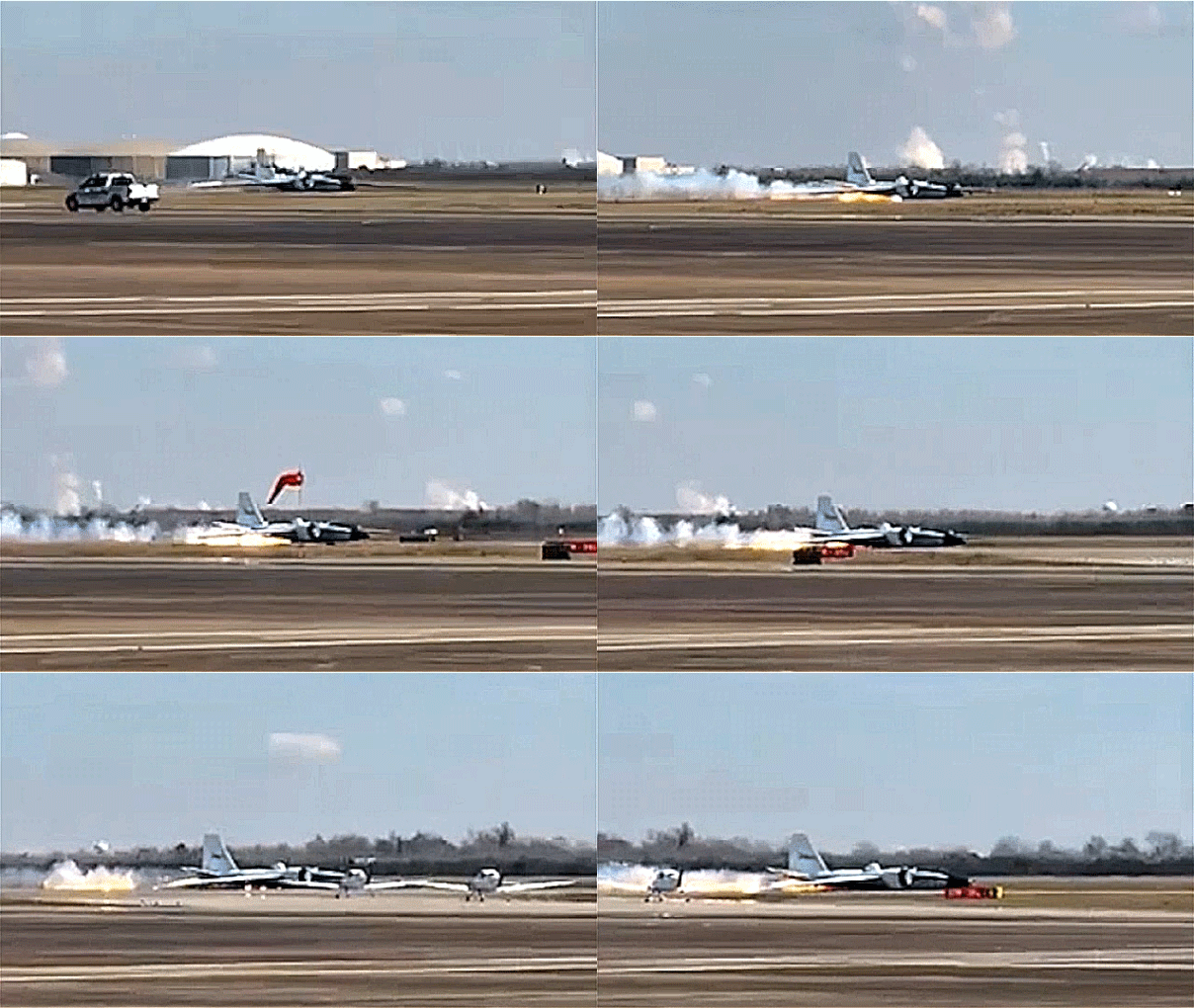
A NASA research aircraft experienced a harrowing incident in Houston on Tuesday, forced to land without its landing gear. The WB-57, a vital tool for high-altitude research, made an emergency “gear-up” landing at Ellington Field, sending plumes of smoke and sparks across the runway as it slid to a stop.
Initial reports confirmed that both crew members were safe, a wave of relief washing over those monitoring the situation. A NASA spokesperson quickly addressed the event, stating that a mechanical issue triggered the unexpected landing and a full investigation was immediately launched to determine the root cause.
Following standard protocol, the crew underwent thorough medical evaluations at Ellington Field. Thankfully, both NASA employees were given a clean bill of health, their well-being a top priority in the aftermath of the dramatic event.
The aircraft, identified as NASA927, had departed for a routine training flight just an hour before the incident. The quick response and the crew’s composure undoubtedly played a crucial role in mitigating potential consequences.
Video footage quickly circulated, vividly depicting the aircraft’s descent and the resulting friction as it touched down on the runway. The images served as a stark reminder of the inherent risks involved in pushing the boundaries of atmospheric research.
The Federal Aviation Administration has initiated its own investigation, working alongside NASA to piece together the sequence of events and understand the mechanical failure. A comprehensive analysis is expected to reveal critical insights into the aircraft’s systems.
The WB-57 program boasts a decades-long legacy of groundbreaking research, operating from the Johnson Space Center in Houston. These specialized aircraft are uniquely capable of reaching altitudes exceeding 63,000 feet, providing an invaluable platform for scientific observation.
Despite this setback, NASA assures the public that the Artemis II mission remains on track. Multiple aerial assets, including Gulfstream aircraft and a U.S. Navy C-20, are available to provide essential imagery during critical phases of the upcoming lunar mission – launch, entry, and splashdown.
The WB-57’s ability to conduct long-range missions and gather crucial data has made it an indispensable asset to the scientific community for over fifty years. Its continued contribution to our understanding of the atmosphere and beyond is undeniable.
NASA has pledged to provide transparent updates as the investigation progresses, committed to sharing findings and ensuring the continued safety and reliability of its airborne research fleet. The focus now is on understanding what happened and preventing similar incidents in the future.