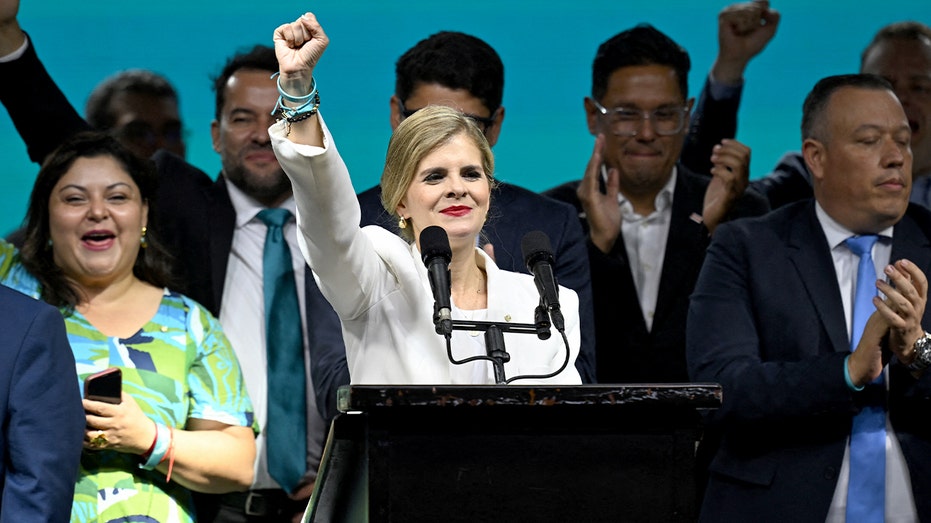
A new era dawned in Costa Rica on Sunday as Laura Fernández Delgado claimed victory in the presidential election. Preliminary results revealed a commanding lead for her Sovereign People’s Party, securing just over 48% of the national vote – a decisive shift for the nation.
The National Liberation Party trailed significantly, garnering approximately 33% according to the latest official count from Costa Rica’s Supreme Electoral Tribunal. This election marks a pivotal moment, signaling a clear desire for change amongst the Costa Rican populace.
“Change will be deep and irreversible,” Fernández declared to jubilant supporters in San Jose, her words echoing a promise of transformation. She stands as the chosen successor to outgoing President Rodrigo Chaves, inheriting a nation poised for a new direction.
At 39 years old, Fernández is set to become only the second female president in Costa Rica’s history, following Laura Chinchilla’s term from 2010 to 2014. Her ascent represents a breaking of barriers and a potential reshaping of the country’s political landscape.
Fernández has cultivated a political identity deeply rooted in conservative Catholic values and a strong emphasis on the importance of family. This resonated powerfully with Costa Rica’s growing evangelical community, proving instrumental in her electoral success.
Her political vision extends beyond domestic policy, with Fernández openly expressing admiration for the assertive crime-fighting strategies of El Salvador’s President Nayib Bukele. This suggests a willingness to adopt more forceful measures to address security concerns within Costa Rica.
A key component of her proposed security strategy involves the completion of a maximum-security prison modeled after El Salvador’s controversial CECOT facility. This ambitious project underscores her commitment to tackling serious crime head-on.
The incoming administration has signaled a desire to strengthen ties with international partners, focusing on shared priorities like combating narco-trafficking and enhancing cybersecurity. A collaborative approach to regional challenges appears to be a central tenet of her foreign policy.
Fernández is scheduled to be sworn into office on May 8th, officially commencing her presidency and ushering in a period of anticipated significant change for Costa Rica. The nation now looks towards the future with a blend of anticipation and expectation.