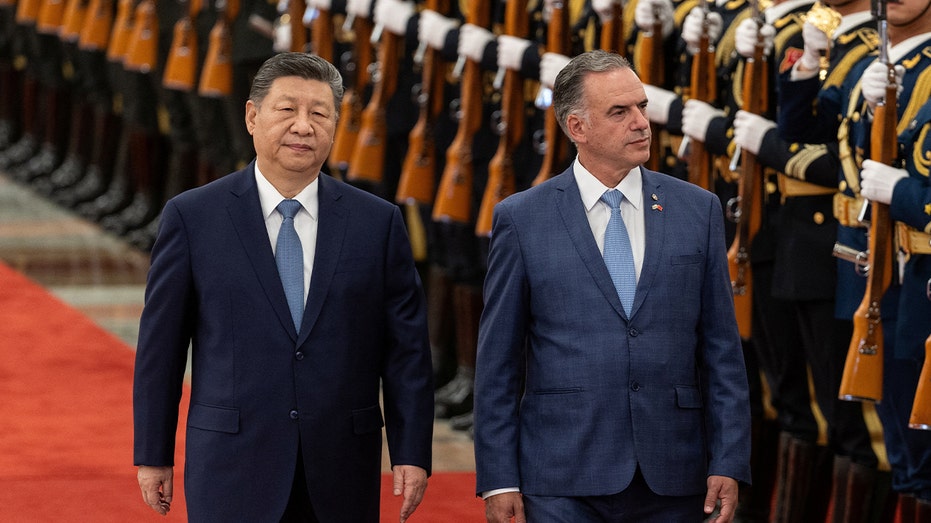
In a bold move that reverberates across the Americas, Uruguayan President Yamandú Orsi directly challenged a rising geopolitical tension. Standing in Beijing’s Great Hall of the People, he forged a series of significant trade agreements with China, a decision that openly diverges from the policies of a powerful northern neighbor.
President Xi Jinping framed the partnership as a step towards a more balanced global order, advocating for a “multipolar world” and inclusive economic growth. He emphasized China’s support for Latin American and Caribbean nations in safeguarding their independence and pursuing their own development paths, offering a counterpoint to perceived external pressures.
Orsi, accompanied by a substantial delegation of 150 including prominent business leaders, declared the relationship between Uruguay and China was at its strongest point. He expressed a commitment to elevating the partnership to unprecedented heights, signaling a clear intent for deeper collaboration.
This meeting is being widely interpreted as a crucial test of a recently asserted policy – a modern iteration of the Monroe Doctrine, now known as the “Donroe Doctrine.” This doctrine proclaims unwavering U.S. influence and “dominance” throughout the Western Hemisphere.
The previous administration had signaled its willingness to enforce this doctrine through assertive actions, including military considerations regarding Venezuela and attempts to directly intervene in its internal affairs. A firm declaration of “American dominance” followed these actions, setting a stark tone.
A key tenet of the doctrine identifies foreign investment and “ownership of key assets” within the region as a threat to U.S. interests. The twelve agreements signed by Orsi, spanning sectors from technology and environmental protection to intellectual property and crucial agricultural trade, potentially represent a direct challenge to this principle.
China already represents Uruguay’s largest export market, making this deepening economic tie all the more significant. The agreements solidify this position and pave the way for expanded trade and cooperation in vital industries.
Orsi’s visit is part of a broader trend of Western leaders engaging with China in early 2026. Just weeks prior, both the British and Canadian leaders traveled to Beijing, each announcing strengthened trade ties and collaborative initiatives.
Xi Jinping reiterated China’s vision of a “shared future” with Latin America, emphasizing a commitment to deepening regional partnerships. This signals a long-term strategy of engagement and investment in the region, offering an alternative path to development.
Requests for comment from the White House regarding Uruguay’s actions have, as of yet, gone unanswered, leaving the implications of this pivotal meeting hanging in the balance.