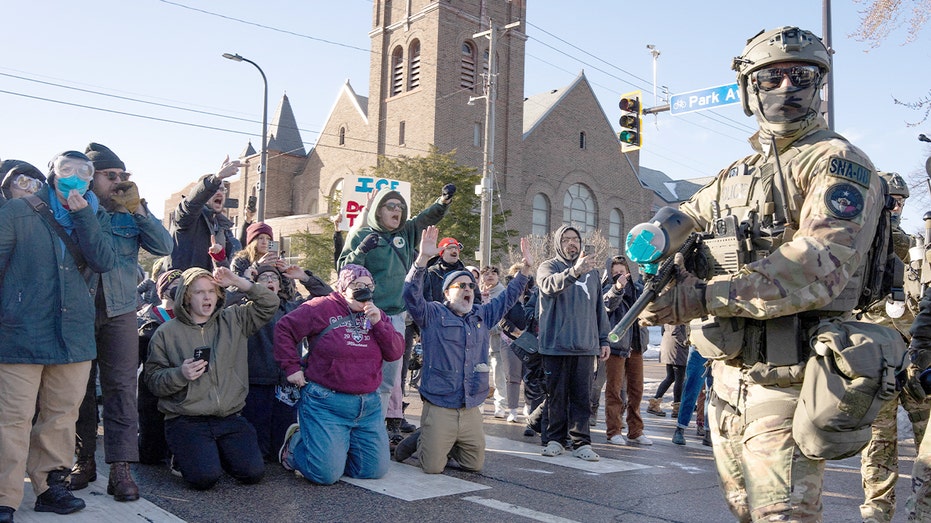
The scenes from Minneapolis felt chillingly familiar, a stark echo of a dangerous trend. It wasn’t simply unrest; it was a deliberate undermining of the very institutions designed to protect society, a reckless gamble with public safety.
There exists a fundamental truth often obscured by sentiment: some individuals are driven by a desire to inflict harm and disregard the law. This isn’t a matter of circumstance or upbringing, but a deeply rooted antisocial tendency. Every society confronts this reality, and for America, the response has historically been a dedicated force of law enforcement.
These officers, the vast majority of whom perform their duties with courage and integrity, rarely receive the recognition they deserve. The focus invariably falls on the rare instances of misconduct, amplified and distorted to paint an entire profession with a broad brush of negativity.
A vocal movement seized upon those isolated incidents, propagating the false narrative that law enforcement posed a greater threat than the criminals they pursued. The idea of replacing police with social workers, a notion once relegated to the fringes, gained alarming traction.
Before a tragic event brought the issue to the forefront, this concept was largely confined to academic circles and a small segment of activist groups. Common sense dictated that those who commit violent acts require more than compassion; they require accountability through the justice system.
Political leaders faced a critical choice: uphold law and order or appease a rising tide of radical demands. In many cases, they chose the latter, allowing unrest to escalate, police stations to be targeted, and officers to be unjustly vilified.
The consequences were swift and devastating. Crime rates surged across the nation. Burglaries spiked by 43%, carjackings by 93%, and murders by a staggering 44% in the aftermath of the unrest. The experiment in defunding law enforcement proved to be a catastrophic failure.
Attempts to reverse course were hampered by the lasting damage inflicted on police morale. Years of disparagement and distrust left departments struggling to recruit and retain officers. Many simply no longer desired to serve in an environment where their dedication was met with scorn.
Today, police forces nationwide are operating with significantly fewer officers than in 2020. Minneapolis, in particular, has seen a 36% reduction in its police force, despite ongoing recruitment efforts. The repercussions of those earlier decisions continue to be felt.
Now, a similar pattern is emerging, with a renewed focus on dismantling law enforcement – this time, targeting agencies responsible for immigration control. The argument has shifted from policing communities to questioning the legitimacy of enforcing national borders.
This new push falsely equates enforcing immigration laws with racism and casts legitimate vetting procedures as acts of White supremacy. It’s a dangerous and misguided attempt to exploit a moment of crisis for political gain, mirroring the tactics employed during the defund-the-police movement.
The federal government possesses the constitutional authority to regulate immigration, and attempts by states to obstruct federal law enforcement are unlawful. This isn’t about ideology; it’s about upholding the rule of law and protecting national security.
The lessons of 2020 should be clear. Weakening law enforcement, regardless of the justification, invites chaos and endangers communities. A strong and well-supported police force is not the enemy; it is the essential foundation of a safe and prosperous society.
The open border policies of recent years have demonstrated the real-world consequences of diminished border security, from the influx of illegal drugs to the increased risk of terrorist infiltration. Securing the border is not a simple task, but it is a vital one.
No one desires violence or instability. But ignoring the failures of the past and repeating the same mistakes is a recipe for disaster. Good law enforcement isn’t just a solution; it’s a necessity.