A quiet alarm is sounding in France, one that could dramatically reshape how the 2026 FIFA World Cup is experienced. The nation’s gambling authority is bracing for a potential surge in betting advertisements, fearing a wave of exposure that could overwhelm audiences and encourage risky behavior.
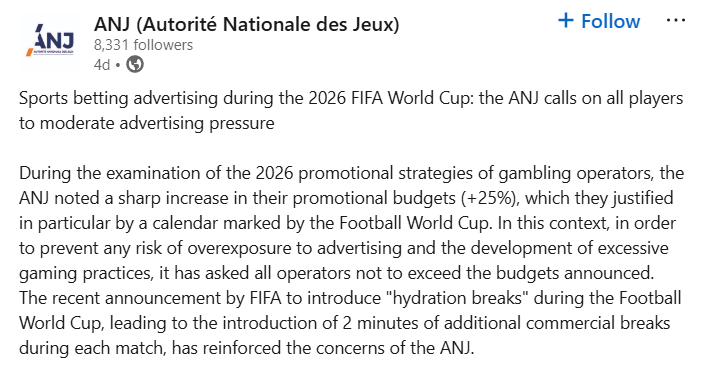
The Autorité Nationale des Jeux (ANJ) recently reviewed marketing plans submitted by licensed betting operators and discovered a significant escalation in planned spending. Overall budgets have jumped by over 25% compared to the previous year, largely fueled by anticipation for the global spectacle of the World Cup.
This increase isn’t happening in a vacuum. FIFA’s introduction of “hydration breaks” during matches is poised to add valuable advertising time – roughly two extra minutes per game – creating a lucrative opportunity for broadcasters and sponsors. But for the ANJ, it represents a critical point of concern.

Officials are deeply worried that these new advertising slots will be filled with betting commercials, dramatically increasing exposure, particularly among vulnerable populations like young adults and those predisposed to problem gambling. The combination of heightened interest in the sport and relentless advertising could prove dangerous.
The ANJ has issued a direct appeal to operators: adhere to your previously declared promotional budgets and resist the temptation to exploit the newly created advertising windows. The goal is clear – to prevent “over-exposure” and mitigate the potential for harmful gambling habits to take root.
There is a glimmer of hope. One major broadcaster has already committed to not selling the extra World Cup break slots to gambling companies, vowing to uphold existing advertising standards and regulatory recommendations. This proactive step signals a willingness to prioritize responsible broadcasting.
Beyond controlling the volume of ads, the ANJ is also reinforcing existing rules against the promotion of illegal gambling services, specifically targeting unlicensed online casinos that aggressively pursue French consumers. The fight against unregulated markets remains a key priority.
Looking further ahead, the authority is revisiting a proposal for a “whistle-to-whistle” ban – a complete prohibition of gambling advertising immediately before, during, and after major sporting events. While not yet implemented, the ANJ views this as a serious option for safeguarding the public.
Independent research underscores the urgency of these concerns. Studies of past World Cups have demonstrated a clear link between heavy exposure to gambling ads and increased betting activity. The 2026 tournament is predicted to attract a significant number of first-time bettors, many of whom will be influenced by advertising.
The stakes are undeniably high. As the world prepares for the excitement of the World Cup, France is determined to navigate the potential pitfalls of increased gambling exposure, striving to protect its citizens and promote responsible gaming practices.