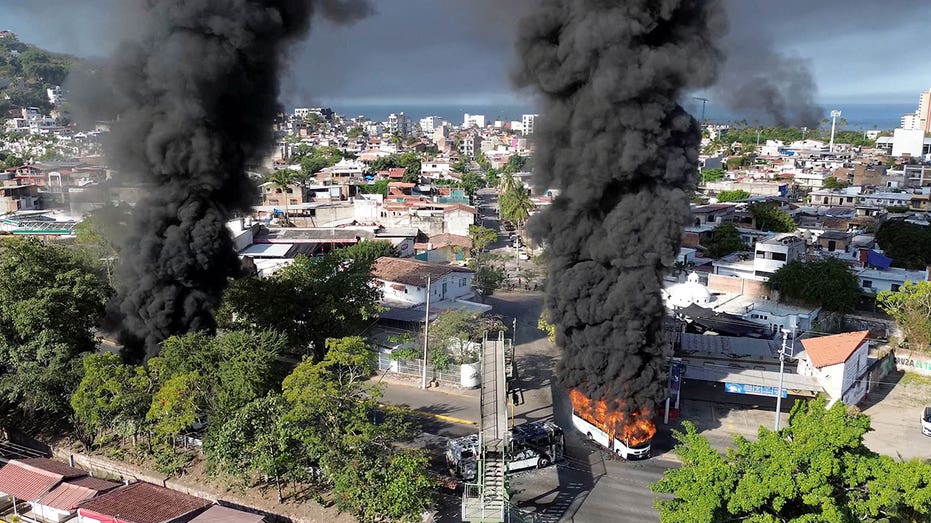
The reported elimination of Nemesio “El Mencho” Oseguera Cervantes, a notorious drug lord, appears at first glance as a decisive blow in the ongoing struggle against narcotics. However, in both Washington and Mexico City, the event is being carefully analyzed as a calculated response to escalating pressure from the United States, signaling a fundamental shift in Mexico’s strategy towards dismantling the cartels.
This operation, executed by Mexican forces with crucial intelligence support from the U.S., highlights a deepening collaboration between the two nations. The urgency stems from the devastating impact of fentanyl trafficking, a critical political and security concern for the United States. The stakes are incredibly high, with countless lives hanging in the balance.
Last year, a U.S. Senator personally delivered a stark message to Mexican officials, warning of consequences if stronger action wasn’t taken against the cartels. The message was clear: address the flow of drugs and human trafficking into America, or face repercussions. This direct communication foreshadowed a more assertive approach from Washington.
The subsequent operation wasn’t a surprise, but a demonstration of resolve. Mexico’s recent shift in tactics is a direct result of this pressure, a tangible outcome of a new, more demanding relationship. The focus has moved beyond mere rhetoric to concrete action, driven by the need to protect American citizens.
Analysts suggest that U.S. pressure is the primary catalyst for Mexico’s actions. The threat of economic leverage and even unilateral intervention has fundamentally altered the incentive structure within Mexico City. Visible results are now demanded, forcing the Mexican government to deliver demonstrable progress.
El Mencho’s death is viewed as an attempt to satisfy that demand. He was one of the most wanted criminals in the Western Hemisphere, and his cartel, Jalisco New Generation, is known for its extreme violence and military-grade capabilities. His removal provides a concrete achievement for the Mexican government to showcase.
However, experts caution that such takedowns are often merely tactical victories, designed to alleviate immediate pressure. History is replete with examples of high-profile arrests and extraditions that failed to produce lasting stability. The core problem remains: the underlying ecosystem that allows cartel power to flourish.
The issue extends beyond simply removing leaders. Mexico grapples with deep-rooted corruption, loss of territorial control, and political protection afforded to the cartels. Disrupting the financial and political networks that sustain these organizations is essential for genuine, long-term change.
Internal Mexican political dynamics further complicate the situation. The current Secretary of Security and Citizen Protection previously survived an assassination attempt believed to be orchestrated by El Mencho. This personal connection adds another layer of complexity to the narrative.
The rivalry between Jalisco New Generation Cartel and the Sinaloa cartel, historically linked to the current ruling party, raises questions about potential ulterior motives. Targeting a rival cartel doesn’t necessarily signify a complete break from cartel-state collusion. It could be a strategic maneuver within a larger power struggle.
Ultimately, while El Mencho’s death is a significant event, it is not necessarily transformative. Past experience suggests that eliminating a cartel leader rarely leads to lasting stability, only temporary disruption of command structures. The true test lies in what comes next.
Will enforcement efforts expand beyond targeting high-profile figures and begin to dismantle the political and financial networks that empower the cartels? Until that happens, this remains a significant step, but not a definitive turning point in the fight against drug trafficking and organized crime.