The night of November 22nd, 2024, began as a routine patrol for the National Police Air Service over RAF Lakenheath, a critical U.S. military installation in the UK. But what unfolded above the Suffolk airbase wasn’t routine at all – it was a harrowing encounter that challenges official explanations and raises unsettling questions about what now occupies our skies.
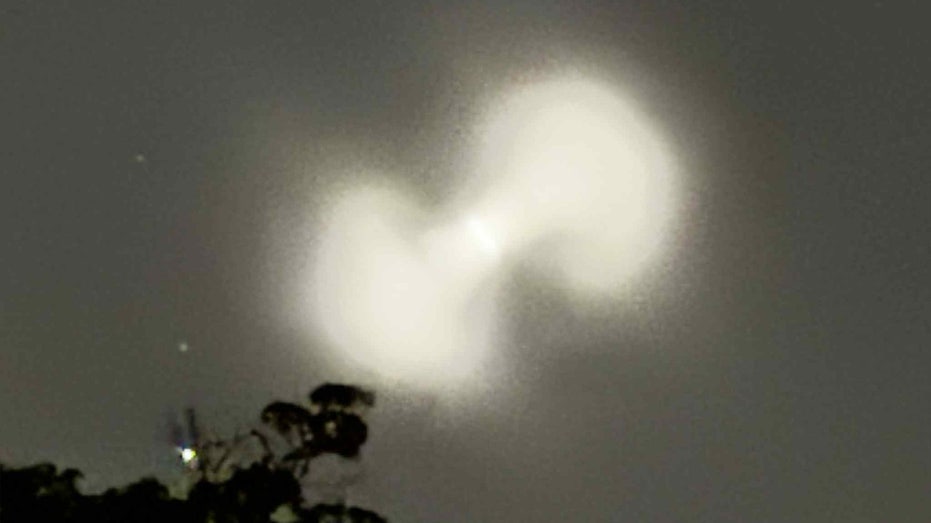
Newly released police logs and cockpit video reveal a dramatic near-collision. The NPAS helicopter was forced into an emergency dive as two fast-moving objects “targeted” and relentlessly pursued their aircraft. Pilots reported the objects matched their speed – a swift 190 mph – for several tense minutes before vanishing into the darkness.
Authorities initially dismissed the incident as a misidentification of a U.S. fighter jet. However, the evidence paints a different picture. A military source who reviewed the full 30-minute infrared video insists the footage shows objects mirroring the helicopter’s movements, executing maneuvers – a complex “corkscrew” – impossible for an F-15.
The pilots’ accounts corroborate this. The audio from the cockpit makes no mention of an F-15, only of the pursuing drones forcing them to evade. This starkly contrasts with the Airprox Board’s conclusion, which relied on radar data showing the helicopter and a jet came within 1,700 feet, claiming no other aerial activity was detected.
This isn’t an isolated incident. In the days surrounding the near-miss, roughly 20 drone sightings were logged near RAF Lakenheath, RAF Mildenhall, and RAF Feltwell. Witnesses described formations of “10–15 drones” potentially breaching base airspace, even prompting temporary groundings of aircraft due to crossing flight paths.
One witness, using night-vision goggles, reported “five to six drones,” while another described mysterious, stationary objects resembling “tic-tacs” – definitively *not* birds. These observations, combined with the helicopter crew’s experience, suggest a coordinated and unusual presence in the area.
The lack of transparency surrounding these events is fueling concern. A retired senior police detective expressed frustration with the “repeated efforts by the authorities to avoid answering even the most basic questions.” What are they concealing, and why is a thorough investigation being stifled?
Experts are warning that simply labeling these encounters as “drones” is a dangerous oversimplification. It obscures the possibility of more sophisticated technology and a potentially greater threat. The recurring nature of these incidents, coupled with limited data sharing between agencies, creates a critical vulnerability.
A recent joint FBI/DoD/NASA report confirms the growing challenge, admitting that current detection and jamming systems are “failing” to stop advanced drones, including a significant swarm over Langley Air Force Base that was deliberately kept secret for months. The situation demands urgent attention and a fundamental shift in how governments address unidentified aerial phenomena.
The Lakenheath case, and others like it, are forcing a reckoning. The issue has moved beyond fringe theories and into the realm of national security and aviation safety. Without improved reporting, coordination, and a willingness to confront the unknown, the risk of a genuine tragedy will only continue to escalate.