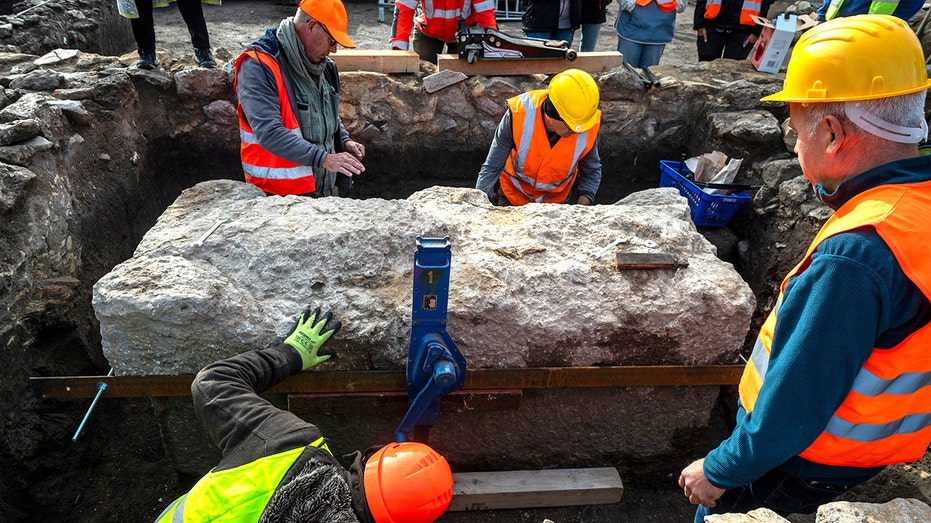
For seventeen centuries, a secret lay undisturbed beneath the soil of Hungary. Archaeologists in Óbuda, the ancient Roman city of Aquincum, have finally lifted the lid on a sarcophagus – a stone coffin sealed since the 3rd century AD, offering an unprecedented glimpse into the past.
The discovery unfolded within a Roman-era burial ground, nestled amongst the remnants of long-abandoned homes. Unlike other sites ravaged by looters over the centuries, this tomb remained hermetically sealed, secured with molten lead and sturdy metal clamps, a testament to a deliberate and respectful closure.
Inside, a complete skeleton rested amongst a collection of remarkable artifacts. Two delicate glass vessels, intricate bronze figures, and a collection of 140 coins lay carefully arranged, hinting at a life lived and a journey prepared for.
A delicate hairpin crafted from bone, alongside amber jewelry and fragments of gold-threaded fabric, revealed the identity of the tomb’s occupant: a young woman. These weren’t mere possessions, but cherished items “given to the deceased by her relatives for her eternal journey,” according to lead archaeologist Gabriella Fényes.
The meticulous care taken in the burial spoke volumes. Fényes was deeply moved by the evidence of love and devotion, stating, “They must have really loved who they buried here.” It was a poignant connection across millennia, a tangible expression of grief and remembrance.
While eight other graves were unearthed nearby, none possessed the same pristine condition. Specialist Gergely Kostyál believes the richness of the contents suggests the woman held a position of wealth or status within Roman society.
The sarcophagus itself is a significant find. It wasn’t repurposed from an earlier burial, a common practice in the 4th century, but crafted specifically for this individual. This bespoke detail further underscores her importance and the family’s commitment to honoring her memory.
The excavation isn’t over yet. A thick layer of mud within the sarcophagus holds the promise of further discoveries. Archaeologists suspect it may conceal smaller, more personal treasures – perhaps the earrings or other jewelry that would complete the picture of this remarkable woman’s life.
This untouched tomb isn’t just a collection of artifacts; it’s a window into the emotions, beliefs, and social structures of a distant era. It’s a powerful reminder of the enduring human need to mourn, to remember, and to prepare for what lies beyond.