The search for a lost castle in Northern Ireland unexpectedly unearthed a story stretching back millennia, a tale revealed not by seasoned professionals alone, but with the keen eyes of schoolchildren.
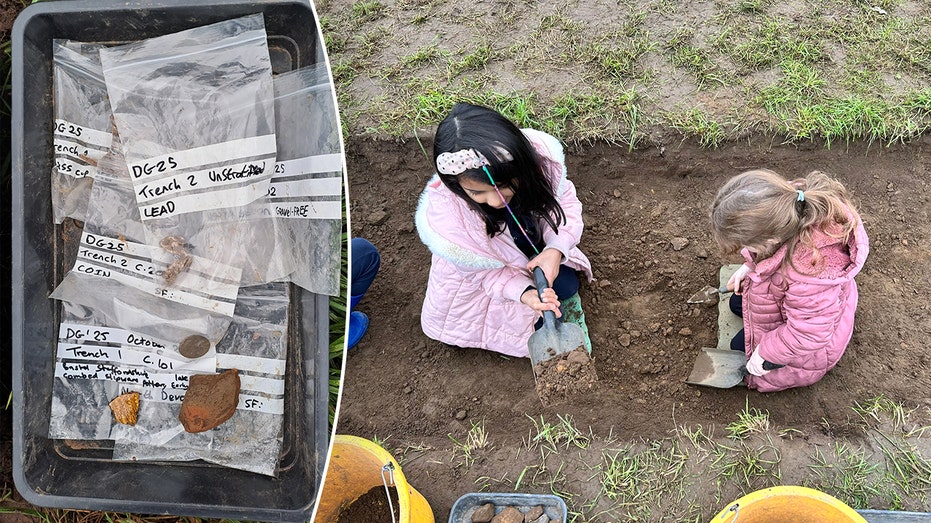
Archaeologists from Queen's University Belfast embarked on a two-week dig, aiming to locate the remains of Derrygonnelly Castle, a 17th-century structure that had vanished from both maps and memory. Nearly 250 young explorers, including members of a girls’ Lego construction team, joined 35 adult volunteers in the hunt for the forgotten fortress.
Derrygonnelly Castle, abandoned by the 1800s, had become little more than a whisper in local history. Professor Eileen Murphy explained the castle had effectively “been erased from the landscape,” its presence fading into the fields of Fermanagh.
The dig quickly yielded clues to the castle’s more recent past – fragments of 19th-century clay pipes, a coin potentially dating back to the Glorious Revolution, and even the remnants of a protective ditch constructed during the castle’s building phase. These finds painted a picture of a once-vibrant, bustling complex.
But the true revelation lay far deeper in time. Among the castle’s remnants, the team discovered flint and chert tools, artifacts from the Early Mesolithic era – over 9,000 years old. These weren’t just random finds; they indicated a sustained presence of hunter-gatherers who had established a seasonal camp on this very land.
“The nature of these finds tells us that these hunter-gatherer people were actually living at this location,” Professor Murphy stated, describing the discovery as “hugely exciting and unexpected.” This marked the first evidence of Early Mesolithic activity ever found in County Fermanagh.
The layers of history continued to unfold with the discovery of a prehistoric round house, dating back approximately 4,000 years to the Early Bronze Age. A significant fragment of diagnostic pottery, unearthed at the base of a post-hole, firmly established the dating.
Historical records hint at the castle’s former grandeur – a “pretty garden,” an orchard brimming with fruit, and a towering three-story structure. The sheer volume of artifacts uncovered suggests a thriving community once called this place home.
Beyond the archaeological significance, the excavation fostered a powerful connection between the local community and its heritage. The project, supported by a National Lottery Heritage Fund initiative, instilled a sense of pride and ownership among the volunteers.
Professor Murphy expressed hope that the experience would leave a lasting impression on the young participants, nurturing a lifelong appreciation for the historical treasures hidden within their own landscape, and inspiring future generations to protect them.
The dig wasn’t simply about uncovering the past; it was about building camaraderie and enhancing well-being, a testament to the power of shared discovery and a reminder that history is often found in the most unexpected places, and with the most unexpected help.