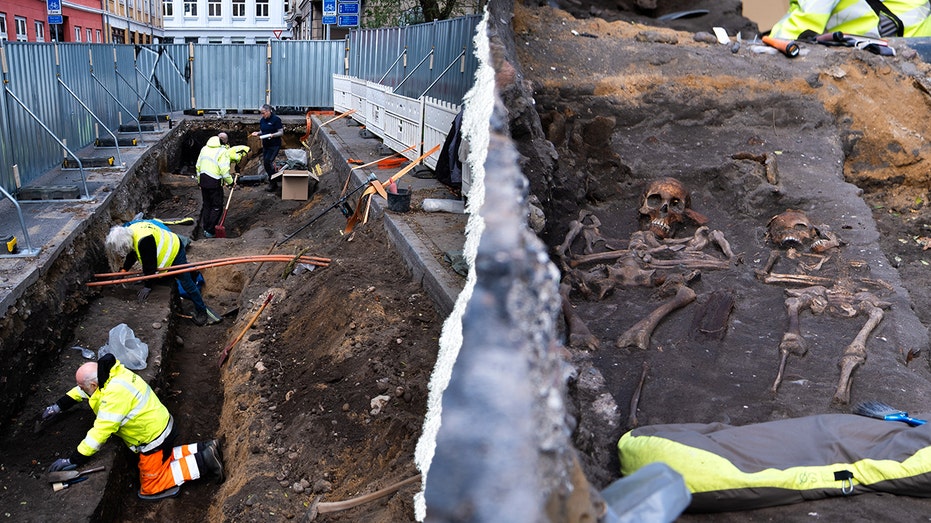
Beneath the modern city of Aarhus, Denmark, a remarkable story of hardship and faith is emerging from the earth. Archaeologists have unearthed seventy-seven medieval graves, offering an intimate glimpse into the lives – and deaths – of those who lived nearly a millennium ago.
The discovery occurred during routine infrastructure work, a surprising revelation within the boundaries of St. Oluf’s Cemetery. This ancient burial ground, active from the 1100s to 1813, stands as a testament to the enduring legacy of St. Olaf, the Viking king who championed Christianity throughout Scandinavia.
These weren’t the remains of Denmark’s first Christians. Christianity had taken root in the 9th and 10th centuries, solidified by Harald Bluetooth in the mid-10th century. Instead, these graves represent a community deeply embedded in the Christian faith, a generation removed from the initial conversion.
A stark social divide is evident in the cemetery’s location. While the wealthy found their final resting place within the cathedral walls, this ground served as the final sanctuary for Aarhus’s less fortunate. This concentration resulted in a densely packed burial site, where later interments often disturbed earlier ones.
Few of the individuals were buried with possessions, a clear indication of their humble circumstances. However, one grave from 1626 held a peculiar detail: a coin placed within the mouth of the deceased, a lingering echo of ancient folklore, particularly among sailors.
The true significance of the excavation lies not in riches, but in the stories of everyday life. These remains offer a window into a world where the average lifespan hovered around thirty-seven years, relentlessly shaped by disease and struggle.
One particularly poignant find revealed three children buried together, a heartbreaking suggestion of a swift and devastating outbreak – perhaps plague or another deadly infection. Detailed analysis promises to reveal the precise cause of their untimely deaths.
Leprosy, plague, waterborne illnesses, and syphilis were rampant, claiming lives with brutal efficiency. The prevalence of these diseases wasn’t confined to Europe; it’s a sobering thought that these same ailments were unknowingly carried to the New World, with catastrophic consequences for Native American populations.
The skeletal remains also speak to the dangers faced by women, particularly the high mortality rate associated with childbirth. Life was a precarious balance, constantly threatened by forces beyond control.
For the archaeologists who unearthed these stories, the experience is a powerful reminder of the fragility of life and the hardships endured by those who came before. It’s a past best observed, not revisited.