A wave of encouraging news regarding vaccines had recently emerged – studies suggesting flu shots could protect against heart disease, shingles vaccines might delay dementia, and a single HPV dose offering lifelong cervical cancer protection for girls. Yet, within the Department of Health and Human Services, a starkly different reality was taking hold.
Under the leadership of Robert F. Kennedy Jr., the very foundation of vaccine policy was being challenged. A committee, heavily populated by vaccine skeptics handpicked by Kennedy, voted to dismantle a 34-year recommendation: routine hepatitis B vaccination for newborns. This practice had dramatically reduced childhood infections, plummeting from approximately 16,000 cases in 1991 to a mere seven in 2023.
While the committee deliberated, a troubling trend unfolded across the nation. The country experienced its worst year for measles since 1992 – a disease entirely preventable through vaccination – with outbreaks erupting in Utah, Arizona, and South Carolina. A two-year whooping cough outbreak had already resulted in around 60,000 reported cases, including the tragic loss of at least six infants.
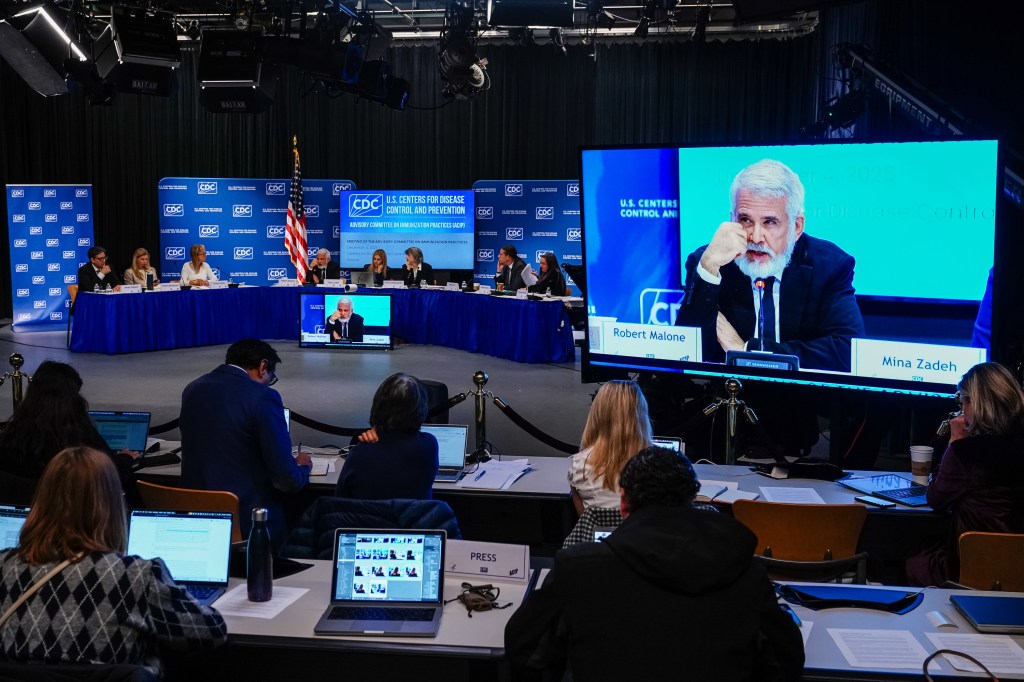
These escalating threats were conspicuously absent from the committee’s initial discussions. Instead of focusing on countering these risks, the panel, under Kennedy’s direction, appeared fixated on addressing doubts and objections raised by vaccine opponents. The proceedings were a stark departure from the established practices of the Centers for Disease Control and Prevention, which Kennedy himself had labeled a “cesspool of corruption.”
The committee’s chair, epidemiologist Martin Kulldorff, abruptly departed just days before the meeting, accepting a senior position within HHS. His replacement, a pediatric cardiologist with a history of claiming mRNA vaccine technology posed “the biggest threat to humanity,” was largely absent, leaving Vice Chair Robert Malone in charge. Malone, a vocal opponent of vaccine mandates, had previously asserted that Americans were being “hypnotized” into receiving the COVID-19 vaccine.
A fundamental shift in transparency occurred. Unlike previous meetings, where supporting data and slides were readily available on the CDC’s website, this time, they were withheld entirely. This lack of access hindered informed discussion and raised serious concerns about the process.
The working group tasked with studying the hepatitis B vaccine lacked representation from recognized experts in the field. When panel members voiced concerns, a CDC hepatitis specialist was brought in, only to express his disapproval of the proposed changes. The composition of the committee itself signaled a predetermined outcome.
The meeting’s presenters included Aaron Siri, a former lawyer for Kennedy and a prominent legal adversary of vaccination. Senator Bill Cassidy, a physician, publicly condemned the situation, stating Siri was presenting as an expert despite making a living suing vaccine manufacturers and that the ACIP was “totally discredited” and “not protecting children.”
Further fueling concerns, the committee’s review of the entire childhood vaccine schedule was being chaired by Vicky Pebsworth, a long-time leader within the National Vaccine Information Center – a prominent organization known for its vaccine skepticism. This placed the protection of American children against a range of diseases at risk.
Instead of relying on data presented by seasoned CDC and FDA experts, the case against the hepatitis B vaccine was presented by Pebsworth, a climate scientist with vaccine doubts, and a businessman previously involved in anti-vaccine groups. Their presentations, based on questionable data and retracted studies, painted a misleading picture of the vaccine’s safety and efficacy.
The presentations were met with disbelief by infectious disease specialists on the panel. One described the statements as inaccurate and unsubstantiated, while another former ACIP member characterized them as “misinformation, disinformation, or outright lies,” accusing the committee of cherry-picking data and misunderstanding legitimate research.
Pebsworth justified the review by citing “pressure coming from stakeholder groups” – a clear reference to Kennedy and his allies. She incorrectly claimed the U.S. was an outlier in its universal recommendation, despite the birth dose being administered in 115 countries and endorsed by the World Health Organization.
Arguments were made that targeted measures, such as safer sex practices and blood screening, had already significantly reduced hepatitis B cases. However, experts emphasized the birth dose served as a crucial safety net, particularly for mothers who remained untested or whose status was unknown. Eliminating it could lead to nearly 500 preventable deaths annually.
The meeting was preceded by a flurry of briefings and “prebunking” papers from established medical experts, who viewed the new ACIP as a platform for anti-vaccine viewpoints – “inflating speculative risks while downplaying well-established vaccine benefits.”
While the hepatitis B birth dose was already considered optional by many physicians, a recommendation for a shared decision-making process could introduce doubt and reduce vaccination rates. Studies have consistently shown that ambiguous advice leads to lower uptake.
Anti-vaccine activists had long targeted the hepatitis B birth dose, previously making baseless claims linking it to sudden infant death syndrome. Ironically, the implementation of the universal dose coincided with a near 50% decline in SIDS rates, attributed to a separate public health campaign promoting safe sleep practices.
The unfolding events raised profound questions about the integrity of the vaccination process and the potential consequences for public health. The decisions made within this committee, driven by skepticism and a disregard for scientific consensus, threatened to undo decades of progress in preventing devastating diseases.