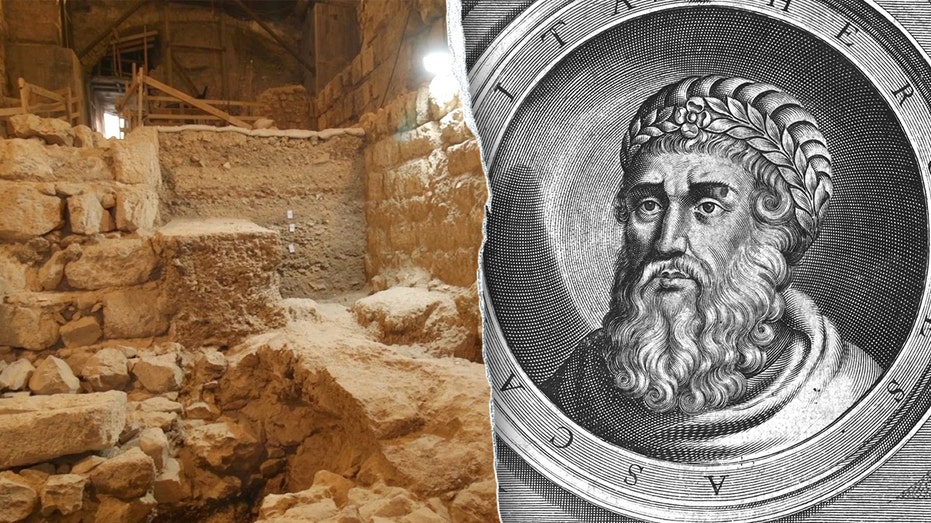
Beneath the modern streets of Jerusalem, a silent witness to ancient power struggles has emerged. Archaeologists have unearthed a remarkably preserved section of a wall dating back to the Hanukkah era, a tangible link to the tumultuous days of the Maccabees.
This isn’t just a pile of stones; it’s the longest intact segment of Jerusalem’s Hasmonean-era city wall ever discovered, stretching over 130 feet long and standing originally over 30 feet tall. The sheer scale of the construction speaks volumes about the ambition and anxieties of the people who built it in the late 2nd century B.C.
The location itself is steeped in history, once part of a formidable citadel complex later expanded by King Herod. But the wall predates Herod’s reign, a defiant statement built during a time when the Maccabees fought for their freedom and religious identity.
Excavation directors Amit Re’em and Marion Zindel describe the wall as “particularly impressive,” meticulously crafted from massive stones. It wasn’t simply built to defend; it was designed to intimidate, a symbol of unwavering resolve.
Ancient texts corroborate the wall’s imposing nature. The historian Josephus, writing in the first century A.D., declared it “impregnable,” boasting sixty towers that commanded the surrounding landscape. This was a fortress meant to withstand any siege.
Yet, despite its strength, the wall met a deliberate and violent end. It wasn’t eroded by time or fallen to a random attack; it was systematically destroyed, razed to the ground with a calculated precision that begs the question: who ordered its demolition?
Two compelling theories have emerged. The first points to Antiochus VII Sidetes, the Seleucid king who besieged Jerusalem in the mid-2nd century B.C. He may have demanded the dismantling of the fortifications as a condition for peace, a humbling concession forced upon the besieged city.
The second, more intriguing theory implicates King Herod. Driven by a desire to erase the legacy of the Hasmonean dynasty, Herod may have ordered the wall’s destruction as a symbolic act of dominance, proclaiming himself the rightful successor to the Hasmonean kings.
Evidence, including ancient arrowheads discovered at the site, supports the idea of a military action. The methodical nature of the destruction, however, suggests a calculated political move rather than a chaotic battle.
The discovery is now being carefully preserved as part of the Tower of David Jerusalem Museum’s new Schulich Wing. Visitors will soon be able to walk above the ancient stones, gaining a unique perspective on this pivotal moment in history.
This wall isn’t just a relic of the past; it’s a powerful reminder of the enduring struggles for power, freedom, and identity that have shaped Jerusalem for millennia. It’s a story etched in stone, waiting to be rediscovered and understood.