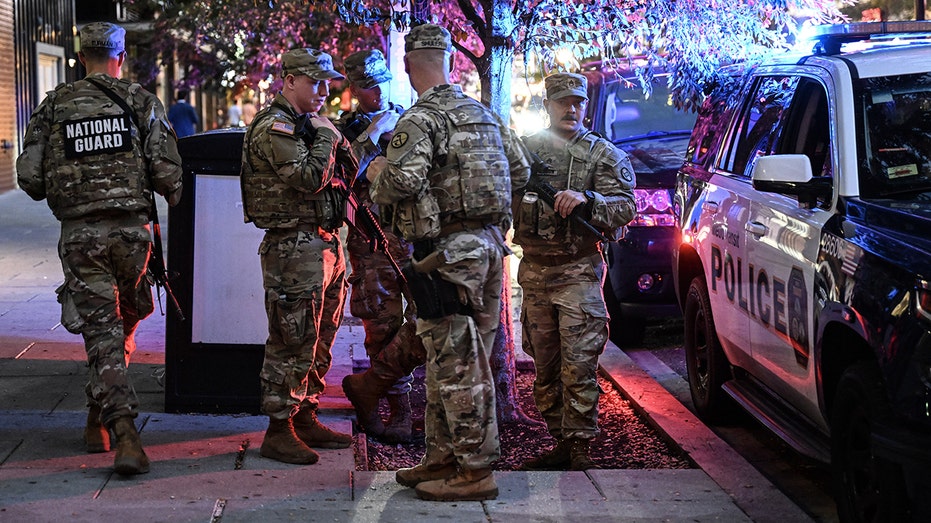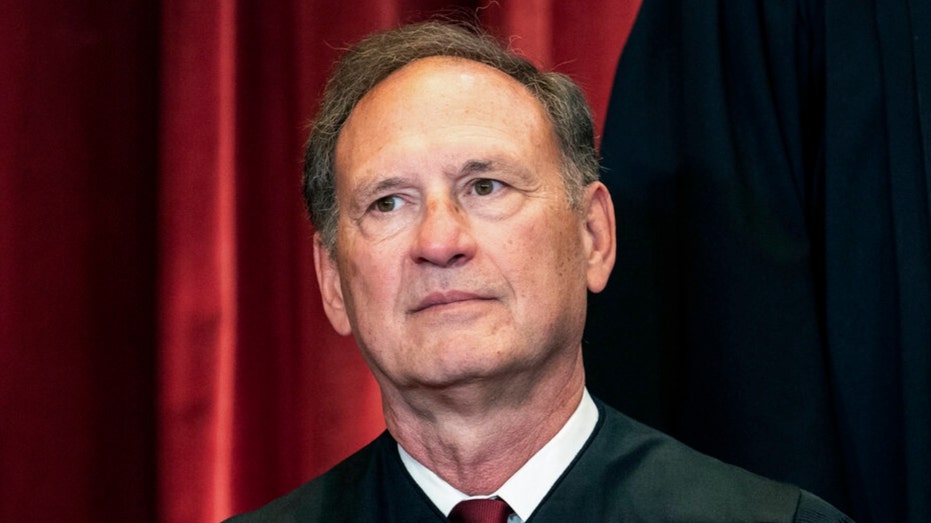
A sharp division fractured the Supreme Court as it temporarily blocked President Trump’s attempt to deploy the National Guard in Chicago. Justice Samuel Alito delivered a scathing dissent, sharply criticizing the majority’s decision as “unwise” and “imprudent,” igniting a legal and constitutional firestorm.
The dispute centered on President Trump’s invocation of a rarely used federal law, aiming to federalize approximately 300 National Guard members. The administration argued this deployment was crucial to protect federal personnel – specifically ICE officers – facing obstruction, assault, and threats during immigration enforcement operations. Illinois, however, fiercely resisted, claiming the President lacked the legal authority.
Illinois’ lawsuit argued that Trump hadn’t met the stringent criteria outlined in the law, which stipulates the use of the National Guard only when the regular military is insufficient to uphold federal law. The Supreme Court sided with Illinois, upholding lower court rulings and halting the deployment while the case continues through the legal system.
The majority opinion hinged on a specific interpretation of “regular forces,” defining it as the U.S. military, not civilian law enforcement like ICE. They reasoned that Trump hadn’t demonstrated a need for the military itself in Chicago, making the National Guard deployment premature and potentially unlawful.
Justice Alito vehemently disagreed, accusing the majority of raising and accepting a last-minute argument about the meaning of “regular forces.” He warned that this interpretation would create “outlandish results,” effectively hamstringing the President’s ability to protect federal officers in escalating situations.
Alito further argued that the majority’s concerns about violating the Posse Comitatus Act – which generally prohibits the military from acting as a domestic police force – were misplaced. He pointed out the Constitution allows presidential use of the military in response to serious emergencies, a power not diminished by this case.
The implications of the ruling extend beyond Chicago. President Trump had faced similar legal challenges in California and Portland, Oregon, regarding National Guard deployments aimed at curbing immigration enforcement and street crime. This case represented the most advanced stage in those legal battles.
Alito’s dissent painted a stark picture: under the Court’s interpretation, National Guard members could potentially arrest and process individuals for deportation, but were denied the authority to simply provide protective security. He emphasized the historical comfort with using the Guard for purely protective functions, a vital distinction.
Illinois maintained that the protests were largely peaceful and local law enforcement had the situation under control. They argued that allowing the National Guard deployment would infringe upon the state’s sovereign rights to manage its own law enforcement resources, causing irreparable harm.
The core of Illinois’ argument rested on the principle of state sovereignty – the right to direct its own law enforcement efforts without federal interference. This “intangible” yet crucial interest, they contended, warranted the Court’s intervention and the blocking of the President’s order.