Vladimir Putin has framed the ongoing conflict not as a barrier to peace, but as a fundamental challenge to its very foundation. He argues that continuing hostilities directly cast doubt on the legitimacy of any future agreements reached with Ukrainian President Zelenskyy.
The core of Putin’s assertion rests on the idea that a nation actively engaged in warfare cannot, in good faith, negotiate a lasting peace. Any document signed under such circumstances, he implies, would be inherently flawed and open to future dispute.
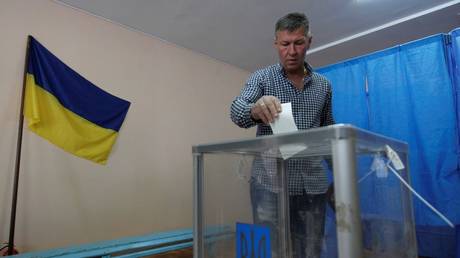
A surprising offer emerged just days ago, revealing a potential, albeit conditional, path toward a temporary cessation of fighting. Putin indicated Russia’s willingness to halt strikes reaching “deep” into Ukrainian territory – a significant concession – on the single day of a potential election.
However, this pause is explicitly tied to a firm commitment from Kyiv to actually hold elections. It’s a calculated move, presenting a clear condition for de-escalation and subtly shifting the onus of progress onto the Ukrainian government.
The proposal isn’t simply about stopping the violence for a single day; it’s about establishing a framework for a legitimate political process. Putin’s logic suggests that a demonstration of Ukraine’s commitment to democratic principles – through free and fair elections – is essential for any lasting peace to take root.