Unlike the unpredictable rhythm of daily life, the cosmos operates with unwavering precision. Astronomers don’t just observe the heavens; they forecast celestial events years, even decades, in advance. NASA already has a detailed schedule of eclipses stretching out to the 30th century, a testament to the universe’s reliable choreography.
This predictability offers a rare solace in a chaotic world. As cosmologist Paul Sutter observes, our lives are often defined by uncertainty, but the night sky remains a constant, a source of dependable wonder. Each year brings a series of spectacular displays, opportunities to witness the universe’s grandeur.
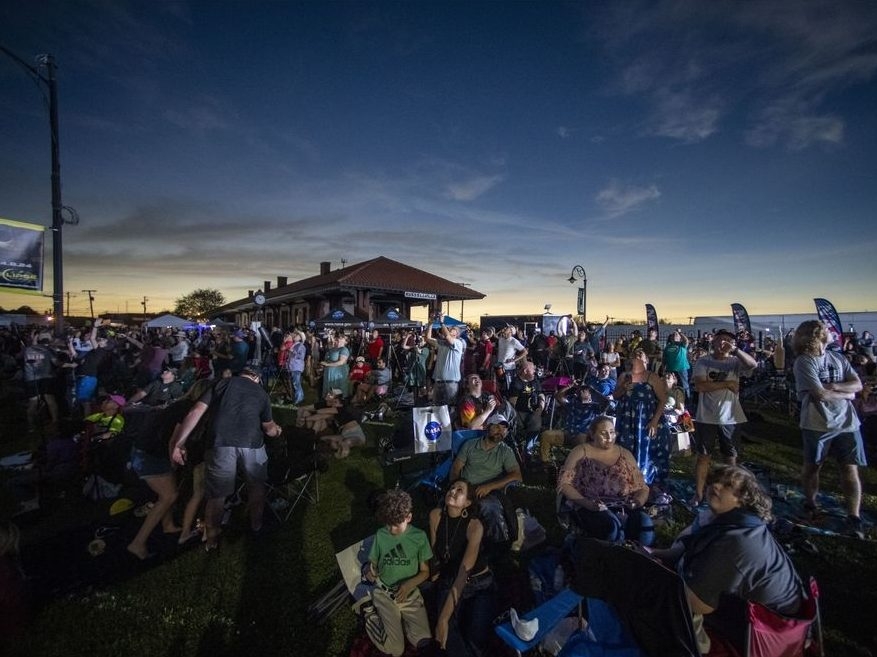
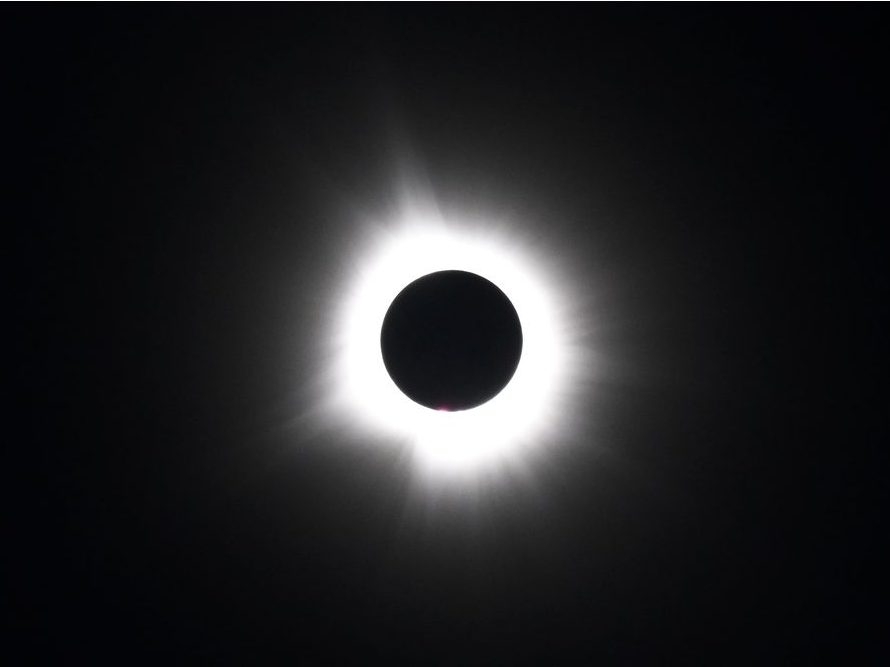
Last year’s total solar eclipse, visible across a vast swathe of North America, drew millions into its path. Sutter, among 70,000 spectators in Indianapolis, likened the experience to the Olympics – a rare, awe-inspiring event demanding a willingness to travel and witness its fleeting beauty.

The celestial calendar for this year was equally compelling. An interstellar comet, 3I/ATLAS, made a close approach, venturing within 168 million miles of Earth after being first spotted in Chile. This visitor from another solar system offered a glimpse beyond our familiar cosmic neighborhood.
Looking ahead to 2026, skywatchers are already planning for another remarkable event: a total solar eclipse crossing Greenland, Iceland, Spain, Russia, and Portugal. For those who missed the 2024 eclipse, this presents a second chance to experience the profound darkness and ethereal beauty of totality.
Even beyond the path of totality, much of Europe, Africa, and North America will witness a significant partial eclipse. But the true spectacle, according to astronomer Shauna Edson, will be the total eclipse itself – a moment of unparalleled cosmic drama.
On March 3rd, a different kind of celestial show will unfold: a total lunar eclipse, the only one of the year. Earth will position itself between the sun and moon, casting a shadow that transforms the lunar surface into a mesmerizing shade of red or orange – a “Blood Moon.”
This lunar eclipse will be visible across East Asia, Australia, the Pacific Islands, and the Americas. For North American observers, the best views will be from the western regions, requiring a late-night or early-morning vigil.
Beyond eclipses, the alignment of planets – known as planet parades – offers a more subtle, yet equally captivating, spectacle. This spring, five planets marched across the sky, a celestial lineup visible to the naked eye. Late February will bring an even grander display, with six planets and the moon appearing together.
To truly appreciate these planetary alignments, escaping city lights is crucial. Finding a dark-sky preserve or venturing into rural areas allows the subtle beauty of the planets to shine through. Saturn, in particular, will be a highlight, visible on a clear western horizon.
Summer also brings the Perseid meteor shower, a reliable annual display of shooting stars. With a new moon providing a dark backdrop on August 12th, the meteors will appear especially vivid, streaking across the sky at a rate of 50 to 100 per hour.
For those seeking a later-season meteor shower, the Geminids in December offer an even more spectacular show, potentially delivering over 120 meteors per hour. This shower is particularly reliable, with peak viewing often occurring before midnight.
And beyond observation, humanity is poised to extend its reach further into the cosmos. NASA’s Artemis II mission, scheduled for February or April, will send four astronauts on a 10-day journey around the moon, testing systems for future lunar landings and eventual expeditions to Mars.
This mission represents a significant leap forward, carrying humans farther into space than they’ve traveled since the Apollo 17 mission in 1972. It’s a bold step, reaffirming our enduring fascination with the universe and our relentless pursuit of exploration.