The return to the Oval Office marked a swift and decisive shift. President Trump, beginning his second term, immediately prioritized immigration enforcement with a series of directives designed to reverse policies enacted during the previous administration. The focus sharpened on the deportation of individuals who had entered the country outside of legal channels, setting the stage for a year of intense confrontation.
The response from some Democratic leaders was immediate and, at times, explosive. Across the West Coast, particularly, officials reacted with visible outrage to the renewed ICE operations. What unfolded wasn’t simply political disagreement, but a series of highly public clashes that revealed deep divisions and escalating tensions.
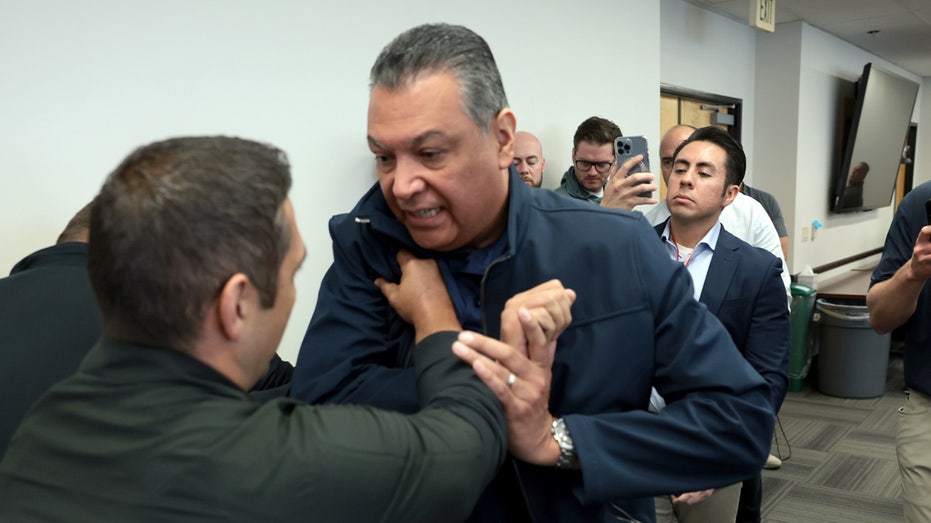
In June, Senator Alex Padilla found himself handcuffed and escorted from a Department of Homeland Security press conference. The incident occurred as he attempted to question Secretary Kristi Noem, interrupting her remarks about unrest in Los Angeles sparked by federal immigration raids. DHS officials stated Padilla hadn’t identified himself as a senator and wasn’t wearing his official pin, a detail that fueled further controversy.
Padilla later described the experience as a chilling demonstration of the administration’s tactics. He argued that his treatment – as an elected official – foreshadowed how others, without a public platform, might be treated behind closed doors. The incident quickly went viral, becoming a rallying cry for critics of the administration’s policies.
California Governor Gavin Newsom didn’t hold back his criticism, escalating his long-standing animosity towards the President. As federal agents conducted raids in Los Angeles, Newsom condemned the actions as “chaotic and reckless,” accusing Trump of eroding trust and tearing families apart. His frustration culminated in a blunt, personal attack, calling the President a “son of a b----” during a radio interview.
The raids themselves ignited riots in Los Angeles, a city that had declared itself a sanctuary for undocumented immigrants. Images of protests and confrontations flooded social media, raising questions about the city’s ability to manage the unrest and potentially impacting Newsom’s future political ambitions. Critics pointed to the chaos as evidence of failed leadership.
Congresswoman Norma Torres, representing California, took a more direct approach, posting a video online urging ICE agents to “get the f--- out of LA.” The fiery statement, delivered via TikTok, drew immediate condemnation from conservatives who labeled her rhetoric as extreme and dangerous. The incident highlighted the increasingly polarized nature of the debate.
In Arizona, Representative Adelita Grijalva found herself embroiled in controversy during a raid at a Tucson restaurant. She claimed to have been pushed aside and pepper-sprayed by federal authorities while seeking information, accusations that DHS vehemently denied. Officials stated she was near someone who *was* pepper-sprayed during a confrontation with law enforcement.
The East Coast also saw its share of conflict. In Newark, New Jersey, Mayor Ras Baraka was arrested for trespassing during a protest outside an ICE detention facility. The arrest occurred alongside three members of Congress who claimed they were exercising their oversight duties, leading to accusations of political overreach and escalating legal battles.
Representative LaMonica McIver, also present at the Newark protest, faced a federal indictment alleging she obstructed Homeland Security agents during the arrest of Mayor Baraka. She was accused of physically interfering with officers, a charge she denies. The legal proceedings underscored the high stakes and intense emotions surrounding the immigration debate.
These weren’t isolated incidents. They represented a pattern of escalating confrontations, fueled by deeply held beliefs and a widening political chasm. As the year drew to a close, the clashes served as a stark reminder of the profound divisions shaping the nation’s future.