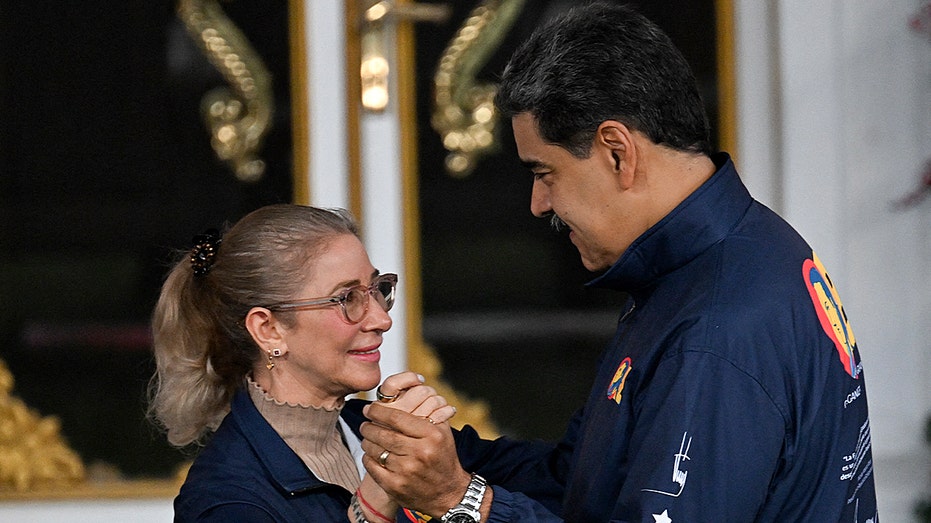
The arrest of Nicolás Maduro and his wife, Cilia Flores, marks a stunning turn for the couple who once held absolute power in Venezuela. Now, facing U.S. federal charges, they confront a “worst-case scenario” – a dramatic fall from grace culminating in a January 5th arraignment.
For thirteen years, their lives and political fortunes have been inextricably linked. This isn’t simply the detention of a former leader; it’s the unraveling of a partnership forged in the fires of Venezuelan politics, a partnership now caught in the grip of American justice.
Maduro, 63, is accused of narco-terrorism conspiracy, cocaine importation, and weapons charges. Flores, 69, faces similar accusations, highlighting a deeply entwined alleged criminal enterprise. The charges paint a picture of a regime allegedly built on illicit activity and sustained through dangerous alliances.
Flores’ story began long before Maduro’s presidency. As a lawyer, she bravely defended Hugo Chávez after his failed 1992 coup attempt, a pivotal moment that cemented her place within his inner circle. This loyalty would shape her future and, ultimately, her fate.
Following Chávez’s election, Flores ascended through the ranks of Venezuelan power, serving in the National Assembly and later as Attorney General. She became a key architect of Chávez’s “revolutionary project,” a movement now facing its most significant crisis.
Those who knew them describe a powerful dynamic. Maduro once characterized Flores as possessing a “fiery character,” a testament to her strength and determination. Their marriage, delayed for nearly two decades, finally occurred after Maduro assumed the presidency in 2013.
Critics whispered of a “Lady Macbeth” figure, suggesting Flores wielded considerable influence behind the scenes. While Maduro held the office, she was a crucial advisor, subtly shaping policy and navigating the treacherous landscape of Venezuelan politics.
Her influence extended to controversial decisions, including the dismantling of the democratically elected National Assembly in 2015. Instead of respecting the will of the people, Maduro created a parallel body, effectively seizing legislative power – a move Flores allegedly supported.
The U.S. government took notice, sanctioning Flores in 2018 for her role in undermining democratic institutions. These sanctions signaled a growing determination to hold those responsible for Venezuela’s descent into authoritarianism accountable.
Reports also surfaced implicating members of Flores’ family in criminal activity, further deepening the web of allegations surrounding the couple. The charges suggest a pattern of corruption reaching the highest levels of the Venezuelan government.
The recent capture has prompted strong reactions. Warnings of “serious consequences” have been issued, and talk of a temporary U.S. governance of Venezuela has emerged. However, the future of Cilia Flores remains uncertain, with little public discussion regarding her fate.
While details of negotiations leading to their arrest remain shrouded in secrecy, one thing is clear: the arrest of Nicolás Maduro and Cilia Flores represents a seismic shift in the ongoing struggle for Venezuela’s future, a future now hanging in the balance.