Kim Jong Un personally oversaw the latest missile tests, a stark demonstration of North Korea’s unwavering commitment to bolstering its nuclear arsenal. The launches, involving hypersonic weaponry, occurred just as tensions escalate in the region and ahead of a crucial political conference within the country.
The drills were reported a day after neighboring nations detected multiple ballistic missile launches, condemning the actions as provocative. These tests weren’t isolated incidents; they arrived hours before the South Korean President embarked on a significant summit with China’s leader, Xi Jinping.
According to state media, the purpose of Sunday’s exercise was to rigorously assess the readiness of the hypersonic weapon system, refine the skills of missile troops, and evaluate the overall operational strength of North Korea’s deterrent forces. The focus was on practical application and combat readiness.
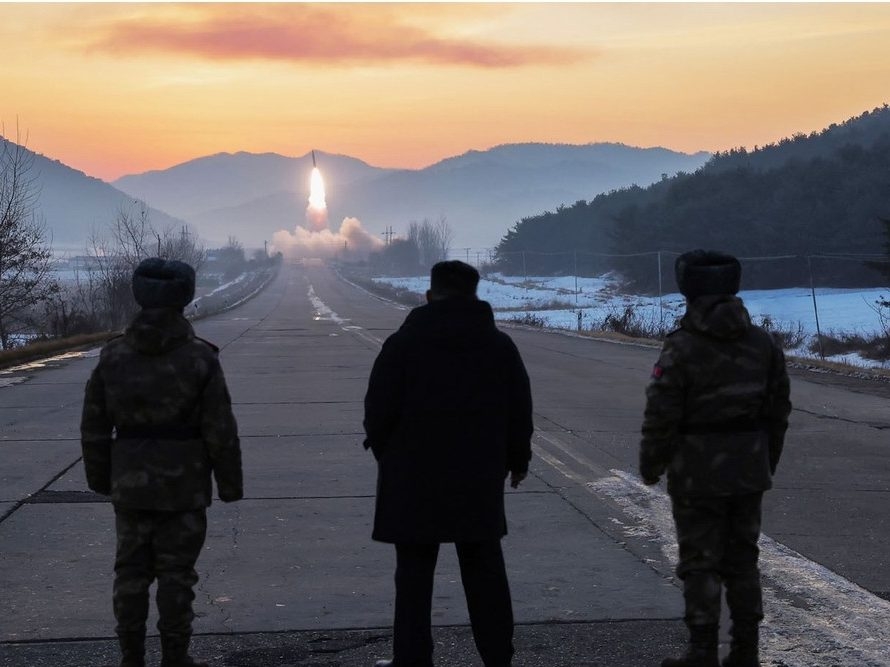
Kim Jong Un declared the tests a success, stating a “very important technology task for national defense” had been accomplished. He emphasized the urgent need for continuous upgrades, particularly in offensive weapon systems, signaling an aggressive path forward for the nation’s military development.
A fully functional hypersonic weapon would represent a significant leap in North Korea’s capabilities, potentially overwhelming existing U.S. and South Korean missile defense systems. While past tests have been conducted, questions remain among international experts regarding the actual speed and maneuverability achieved.
Recent weeks have witnessed a flurry of activity, including tests of long-range cruise missiles and new anti-air systems. Compounding these developments, photographic evidence suggests substantial progress in the construction of North Korea’s first nuclear-powered submarine, hinting at a broader naval strategy.
Analysts believe these displays of force are strategically timed to showcase North Korea’s advancements in weapons development before the upcoming Workers’ Party congress – a pivotal event not held for five years. All eyes are on Kim to see if he will unveil a new approach to relations with the United States and potentially restart stalled negotiations.
The situation is expected to be a key topic of discussion during the summit between the South Korean and Chinese presidents. Seoul is urging Beijing, as North Korea’s primary ally and economic benefactor, to play a constructive role in fostering peace on the Korean Peninsula.
The timing of these launches also follows a bold U.S. military operation that resulted in the removal of Venezuelan leader Nicolas Maduro and his subsequent arrival in the U.S. to face charges. North Korea vehemently condemned the operation, characterizing it as evidence of American “rogue and brutal nature.”
Many experts suggest this U.S. action will likely fuel Kim Jong Un’s determination to expand his nuclear arsenal, a move he views as essential for safeguarding his government and national sovereignty against perceived U.S.-led hostility. The perceived threat intensifies the need for self-reliance.
Kim Jong Un directly linked the need for a stronger nuclear program to the current geopolitical climate and complex international events. He argued that recent crises underscore the necessity of a robust deterrent, framing the program as a defensive measure in a volatile world.