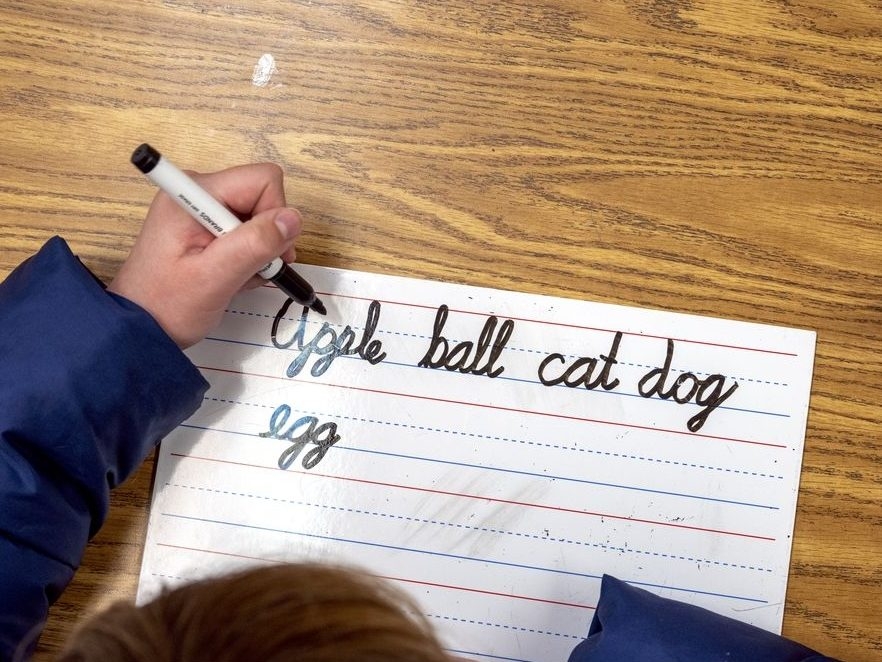
Markers poised, a small group of middle schoolers tentatively began forming the loops and curves of “B” and “Q.” It wasn’t a remedial lesson, but a reintroduction – to the lost art of cursive writing, for many, a completely new skill.
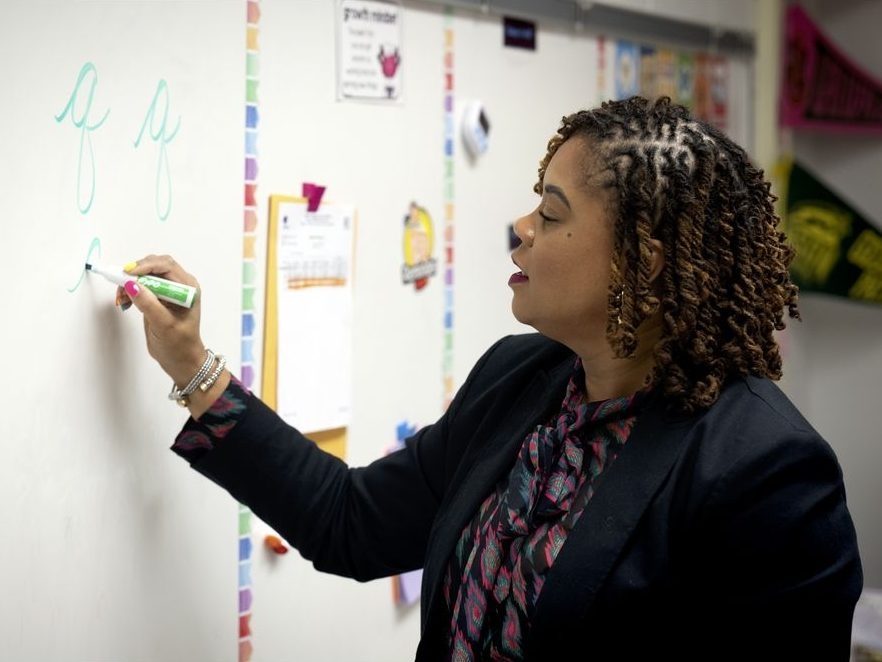
Sherisse Kenerson, a teacher in Alexandria, Virginia, unexpectedly found herself leading a cursive club, a haven for sixth through eighth graders eager to connect with this fading tradition. The interest astonished her, sparking local news coverage and a wave of inquiries from educators across the country.
The surprise wasn’t just that students *wanted* to learn cursive, but that they sought it out for pure enjoyment. While previous generations painstakingly mastered it as a school requirement, these students were choosing to embrace a skill often deemed obsolete.
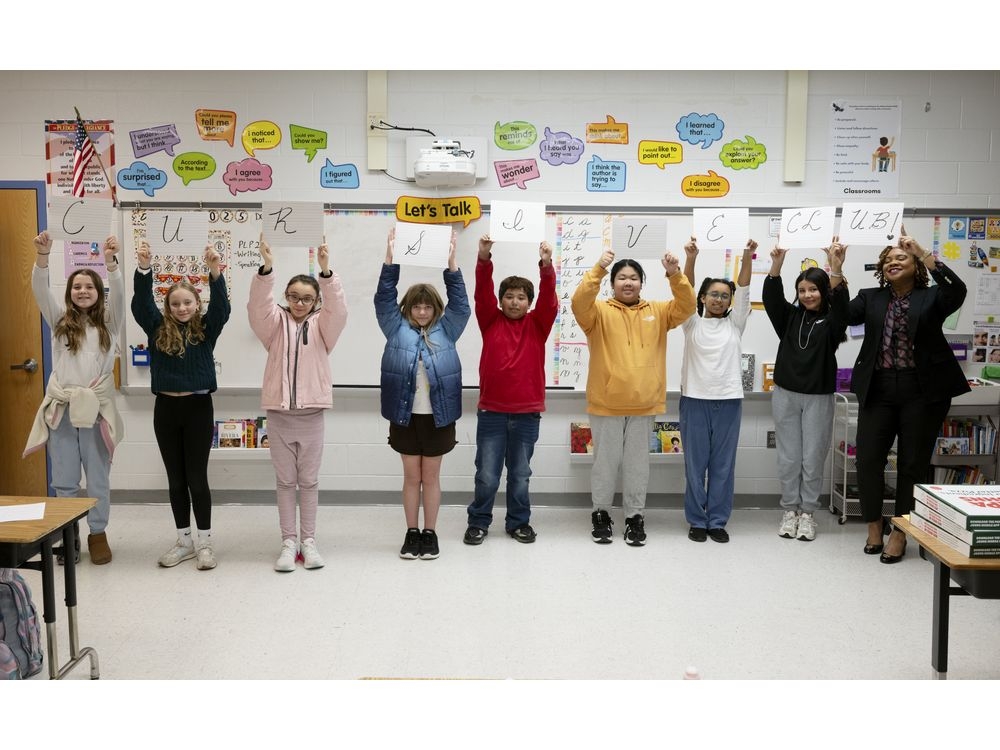
“We’ve moved to a print-based world,” Kenerson observed, acknowledging the dominance of computers and typing. “But there’s a reason cursive hasn’t entirely disappeared. It taps into something deeper, something beneficial for the mind.”
The early 2000s saw cursive declared nearly extinct, with a dramatic decline in its use. By 2006, only a small fraction of SAT essays were penned in flowing script. The Common Core standards further solidified its decline, leading schools to drop cursive from their curriculum.
Yet, a quiet resistance began to grow. Historians and educators, like Kenerson, championed its preservation through clubs, camps, and optional classes. A recent wave of legislation in states like California and Pennsylvania now mandates cursive instruction, aiming to reinforce fundamental handwriting skills.
This resurgence coincides with a growing awareness of the impact of screens and artificial intelligence on education. Research increasingly points to handwriting as a powerful tool for learning and memory, activating brain regions in a way typing simply doesn’t.
“Handwriting remains the most accessible and affordable way for students to engage with writing,” explained Shawn Datchuk, a professor of special education. “It’s a fundamental skill with significant cognitive benefits.”
Beyond the neurological advantages, Datchuk believes cursive holds a unique emotional resonance, particularly for older generations. A handwritten note carries a weight and intimacy a text message can’t replicate.
“I always handwrite my mother’s birthday card,” Datchuk admitted with a smile. “A text just wouldn’t do. Our handwriting evolves with us, becoming a unique expression of who we are.”
Kenerson launched her cursive club after realizing her students couldn’t decipher her handwritten notes on the whiteboard. She wanted to unlock a skill that felt lost to them, a connection to the past.
She emphasizes that cursive isn’t about rigid perfection, but about personal expression. Each student’s script is unique, a reflection of their individual style and flair.
Twelve-year-old Halle O’Brien initially struggled with cursive, even with her grandfather’s patient guidance. But something clicked within the supportive environment of the club. She now finds cursive easier and faster than printing.
“People who know cursive write so smoothly, without even thinking about the letters,” Halle explained. She sees a practical benefit, recalling a field trip where no one could read the Declaration of Independence.
Inspired by this realization, Halle discovered others were joining cursive clubs specifically to unlock the secrets of historical documents. The National Archives even issued a call for volunteers with cursive skills, calling it a “superpower” in a digital age.
Datchuk also points to a link between cursive and improved spelling. The act of forming each letter in a continuous flow requires a complete understanding of a word’s structure.
Eleven-year-old Sarah Stephens carefully spelled “spectacular” in print before gracefully looping the letters together in cursive, demonstrating this connection. She’d first learned cursive in private school, where it was a core skill.
Even with prior experience, Sarah relished the club’s relaxed atmosphere and the chance to connect with friends. She even confessed it was more enjoyable than the anime club.
“It’s just fun to do the swirls,” Sarah said, beaming. “I especially like writing the letter ‘S.’”
Kenerson believes the appeal of cursive extends beyond its cognitive benefits. For her students, learning cursive is about feeling grown up, about possessing a skill that sets them apart.
“It empowers them,” she said, “because it’s something not everyone can do anymore. Even some of the teachers.”