For years, a dissenting voice warned that the prosecution of Donald Trump regarding his January 6th speech was a dangerous overreach, a collision with fundamental First Amendment rights. That voice was often dismissed, labeled as sympathetic to a controversial figure. But the core argument – that the speech itself was protected – persisted, rooted in decades of Supreme Court precedent.
Now, a stunning admission has emerged. The Washington Post, a publication that previously supported the prosecution, has conceded that Trump’s speech *was* indeed protected, and that Special Counsel Jack Smith’s case threatened to “blow a hole in the First Amendment.” This isn’t a minor correction; it’s a seismic shift in understanding a pivotal legal battle.
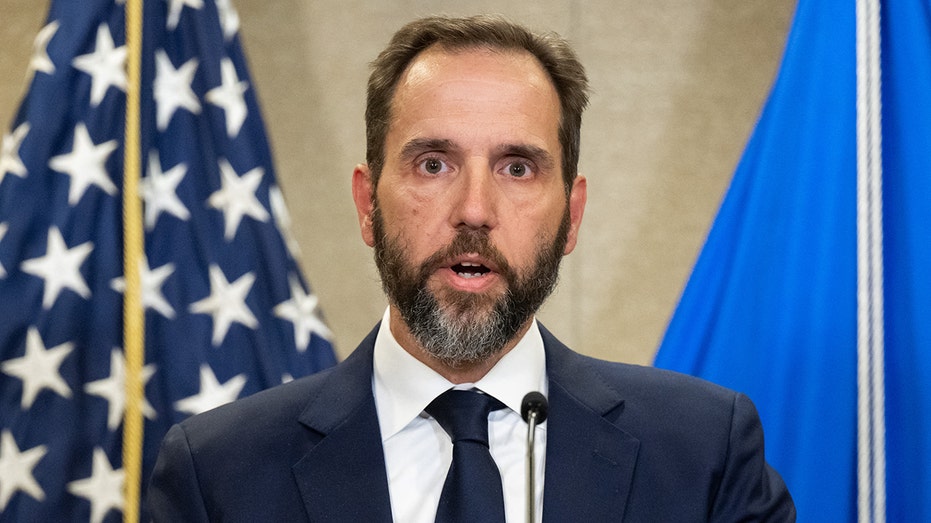
The revelation stems from Smith’s recent appearance before Congress, where his disregard for established constitutional law was shockingly on display. When questioned directly about Trump’s First Amendment rights, Smith’s response was unequivocal: “Absolutely not.” He argued that speech targeting a lawful government function, and containing what he deemed “knowing falsity,” was exempt from protection.
This assertion is fundamentally flawed. The Supreme Court has repeatedly affirmed that even knowingly false statements are shielded by the First Amendment. The landmark case *United States v. Alvarez* explicitly struck down a law criminalizing false claims, recognizing the inherent right to speak untruthfully, even offensively. Similarly, the hateful rhetoric of the Westboro Baptist Church, deemed deeply offensive, was also protected under the First Amendment.
Smith’s attempt to categorize Trump’s claims as “fraud” doesn’t alter this established legal principle. Trump was expressing a belief about a stolen election, a viewpoint shared by many, during a political rally – the very essence of protected political speech. His prosecution, as many predicted, was on a direct path to being overturned by the courts.
The precedent set by *Brandenburg v. Ohio* is crucial here. Even incitement to violence is protected unless it presents an “imminent lawless action” and is likely to produce it. Trump’s speech didn’t meet this threshold, a fact acknowledged even by those who initially called for his investigation. The focus shifted, yet the core issue of protected speech remained.
This isn’t an isolated incident in Smith’s career. His previous conviction of Virginia Governor Robert McDonnell was unanimously overturned by the Supreme Court for overreaching its legal bounds. A pattern emerged: a willingness to push the limits of the law, even at the expense of constitutional rights.
For years, prominent legal experts confidently asserted that Trump had no First Amendment protection, even suggesting charges like attempted murder. These claims, amplified by major media outlets, fueled a narrative that conveniently ignored established legal precedent. The Washington Post’s reversal signals a belated recognition of this imbalance.
The Post now acknowledges that political speech, “no matter how odious,” enjoys strong First Amendment protection. The primary safeguard against misinformation isn’t criminal prosecution, but rather public scrutiny. Smith’s attempt to create an exception for speech targeting “a lawful government function” is dangerously broad, potentially encompassing the vast majority of political discourse.
The danger lies in the precedent itself. Once an exception to the First Amendment is created, it invites abuse. Imagine the implications if a future administration, with different priorities, were to exploit that same exception to silence its political opponents. Smith’s own attempt to impose a gag order on Trump, limiting his ability to criticize the prosecution, foreshadowed this very risk.
This isn’t simply a vindication of Donald Trump; it’s a defense of the foundational principles of American democracy. The Washington Post’s change of heart is a welcome step towards objectivity and accuracy. But the most chilling aspect of this entire affair remains Smith’s apparent contempt for constitutional values, a disregard that should deeply concern anyone who believes in the power of free speech.