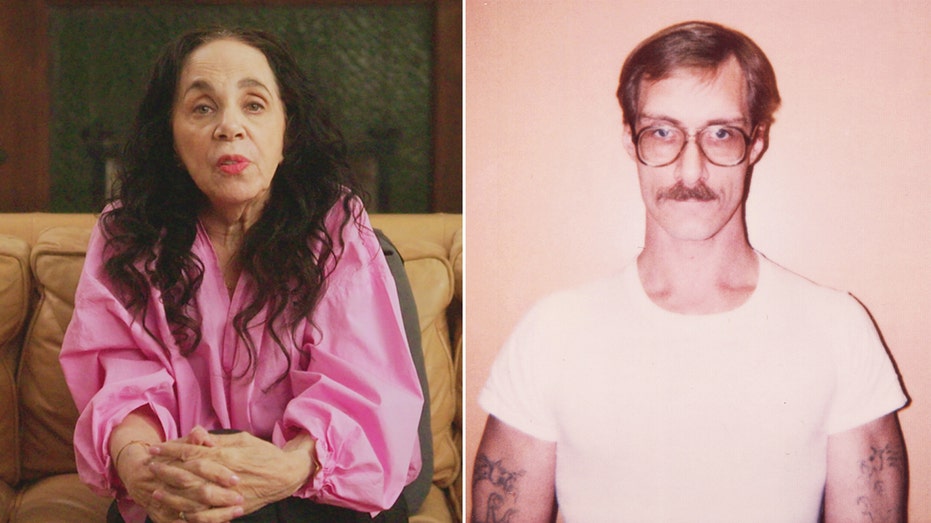
Laura Greenberg embarked on a chilling quest: to understand the minds of killers. Her journey led her to an unlikely and unsettling place – a decades-long correspondence with Doug Gretzler, a forgotten serial killer responsible for the deaths of seventeen people, including two innocent children.
The connection Greenberg forged with Gretzler, a man many would deem beyond redemption, became a haunting obsession. She visited him 350 times, meticulously documenting their conversations through hundreds of letters and over 500 hours of audio recordings, driven by a need to confront the darkness within him.
Filmmaker Ben Giroux, Greenberg’s nephew, grew up knowing only that his aunt interviewed a convicted murderer. It wasn’t until years later, during a period of isolation, that he unearthed the full scope of her extraordinary and disturbing archive.
“She always says there are seventeen bodies between them,” Giroux revealed, acknowledging the monstrous nature of Gretzler while recognizing Greenberg’s ability to see beyond the label. Their connection defied easy explanation, a complex dynamic that shifted and evolved over time.
Greenberg’s home transformed into a repository of the case – a sprawling collection of police reports, crime scene photographs, letters, and even paintings created by Gretzler himself. It was a testament to an all-consuming preoccupation, a codependency born from relentless inquiry.
Gretzler and his accomplice, Willie Steelman, terrorized Arizona and California with a three-week spree of violence. Steelman’s death in 1986 paved the way for Greenberg, a determined reporter, to pursue a connection with the man who remained – a man no one else seemed to reach.
Initially, Gretzler refused to speak about his crimes. But Greenberg’s persistent letters, filled with genuine curiosity, chipped away at his defenses. Soon, visits to prison followed, and a disturbing intimacy began to develop.
Their shared New York City roots became a surprising point of connection. Greenberg would secretly record their conversations, listening to chilling details of the murders while secluded in her bathroom, a hidden world of darkness unfolding late into the night. Gretzler even confessed his affection for her, becoming possessive after she married.
These recordings, previously unknown, reveal a startling intimacy. Conversations weren’t always focused on the horrific acts; they drifted into the mundane – the weather, music, grocery shopping – even shared memories of a music festival. It was a jarring juxtaposition of the ordinary and the monstrous.
The story raises profound ethical questions about the boundaries of journalism. How close is too close when attempting to understand the darkest corners of the human psyche? The documentary explores this tension, revealing the risks and rewards of Greenberg’s unconventional approach.
Gretzler detailed a life spiraling out of control, fleeing responsibility as a husband and father, succumbing to drugs and alcohol. He and Steelman forged a pact of absolute loyalty, embarking on a cross-country journey that quickly descended into violence. For Gretzler, taking a life required little effort.
While some families of the victims found solace in Greenberg’s interviews, gaining a deeper understanding of the events that shattered their lives, she acknowledged that no explanation could ever justify the brutality. She relentlessly challenged Gretzler, refusing to accept excuses for his actions.
Greenberg’s pursuit extended beyond simply documenting the crimes; she sought to understand the roots of violence in Gretzler’s life, the justifications he constructed for his heinous acts. Her dedication provided closure for some, filling gaps left by years of unanswered questions.
“Everyone we found said, ‘Do you know Laura Greenberg? You have to talk to her,’” recalled a producer involved in the documentary. Even Dee Gretzler, Doug’s sister, who had long remained silent, agreed to speak with Greenberg, recognizing her commitment to uncovering the truth.
Gretzler requested Greenberg’s presence at his execution in 1998. She sat near his sister, witnessing the finality of his life. But even after his death, Greenberg’s obsession continued, intensifying her dedication to telling the complete story.
Ultimately, Greenberg pushed Gretzler to confront his own responsibility for the devastation he caused. She repeatedly emphasized that a troubled past did not excuse his actions, a point she drove home with unwavering conviction.
The story serves as a cautionary tale about the dangers of obsession, a reminder of the need for boundaries, and the potential for a single pursuit to consume a lifetime. It’s a chilling exploration of darkness, empathy, and the enduring impact of unimaginable loss.