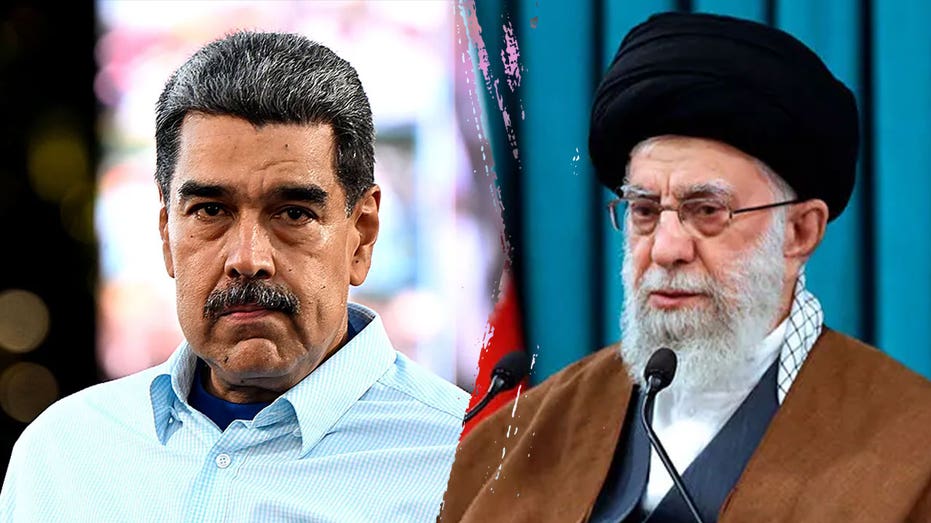
The recent success of a sensitive operation in Venezuela has prompted a critical question within U.S. strategic circles: could similar pressure be applied to Iran as its government violently suppresses widespread protests? The comparison, however, reveals a stark contrast in capabilities and potential consequences.
While the move against Nicolás Maduro in Caracas was swift, any comparable action against Iran would face a far more formidable opponent. Iran isn’t simply a nation with a struggling leader; it’s a deeply entrenched system built to withstand shocks, distributing power across religious institutions, intelligence agencies, and the powerful Islamic Revolutionary Guard Corps.
Experts caution against viewing a potential intervention as a simple “operation,” like removing a single figurehead. Behnam Ben Taleblu, a senior fellow, argues it must be considered a long-term “campaign,” recognizing the regime’s resilience and capacity for sustained resistance.
The Islamic Revolutionary Guard Corps stands as the bedrock of Iran’s defense, described as a primary state sponsor of terrorism. Eliminating a single leader wouldn’t dismantle this hardened security apparatus; it could, in fact, embolden it. This isn’t a scenario of musical chairs at the top, but a confrontation with a deeply rooted, ideologically driven force.
Adding to the complexity, Iran possesses a significant retaliatory capability – a resilient missile force. Even after sustaining damage during conflicts, Tehran retains a substantial arsenal of ballistic missiles, capable of being launched from mobile platforms, presenting a credible threat to regional stability.
The sheer scale of Iran’s military dwarfs that of Venezuela. With nearly one million active and reserve personnel, compared to Venezuela’s 120,000, the U.S. would face a vastly different military landscape. This disparity underscores the increased risks and challenges inherent in any potential intervention.
The ideological foundations of the conflict also differ dramatically. Iran’s antagonism towards the U.S. stems from the core principles of its 1979 Islamic Revolution, a rejection of Western influence. Venezuela’s disputes with Washington have largely revolved around political power and economic interests, lacking the same ideological intensity.
In Venezuela, the stated objective was limited – to address drug trafficking charges and gain leverage over oil resources. The U.S. allowed a transition of power and acknowledged the complexities of establishing a stable government. Any military action in Iran, however, would be perceived as a direct assault on the regime itself.
Targeting Iran’s leadership carries the risk of escalating a focused strike into a broader campaign against its security forces. The question isn’t simply *who* would replace the current leadership, but *what* would follow, and whether that outcome would be more stable than the present situation.
Potential successors – names like Khamenei’s son or Sadegh Larijani – offer no guarantee of a more favorable outcome. This uncertainty transforms a leadership strike into a far more expansive and dangerous undertaking, potentially destabilizing the entire region.
Ultimately, the central challenge for U.S. planners isn’t the military feasibility of intervention, but the clarity of its political objective. What outcome is desired in Iran, and how can military force realistically achieve it? The risk of a prolonged and chaotic conflict looms large, a consequence of attempting to “social engineer” a nation from the outside.
As the situation in Iran continues to unfold, the lessons learned from Venezuela serve as a stark reminder: military intervention is rarely a simple solution, and the potential for unintended consequences is immense, particularly when confronting a nation with Iran’s complexity and resolve.