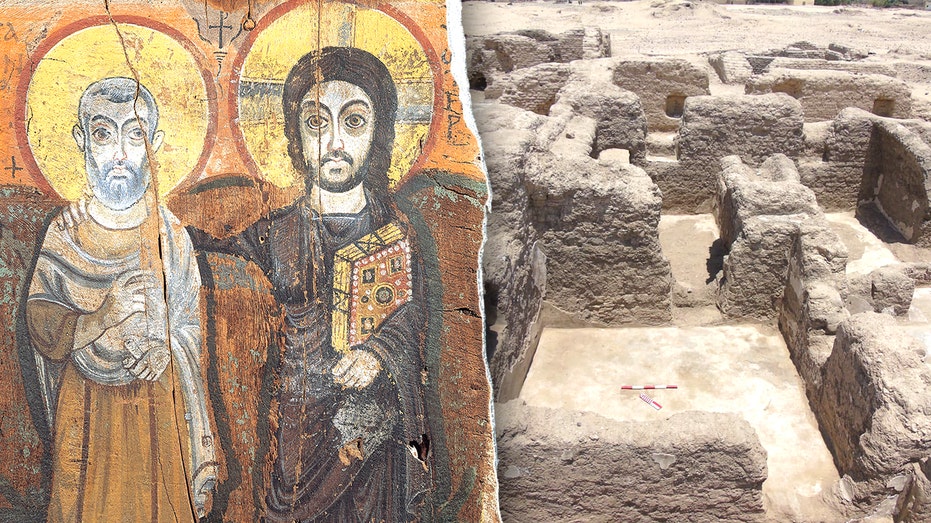
Hidden for centuries beneath the sands of Upper Egypt, a remarkable window into the lives of early Christian monks has been revealed. Archaeologists recently unearthed a sprawling monastic complex at the Al-Qarya archaeological site, near the village of Al-Duwair in the Sohag Governorate, offering an unprecedented glimpse into Byzantine-era religious life.
The discovery isn’t merely a collection of ruins; it’s a remarkably preserved residential complex, meticulously constructed from mudbrick. This wasn’t a solitary retreat for a single hermit, but a thriving community, complete with spaces for living, worship, and the practical tasks that sustained them.
The complex features a large mudbrick building, stretching between 26 and 46 feet in length and 23 to 26 feet in width. Within its walls, archaeologists identified rectangular halls, some featuring eastern niches – clear indicators of dedicated worship spaces. A network of small, vaulted rooms likely served as individual cells, offering monks a sanctuary for devotion and contemplation.
Life within these walls wasn’t solely focused on the spiritual. Evidence suggests a bustling, self-sufficient community. Buildings were designed for communal meals, and dedicated areas housed “industrial activities” – the essential work that kept the monastery functioning.
Intriguing details paint a vivid picture of daily life. Courtyards on the southern side provided access to buildings, and remnants of small, circular structures suggest communal dining tables where monks gathered to share meals. Basins constructed from red brick and limestone, coated in red plaster, hint at sophisticated water storage and perhaps even specialized workshops.
At the heart of the complex stood a second, significant mudbrick building, identified as the main church. Its layout reveals a traditional design, divided into three distinct areas: the nave, the choir, and the sanctuary. Remains of pillars in the nave suggest a soaring central dome once graced the space.
The sanctuary, positioned on the eastern side in a semicircular form, was flanked by two side chambers, likely used for sacred duties. This careful architectural planning speaks to the importance of ritual and communal worship within the monastic order.
Alongside the architectural wonders, the excavation yielded a treasure trove of artifacts. Amphorae bearing mysterious inscriptions, ostraca etched with Coptic text, limestone panels, and everyday tools offer tangible connections to the people who once lived and worked here.
These findings are more than just relics of the past; they are invaluable pieces of a historical puzzle. The complex provides crucial new information about the organization, daily routines, and spiritual practices of monastic life in Upper Egypt during the Byzantine period – a time of significant religious and cultural transformation.
Egypt continues to yield its secrets, month after month. Recent discoveries, including an ancient workshop in the Sinai region and previously unseen tombs in Luxor, underscore the nation’s enduring legacy as a cradle of civilization and a repository of untold stories.