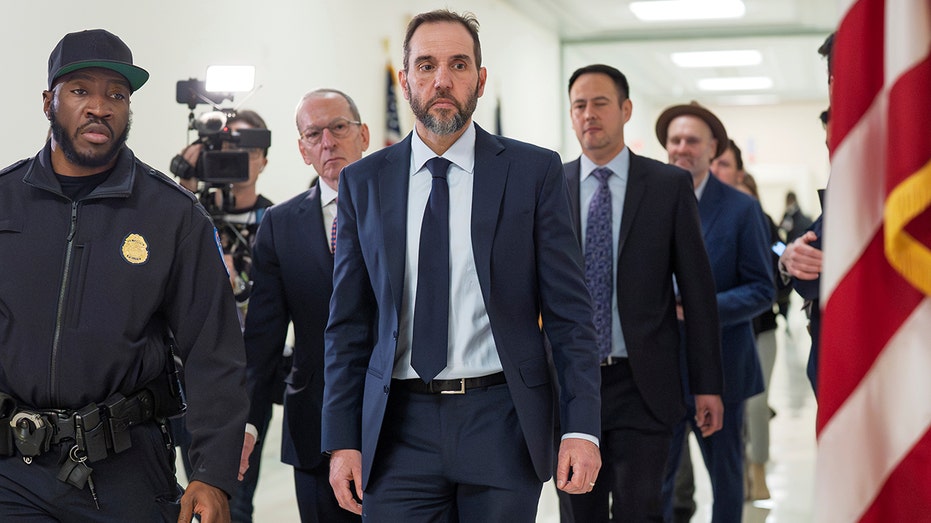
Jack Smith, the former special counsel, delivered a resolute defense of his team’s investigation into Donald Trump’s post-presidency conduct before the House Judiciary Committee. He asserted his prosecutors had amassed “proof beyond a reasonable doubt” of criminal activity, a conviction he would uphold regardless of the subject’s political affiliation.
Smith’s testimony centered on the dual investigations he led – one examining alleged attempts to overturn the 2020 election, and the other concerning the handling of classified documents. Though charges were initially brought in both cases, they were ultimately dropped following Trump’s subsequent election victory, adhering to established Justice Department protocols.
Despite the dismissal of the charges, Smith maintained unwavering confidence in the integrity of the investigation. He emphasized that all decisions were rooted in facts and law, devoid of political consideration. This stance was tested during a contentious hearing, marked by pointed questioning from Republican committee members.
A key point of contention revolved around the acquisition of “tolling records” – phone logs detailing incoming and outgoing calls – from certain Republican lawmakers during the probe. Republicans characterized this as a misuse of power, a “political weaponization” of investigative tools. Smith countered that accessing such records was standard procedure in similar investigations.
He further clarified that the subpoenas for these records had been approved by the Public Integrity Section, a detail supported by publicly available documentation. The debate underscored the deep partisan divisions surrounding the investigation and its methods.
The former president, speaking from Davos, reiterated his unsubstantiated claims of a “rigged” 2020 election and hinted at future prosecutions of those he believes were responsible. His comments added another layer of complexity to the already charged atmosphere surrounding Smith’s testimony.
Smith repeatedly stressed the strength of the case his team had built, emphasizing their adherence to legal requirements and impartiality. He argued that the investigation was conducted “without regard to President Trump's political association,” focusing solely on the evidence.
However, Smith expressed deep concern over the repercussions faced by those who worked on the investigations. He lamented the dismissal and targeting of FBI agents and Justice Department officials, characterizing it as a disturbing pattern of retribution.
He described a sweeping questionnaire distributed to thousands of FBI personnel, probing their involvement in the January 6th Capitol riot investigation. This was followed by the abrupt firing of individuals connected to both the January 6th and special counsel investigations, which Smith labeled an act of “retaliation.”
Smith passionately defended these public servants, calling them “the best of us” and asserting that the nation’s security is diminished by their removal. He argued that targeting dedicated professionals for simply doing their jobs is fundamentally wrong and undermines the principles of justice.
He concluded by emphasizing the debt of gratitude owed to these individuals, highlighting their experience and dedication. Smith’s testimony served as a stark warning about the potential consequences of politicizing law enforcement and the importance of protecting those who uphold the rule of law.