Volodymyr Zelenskyy delivered a stark message to global leaders gathered in Davos, Switzerland: Europe must prepare to defend itself. His warning wasn’t a prediction of immediate danger, but a chilling assessment of a decades-long reliance on American protection – a dependence that has left the continent vulnerable as the world grows increasingly unstable.
For generations, the United States has served as the ultimate backstop for NATO security. While European nations have contributed to conflicts abroad, from Afghanistan to Ukraine, the unwavering assurance of American power has subtly shaped their strategic choices and, crucially, their defense spending.
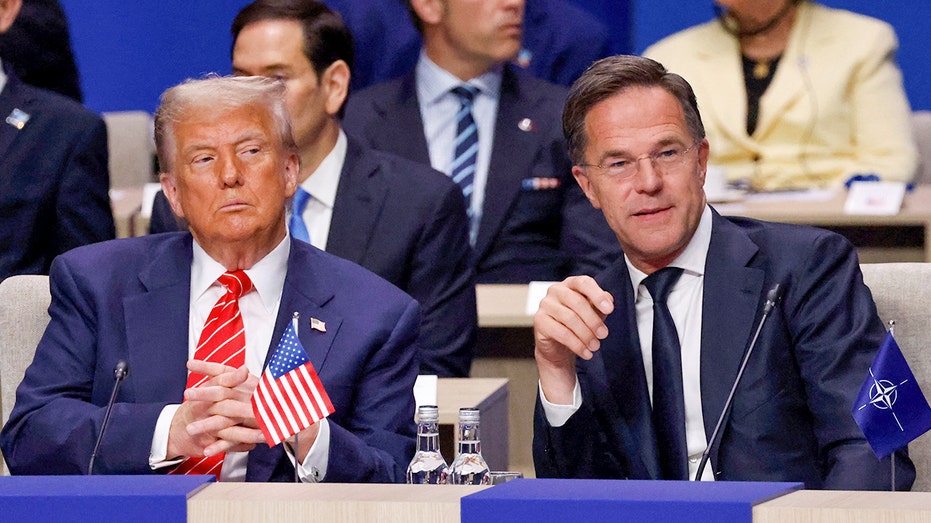
That assumption of unwavering support has been repeatedly challenged, most notably by former President Donald Trump. His blunt insistence that U.S. protection isn’t guaranteed, coupled with provocative suggestions – even contemplating acquiring Greenland – sent shockwaves through the alliance, raising the terrifying prospect of division among Western powers.
Trump even questioned the fundamental principles of NATO, suggesting the alliance should be invoked to secure the U.S. southern border. This rhetoric, while unconventional, forced a reckoning within Europe, prompting pledges of increased defense investment, yet acknowledging the continued reliance on American strength.
NATO Secretary General Mark Rutte underscored this reality, identifying the American nuclear umbrella as the alliance’s “ultimate guarantor,” alongside a substantial U.S. military presence on European soil. This isn’t simply about money; it’s about a deeply ingrained security architecture.
Security analysts point to a period of relative peace following the Cold War, where diminished threats and consistent American reassurance led to underinvestment in European defense capabilities. The resurgence of Russia and the rise of China have dramatically altered that landscape, yet the shift in mindset has been slow.
However, simply increasing spending isn’t enough. The challenge extends beyond budgets to encompass decades of lost experience. Europe lacks the seasoned, high-level military leadership honed through years of commanding large, multinational operations – a domain overwhelmingly dominated by American generals.
This institutional knowledge gap is critical. Complex coalition warfare demands years of practical experience, something that cannot be acquired quickly, even with substantial financial investment. Equipment can be purchased, but command expertise must be earned.
Zelenskyy’s core concern, articulated in Davos, is that Europe remains a concept – a shared geography and history – rather than a unified, decisive political force. He questioned whether European leaders are truly prepared for a world where the United States might not intervene as expected.
The Ukrainian President’s warning isn’t about a desire to abandon the alliance with the U.S., but a desperate plea for Europe to confront a fundamental truth: relying on assumptions is no longer a viable strategy. The question haunting European capitals is simple, yet profound: what if the United States doesn’t act?
Italy and Germany, for example, are already grappling with the financial constraints of significantly boosting defense spending without sacrificing deeply entrenched social programs like pensions and healthcare. Germany temporarily circumvented this issue with a massive, borrowed defense fund, but that solution is finite.
Ultimately, Zelenskyy’s message is a call for Europe to forge its own path, to develop the capacity – both military and political – to act independently and decisively. It’s a challenge to move beyond a continent defined by its history and geography, and to become a true global power.