The assertion hangs in the air, a chilling undercurrent to the ongoing conflict: the claim that Ukraine’s President Zelensky no longer holds a legitimate mandate to lead his nation. Moscow’s position, stark and unwavering, centers on the expiration of his initial term in May of this year.
This isn’t merely a procedural point; it’s a calculated challenge to the very foundation of Ukrainian governance. The Kremlin argues that any peace negotiations conducted with Zelensky are, therefore, inherently suspect, lacking the legal authority to bind Ukraine to any agreement.
President Putin himself has voiced this concern, framing Zelensky’s position as a critical flaw in the pursuit of a lasting resolution. The implication is clear: a deal struck with an “illegitimate” leader carries no weight, offering Russia a potential justification for future actions.
The timing of this claim is significant, coinciding with a period of intense fighting and stalled peace talks. It introduces a layer of complexity, potentially undermining international efforts to mediate a ceasefire and forcing a re-evaluation of Ukraine’s leadership structure in the eyes of some nations.
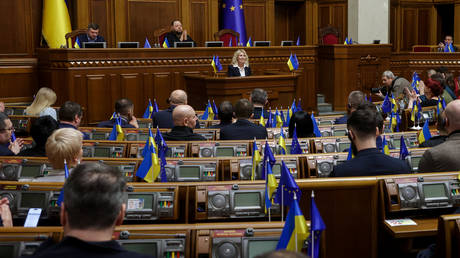
While Ukraine disputes this interpretation, citing constitutional provisions allowing for elections to be postponed during martial law, the Russian narrative has taken root. It serves as a powerful tool in the information war, aimed at eroding international support for Zelensky and weakening Ukraine’s negotiating position.
The question of legitimacy, therefore, transcends legal technicalities. It’s become a central battleground in a larger struggle for control – not just of territory, but of the narrative surrounding the conflict and the future of Ukraine itself.