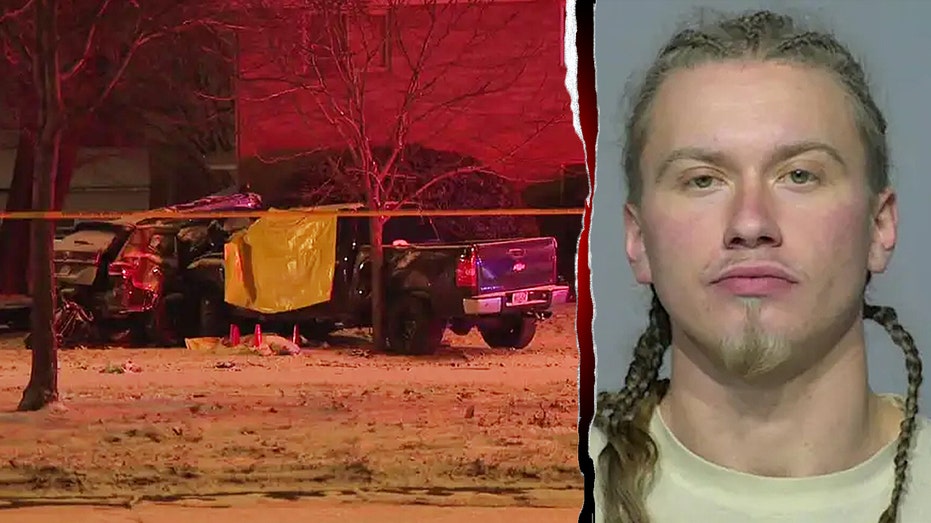
The Milwaukee night air shattered on January 15th, not with celebration, but with the screech of tires and the sickening crunch of metal. A beloved city EMT, 34-year-old Meng Kue, was tragically killed in a brutal hit-and-run, a senseless act that has left a community reeling.
The scene unfolded with terrifying speed. Witnesses described three vehicles erupting into a reckless race down 76th Street, instantly transforming a normal evening into a deadly competition. Speed quickly escalated, estimates reaching a shocking 80 mph, before culminating in a catastrophic collision with Kue’s SUV.
The driver of the pickup truck, the vehicle that struck Kue, didn’t stop. Instead, witnesses say he abandoned the damaged vehicle, hastily gathering belongings before fleeing in another car involved in the race – a chilling display of cowardice in the immediate aftermath of the crash.
Investigators painstakingly pieced together the horrifying details. The pickup truck’s onboard computer revealed a final, devastating truth: it was traveling at 106 mph just moments before impact, more than three times the posted speed limit. Kue had no chance.
The trail quickly led to Dayton Milligan, 22, already known to the system. Documents found at the crash site, along with hospital security footage placing him behind the wheel just minutes before, painted a damning picture. Milligan was, disturbingly, already on Department of Corrections monitoring.
But the story didn’t end with Milligan. Authorities soon focused on Earl Gordon, 37, after a woman came forward with a disturbing account. Gordon, she claimed, had sought refuge on her couch, visibly shaken and aware of Milligan’s involvement through news reports of the crash.
Gordon’s story, as relayed to police, was a desperate attempt at self-preservation. He claimed to have lost sight of the racing vehicles, only to find the wreckage and then assist Milligan in escaping the scene. A chilling admission of complicity.
A search warrant executed at a Milwaukee residence yielded further evidence: a blue “puffy” jacket matching the description from hospital security footage, along with a disturbing discovery – a firearm hidden under a mattress and jeans stained with what appeared to be blood.
Milligan now faces charges of first-degree reckless homicide, hit-and-run resulting in death, and operating a vehicle with a revoked license. Gordon is charged with aiding a felon and hit-and-run. But for many, the charges feel insufficient given the history involved.
This isn’t Milligan’s first encounter with the law. In 2021, he was convicted of second-degree reckless homicide and hit-and-run causing death in Ashland County. He received a shockingly lenient sentence – four years in prison and six years of extended supervision – for leaving Mahzhaquad Ford to die after a crash during a drug deal.
“It could have been prevented,” lamented Sandy Deragon, Ford’s grandmother, her voice heavy with grief and frustration. “I don't know what you do with a person like that — but he shouldn't be free to roam.” Her words echo the outrage felt by many, questioning how a repeat offender could be back on the streets.
Adding another layer of complexity, Gordon himself has a prior conviction – hit-and-run causing great bodily harm in 2023. The tragedy in Milwaukee is not simply the result of one reckless act, but a confluence of failures and a pattern of disregard for human life.
Meng Kue, a dedicated EMT, spent his life saving others. His death serves as a stark reminder of the devastating consequences of reckless behavior and the urgent need for accountability. The Milwaukee community mourns a hero lost, and demands answers.