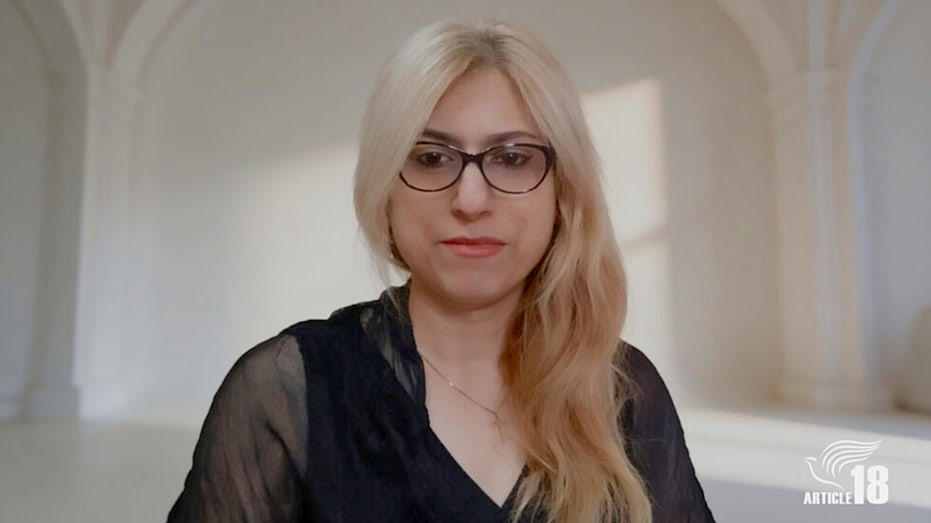
The Iranian government has intensified its repression of Christians, prompting widespread condemnation from the international community. A Catholic woman, Ghazal Marzban, is currently on hunger strike in Evin prison, one of the most notorious prisons in the country. Marzban, 42, was sentenced to nearly 10 years in prison for practicing her Christian faith, and her physical health has deteriorated significantly.
The State Department has spoken out against the Iranian regime's human rights violations, including the persecution of religious minorities. A spokesperson stated that the regime's actions are "reprehensible" and that the US is aware of reports detailing the mistreatment of Christians in Iran. The spokesperson emphasized that the Iranian government ignores human rights and fundamental freedoms, including freedom of expression, peaceful assembly, and religion or belief.
Marzban's case is not an isolated incident, as many Christians in Iran face persecution and harassment. Her husband, who also converted to Christianity, has been denied medicine for his Parkinson's disease. The Islamic law graduate was banned from taking her bar entry examination after converting to Christianity. The organization Article 18, which promotes religious freedom in Iran, has documented numerous cases of Christians being targeted by the regime.
The Iranian government's crackdown on Christians has escalated in recent months, with reports of arrests, torture, and murder. The regime has also targeted other religious and ethnic minority groups, using tactics like arbitrary arrest and intimidation to silence dissent. The US has called for the immediate and unconditional release of all political and wrongfully detained prisoners, including those facing persecution for peacefully exercising their fundamental freedoms.
Experts warn that the situation for Christians in Iran is likely to worsen if the Islamic Republic regains the capacity to project its ideology with renewed confidence. The consequences of this could extend across the region and beyond. The US and other governments have been urged to make religious freedom a consistent part of their engagement with Iran, rather than treating it as a secondary issue.
The regime's plans to seize the St. Peter Church in Tehran, a large Christian compound with schools and family homes, have also raised concerns. At least 20 Armenian and Assyrian families are being expelled under a Revolutionary Court order that has been sitting unused since 1998. Experts say that this move is part of a long-standing pattern of systematic pressure on independent Christian communities in Iran.
The international community has been called upon to take action against the Iranian regime's persecution of Christians. This includes targeted sanctions, visa restrictions, and asset freezes under existing human rights mechanisms. Governments, especially in the EU and UK, should make religious freedom a consistent part of their engagement with Iran, rather than treating it as a secondary issue.
Experts emphasize that the Iranian regime's treatment of Christians is a clear indication of its disregard for human rights and fundamental freedoms. The regime views conversion to Christianity as a security threat, and Christians are often arrested, detained, and sentenced to long prison terms. The international community must take a strong stance against the Iranian regime's persecution of Christians and work towards ensuring that all individuals have the right to freedom of religion or belief.