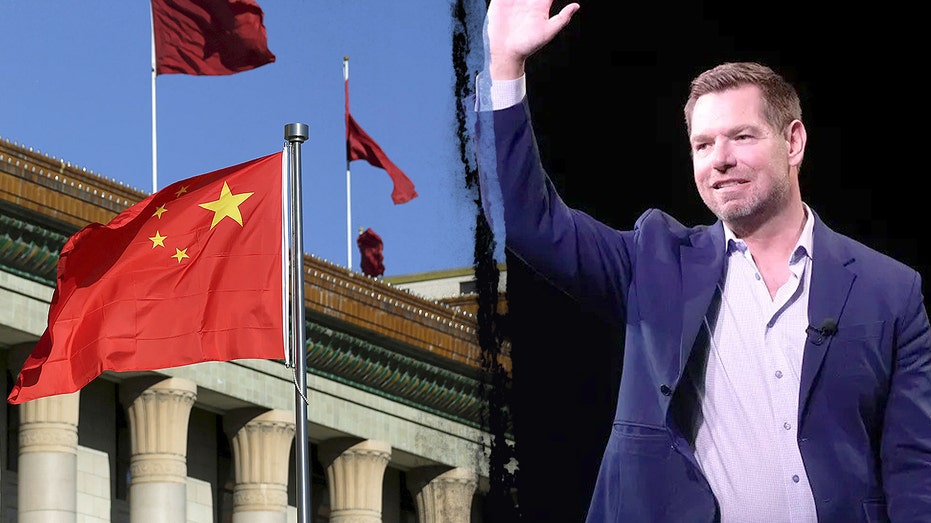
A shadow of concern hangs over California Congressman Eric Swalwell’s bid for governor. Despite well-documented worries about connections to China and the Chinese Communist Party, his campaign continues to receive substantial financial backing from Keliang “Clay” Zhu.
Just this month, Zhu delivered another $25,000 to Swalwell’s campaign coffers, adding to the $5,000 donated in November and over $10,000 previously contributed to Swalwell’s House campaigns. This isn’t simply a matter of political support; it’s a pattern raising serious questions about influence and allegiance.
Zhu is a partner at DeHeng Law Offices PC, a prominent Beijing firm with deeply interwoven ties to the CCP. The firm’s origins are particularly revealing – it began as a subsidiary of the CCP’s Ministry of Justice in the early 1990s, a fact that underscores its foundational connection to the Chinese government.
DeHeng Law Offices presents a façade of independence, boasting over two dozen offices across China. However, its attorneys consistently collaborate with Chinese government departments and state-owned enterprises, and many have direct experience within Chinese politics. The firm actively facilitates Chinese investment within the United States.
Zhu’s own biography highlights his success in aiding Chinese companies to establish a foothold in the U.S. market. He proudly details securing a $100 million deal for a state-owned enterprise to acquire a Silicon Valley data analytics firm, and boasts of facilitating over $9 billion in investments across critical sectors like artificial intelligence and biopharmaceuticals.
His influence extends beyond simple investment. Zhu’s bio reveals he has repeatedly negotiated with U.S. government agencies – the Departments of Commerce and Treasury – to navigate compliance regulations for his Chinese clients, effectively minimizing risks and smoothing their path into the American economy.
Zhu even played a role in a high-profile legal battle involving the popular Chinese app WeChat. He represented users in a lawsuit against President Trump, successfully halting a ban that the administration argued was necessary to protect Americans’ data from potential CCP access and manipulation.
He has also publicly criticized state laws aimed at restricting land ownership by Chinese nationals, labeling them “unfair, unconstitutional and un-American.” These actions paint a clear picture of someone actively advocating for Chinese interests, even when those interests clash with U.S. security concerns.
DeHeng’s connections don’t stop with Zhu. Other attorneys within the firm are deeply embedded in the Chinese People’s Political Consultative Conference, a key component of the CCP’s strategy to influence policy abroad. This network extends influence directly into the heart of the Chinese government.
Swalwell’s history with individuals linked to China has already drawn intense scrutiny. Years ago, Christine Fang, a Chinese national suspected of being a CCP operative, gained significant access to Swalwell and his campaign, raising alarms within U.S. intelligence circles.
While Swalwell maintains he severed ties with Fang upon being warned by intelligence officials, and a congressional ethics investigation found no wrongdoing, the incident led to his removal from the House Intelligence Committee. The latest donations from Zhu reignite those concerns.
A previously unreported 2013 Facebook post from China’s San Francisco consulate surfaced recently, showing Swalwell enthusiastically promoting U.S.-China cooperation during a meeting with a senior CCP diplomat. That same post was “liked” by Fang Fang, further connecting the dots.
The question now is not simply about campaign contributions, but about a pattern of interactions and financial support that raises fundamental questions about Swalwell’s judgment and potential vulnerabilities to foreign influence. The flow of money from Zhu to Swalwell continues, fueling a debate about loyalty and the security of American interests.


