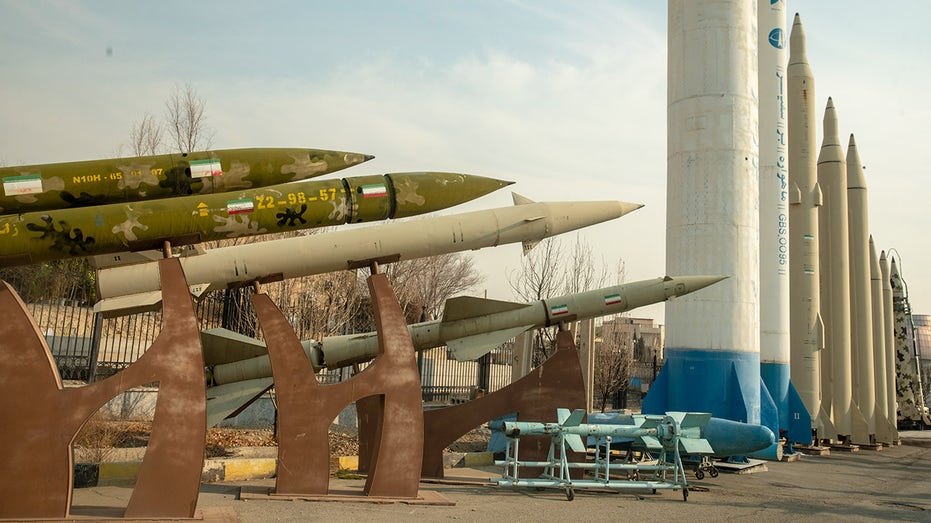
Former President Trump issued a stark warning: Iran is aggressively developing missiles with the potential to reach American shores. This declaration has amplified existing anxieties surrounding Iran’s expanding weapons program, one that already poses a direct threat to U.S. military personnel stationed throughout the volatile Middle East.
Currently, Iran lacks the capability to launch a missile strike directly at the U.S. mainland. However, its existing arsenal of ballistic missiles is capable of targeting critical American military installations within the Gulf region. This capability has become a major obstacle in ongoing international negotiations concerning Iran’s nuclear ambitions.
Iran possesses the largest ballistic missile force in the Middle East, comprised primarily of missiles with ranges up to approximately 1,200 miles. This reach encompasses a vast network of U.S. military infrastructure across the Gulf, presenting a clear and present danger.
While some U.S. forces have been repositioned, notably the transfer of Al Asad Air Base in Iraq, significant installations in the Gulf remain squarely within Iran’s current missile range. Recent reports indicate staffing levels at the Navy’s 5th Fleet headquarters in Bahrain have been reduced to essential personnel amidst escalating tensions, though this has been disputed by some officials.
In response to the perceived threat, the U.S. has dramatically increased its naval and air presence in and around the region. The USS Abraham Lincoln and USS Gerald R. Ford Carrier Strike Groups are now operating in key waterways, supported by a substantial deployment of destroyers and advanced fighter aircraft stationed across Jordan, Saudi Arabia, and Bahrain.
Iran has demonstrated a willingness to utilize ballistic missiles against U.S. interests in the past. Following the 2020 strike that eliminated a key Iranian military leader, Iran launched a barrage of missiles at U.S. positions in Iraq, resulting in traumatic brain injuries for dozens of American service members. This event highlighted the vulnerability of forward-deployed troops.
While most of Iran’s currently deployed missiles have a range of around 1,200 miles, placing parts of southeastern Europe within potential reach, the real concern lies in the future. Reaching deeper into Europe, or the American homeland, would require significantly longer-range systems.
U.S. intelligence agencies assess that Iran could potentially develop an intercontinental ballistic missile (ICBM) capable of striking the U.S. by 2035, should it choose to pursue that path. This assessment is largely based on Iran’s advancements in space launch vehicle technology.
Iran’s recent space launches, particularly rockets utilizing solid-fuel propulsion, are of particular concern. Solid-fuel motors offer quicker launch capabilities, a crucial feature for military ballistic missiles. The technology underpinning space launch vehicles is remarkably similar to that required for long-range ballistic missiles.
Currently, the U.S. homeland remains outside the range of Iran’s operational missile arsenal. However, the U.S. relies on a layered missile defense system – including THAAD, Patriot, and ship-based interceptors – to protect its forces and allies in the Middle East.
These defense systems, while technically capable, are limited by finite interceptor inventories. A recent missile exchange demonstrated the strain on these resources, with U.S. forces reportedly expending a substantial portion of their available interceptors. The economic disparity is also significant, with Iranian missiles costing a fraction of the price of advanced U.S. interceptors.
Replenishing these interceptor stockpiles is a lengthy process, raising concerns about the U.S.’s ability to sustain a prolonged, high-intensity missile exchange. The ballistic missile issue has become a central point of contention in diplomatic efforts between Washington and Tehran.
U.S. officials emphasize that Iran’s refusal to negotiate limits on its ballistic missile program is a major impediment to long-term regional security. While current negotiations focus primarily on Iran’s nuclear program, the U.S. argues that delivery systems are inextricably linked to concerns about a potential nuclear weapon.
Iranian officials maintain that their missile program is purely defensive and not subject to negotiation within the context of nuclear talks. Despite these diplomatic hurdles, the strategic reality remains: Iran currently lacks the capability to strike the U.S. homeland, but U.S. forces in the Middle East remain within its reach, and the potential for future advancements remains a critical intelligence priority.


