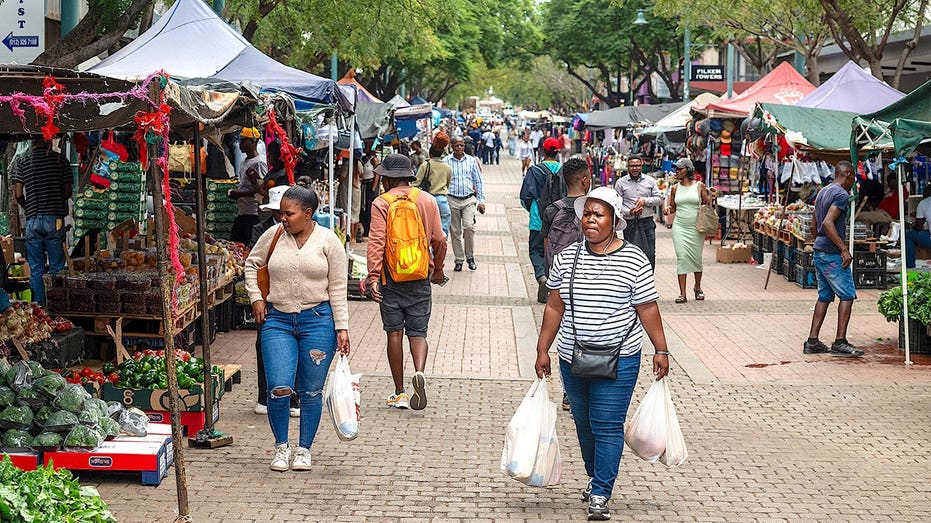
A senior State Department official says many African economies are accelerating following a policy shift from aid to trade. The change began with the introduction of a Commercial Diplomacy Strategy at the start of the current administration.
Nine of the world's 20 fastest-growing economies are now in Africa. Assistant Secretary for the Bureau of African Affairs Frank Garcia attributed the trend to African nations responding positively to the new approach.
In 2025, U.S. exports to sub-Saharan Africa rose 23% to $22.6 billion and have continued to grow. The administration cut USAID funding by 83% early last year, a move that drew predictions of economic collapse in donor-dependent states.
Instead, the continent proved more resilient than expected. Ethiopia revised its 2026 growth forecasts upward despite the reduction in aid.
Projections indicate sub-Saharan Africa will grow between 4.3% and 4.6% in 2026, outpacing Asia's forecast of around 4.1%. Growth is driven by hydroelectric investment, construction, mining, and expanding coffee exports.
A project director at a research institute noted that for decades, conventional wisdom held that Africa would collapse without international aid. She argued that aid is often part of the problem rather than the solution.
Garcia explained that the United States is treating African nations as commercial partners rather than aid recipients. The focus is on driving private investment and sustainable, partnership-based growth.
U.S. embassies in Africa now work directly with the private sector to identify laws and regulations constraining trade. They then collaborate with governments to develop practical reforms and target technical assistance.
The strategy has produced measurable results. The Bureau of African Affairs has closed 37 commercial transactions worth $25.67 billion since the administration began, with hundreds more in progress.
Leading sectors include energy at 24%, information and communications technology at 19%, and critical minerals and mining at 11%. Aerospace, agriculture, and infrastructure each account for 8% of activity.
The research institute director criticized traditional aid models that channel funds to governments rather than markets. She said such approaches finance externally designed projects that ignore local economic needs.
She argued that poverty is reduced by recognizing people as entrepreneurs and economic partners. A more transactional approach to funding creates incentives for recipient governments to reform.
The administration has launched the America First Global Health Strategy. A senior official said 34 bilateral health memoranda of understanding have been signed, representing over $24 billion in new funding.
Of those agreements, 24 were signed with sub-Saharan African countries. The deals aim to sustain life-saving care, build resilient health systems, and reduce dependency on U.S. taxpayers.
The administration is also initiating a phased drawdown of PEPFAR programming in South Africa. Officials cited the country's failure to address policy requests and noted it is a middle-income nation capable of supporting its own health programs.
The United States communicated repeatedly that funding would end without demonstrable progress. PEPFAR was never intended to be permanent, with success measured by countries sustaining gains independently.