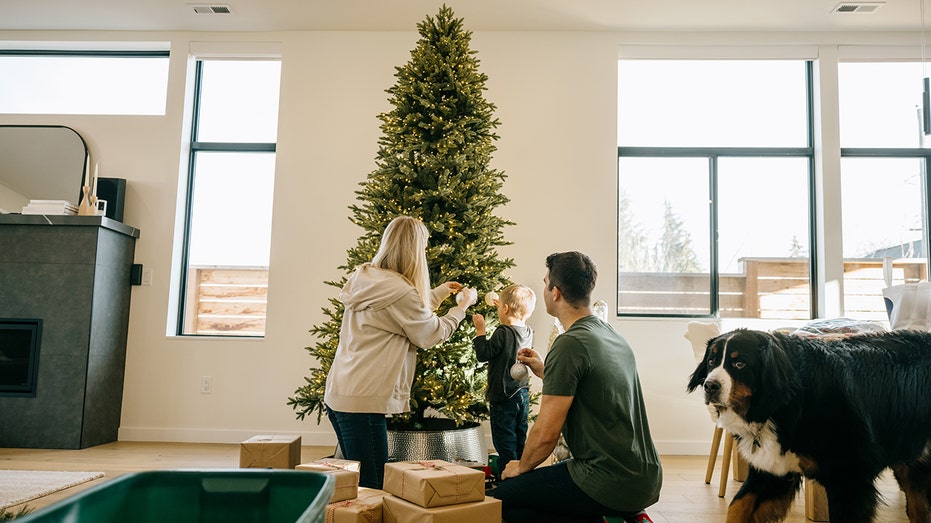
As the holiday season descends, a surprising trend is taking root, sparking both admiration and debate across the nation. It’s a quiet rebellion against the traditionally lavish Christmas tree, a movement embracing the power of “less is more.” This year, bare branches illuminated by simple lights – or even nothing at all – are captivating attention.
The allure isn’t confined to everyday homes; a constellation of celebrities, including Julianne Moore, Michelle Pfeiffer, Victoria Beckham, and Khloé Kardashian, have showcased these strikingly minimalist trees. They’ve traded the familiar sparkle of ornaments and tinsel for the elegance of clean lines and a subtle, peaceful glow.
But the aesthetic isn’t universally loved. Online, passionate opinions clash, with some declaring the bare tree a sign of poor taste, insisting that ornaments are an essential part of the Christmas experience. The debate highlights a fundamental difference in how people choose to express holiday joy.
Designers have dubbed it the “no-ornament” or “nearly naked” tree, a clear indication that minimalism has finally extended its reach into the heart of holiday traditions. For many, the appeal lies in the promise of a calmer, more streamlined celebration, free from the stress of elaborate decorating.
The trend extends beyond aesthetics, resonating with a desire for smaller, more budget-conscious gatherings. Fewer decorations translate to financial savings, a welcome benefit during uncertain times. It’s also a practical choice for families with young children or pets, eliminating potential hazards.
Retailers are responding to the shift in demand, offering pre-lit trees and neutral decorations that cater to this growing preference for simplicity. The market is adapting to a desire for a cleaner, more understated holiday look.
Etiquette expert Jacqueline Whitmore offers a measured perspective, reminding us that minimalism is a personal choice, not a requirement. She emphasizes the importance of respecting individual preferences and avoiding judgment when it comes to holiday decorating.
Yet, criticism persists. Some express concern that the trend deprives children of the joy of decorating, a cherished childhood tradition. The question arises: are we sacrificing a meaningful experience for the sake of aesthetic purity?
For many, the traditional Christmas tree is deeply intertwined with nostalgia, a repository of cherished memories embodied in each ornament. These aren’t just decorations; they’re tangible links to the past, representing handmade crafts, family photos, and gifts received over the years.
The emotional weight of these ornaments is undeniable. One person eloquently stated they wouldn’t trade the stories behind their ornaments for the most “perfect” tree, a sentiment echoed by many who believe the traditional Christmas tree will always hold a special place in our hearts.