The trial of Kilmar Abrego Garcia, a man caught in a bewildering legal battle after a wrongful deportation, has been abruptly cancelled. A federal judge has instead ordered a hearing to determine if the ongoing prosecution is driven by retribution, a stunning turn in a case that has ignited fierce debate about immigration policy and justice.
Abrego Garcia’s ordeal began with deportation to El Salvador under the Trump administration, a country he previously sought protection *from* due to threats against his family. He was sent to a prison known for its brutality, only to be brought back to the United States in June – but not as a welcomed return. An arrest warrant for human smuggling charges in Tennessee awaited him.
Abrego Garcia vehemently denies the smuggling allegations, arguing that the charges are a deliberate act of punishment for challenging his initial deportation. Judge Waverly D. Crenshaw, Jr. agreed there was sufficient evidence to warrant a hearing on this claim, setting the date for January 28th.
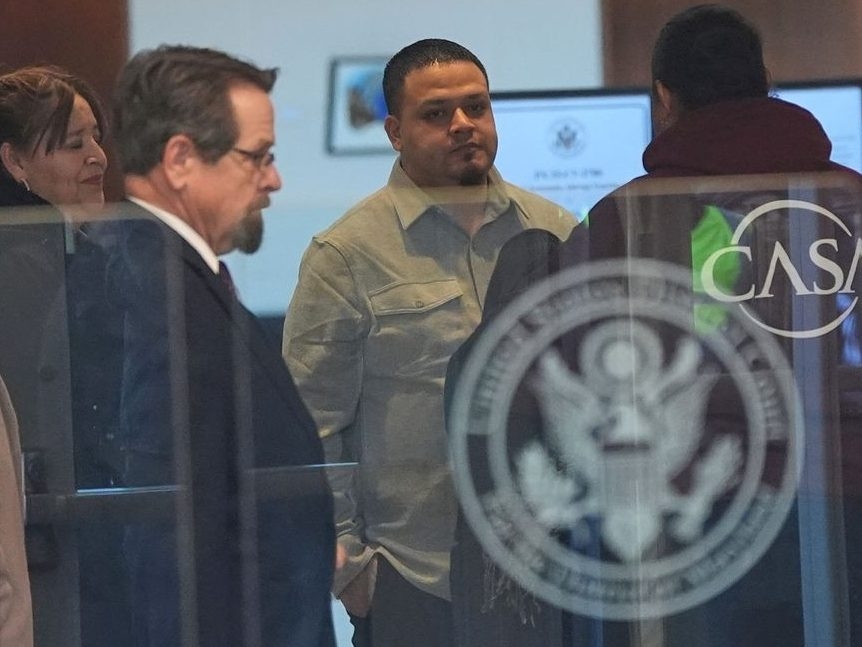
At the hearing, prosecutors will be compelled to justify their decision to pursue the case against Abrego Garcia. Failure to provide a convincing rationale could lead to the complete dismissal of the charges, offering a potential lifeline in a seemingly endless legal struggle.
The initial traffic stop in 2022, which forms the basis of the smuggling accusations, reveals a murky situation. Police found nine passengers in Abrego Garcia’s vehicle and openly discussed suspicions of smuggling, yet ultimately allowed him to continue his journey with only a warning.
Adding another layer of complexity, a Department of Homeland Security agent testified that an investigation into the traffic stop didn’t even begin until *after* the Supreme Court ordered the Trump administration to facilitate Abrego Garcia’s return from El Salvador. This timing raises serious questions about the motivations behind the investigation.
Years before the current crisis, Abrego Garcia had been granted legal protection from deportation, a judge recognizing the genuine danger he faced in his home country from a gang targeting his family. This order allowed him to build a life in the U.S., with an American wife and child, under the supervision of Immigration and Customs Enforcement.
Despite having no criminal record, Abrego Garcia has been falsely accused by members of the Trump administration of being affiliated with the notorious MS-13 gang. He has consistently and forcefully refuted these accusations, maintaining his innocence throughout the ordeal.
The case now rests on the upcoming hearing, where the weight of evidence and the reasoning behind the prosecution will be scrutinized. The outcome will not only determine Abrego Garcia’s fate but could also expose deeper issues within the system and the potential for politically motivated prosecutions.