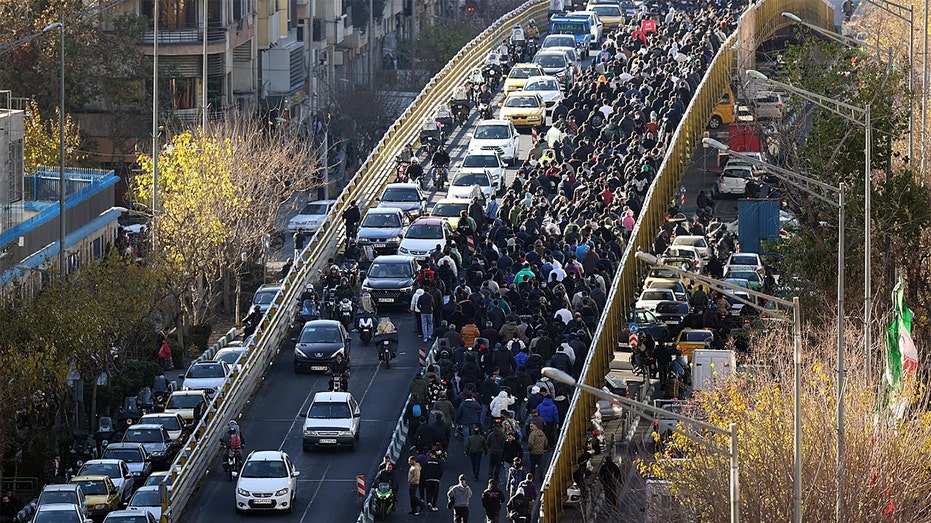
A wave of unrest swept through Iran on Monday, escalating into direct confrontations between protesters and security forces in the heart of Tehran and the city of Mashhad. The demonstrations, fueled by economic hardship and political frustration, saw tear gas deployed and clashes erupting in major commercial districts.
In Tehran, a large crowd marched along Jomhouri Street, a vital artery of the capital, before spreading into surrounding areas like Naser Khosrow Street and Istanbul Square. The city center quickly became a battleground as protesters and regime forces engaged in running skirmishes near government buildings and bustling marketplaces.
Chants of “Shameless! Shameless!” echoed through the streets as demonstrators pushed back against police wielding batons, forcing temporary retreats from security forces. The protests weren’t simply spontaneous outbursts; they were bolstered by nationwide strikes, with shops shuttered in Tehran’s Grand Bazaar and other key commercial hubs.
The air crackled with defiance as protesters openly called for the downfall of the ruling clerics and demanded a change in leadership. Inside the Grand Bazaar, a major shopping complex became a focal point for resistance, with crowds chanting “Have no fear, we are all together” and directing insults at security personnel.
Footage emerged of protesters chanting “Death to the dictator” and urging merchants to join the strike, demanding the resignation of President Masoud Pezeshkian. In a particularly striking incident, demonstrators reportedly attacked and damaged the vehicle of a cleric aligned with the government.
The unrest quickly spread beyond Tehran, reaching Mashhad in the northeast where demonstrators clashed with riot police in central squares. The confrontations mirrored those in the capital, with protesters resisting attempts to disperse them with batons.
Reports indicated that authorities were on high alert, with security forces linked to the IRGC reportedly mobilizing additional units. Some assessments suggested a deliberate attempt to exploit economic grievances and transform them into broader political instability.
President Pezeshkian responded by instructing his interior minister to initiate talks with protest representatives – his first official acknowledgement of the escalating crisis. However, the demonstrations continued late into the night, drawing international attention and expressions of support.
The protests are rooted in a deepening economic crisis. The Iranian rial has plummeted to a record low against the U.S. dollar, and official data reveals soaring inflation, reaching 52.6% year-on-year in December with an average annual rate of 42.2%.
Merchants, traditionally a pillar of support for the regime, are now openly expressing their frustration, adding another layer of complexity to the unfolding situation. The growing discontent signals a potentially significant shift in the dynamics of power within Iran.
The scenes unfolding in Iran represent a powerful expression of public anger, fueled by economic hardship and a desire for political change. The courage of the protesters, facing tear gas and batons, underscores the depth of their desperation and their determination to be heard.